A dog skidding around the kitchen after dinner, a cat launching off the sofa, muddy paws at the ranch slider - pet-friendly flooring has to deal with real life, not just look good in a sample board. Bamboo flooring for pets can be an excellent choice, but only when the product, finish and installation are right for the household. Not all bamboo performs the same, and no hard floor is completely immune to determined claws, grit or standing water.
For busy homes across Auckland and Northland, strand-woven bamboo is the version worth considering. It delivers the warm, natural look of timber with the density needed for active family life. Choose it with clear expectations, maintain it properly and it can stay looking sharp for years.
Why strand-woven bamboo suits homes with pets
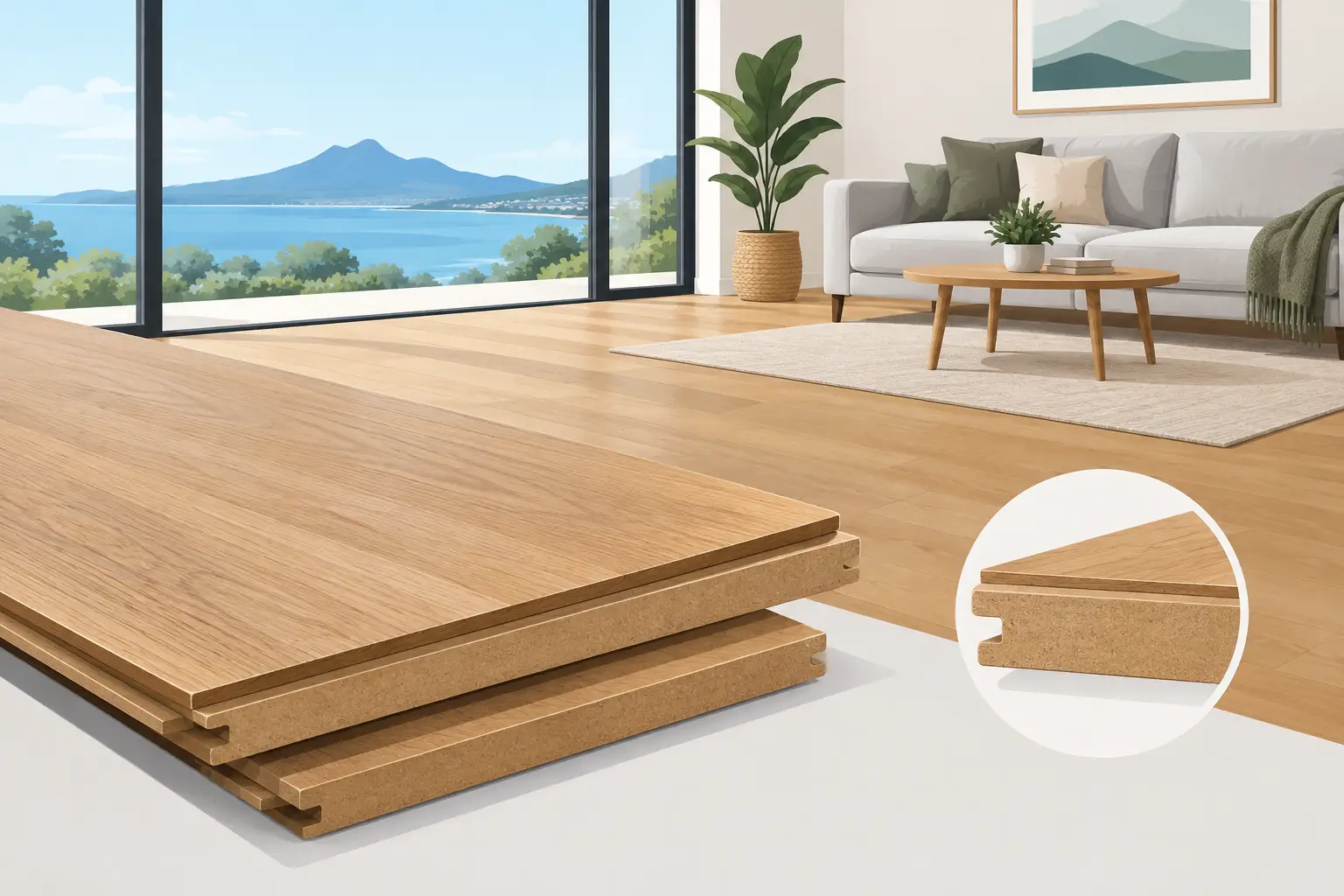
Bamboo grows quickly, which gives it a strong sustainability story. Its real advantage for pet owners, however, is the way premium strand-woven boards are made. Bamboo fibres are compressed under high pressure with resin, creating a dense, stable flooring material. That density is what helps it stand up to everyday traffic, claw marks and the occasional dropped toy.
A good strand-woven bamboo floor is generally harder than many conventional timber species. For a household with a medium or large dog, that matters. Light surface scuffs from normal movement are less likely to show than they would on a soft timber floor, especially in a considered mid-tone or textured finish.
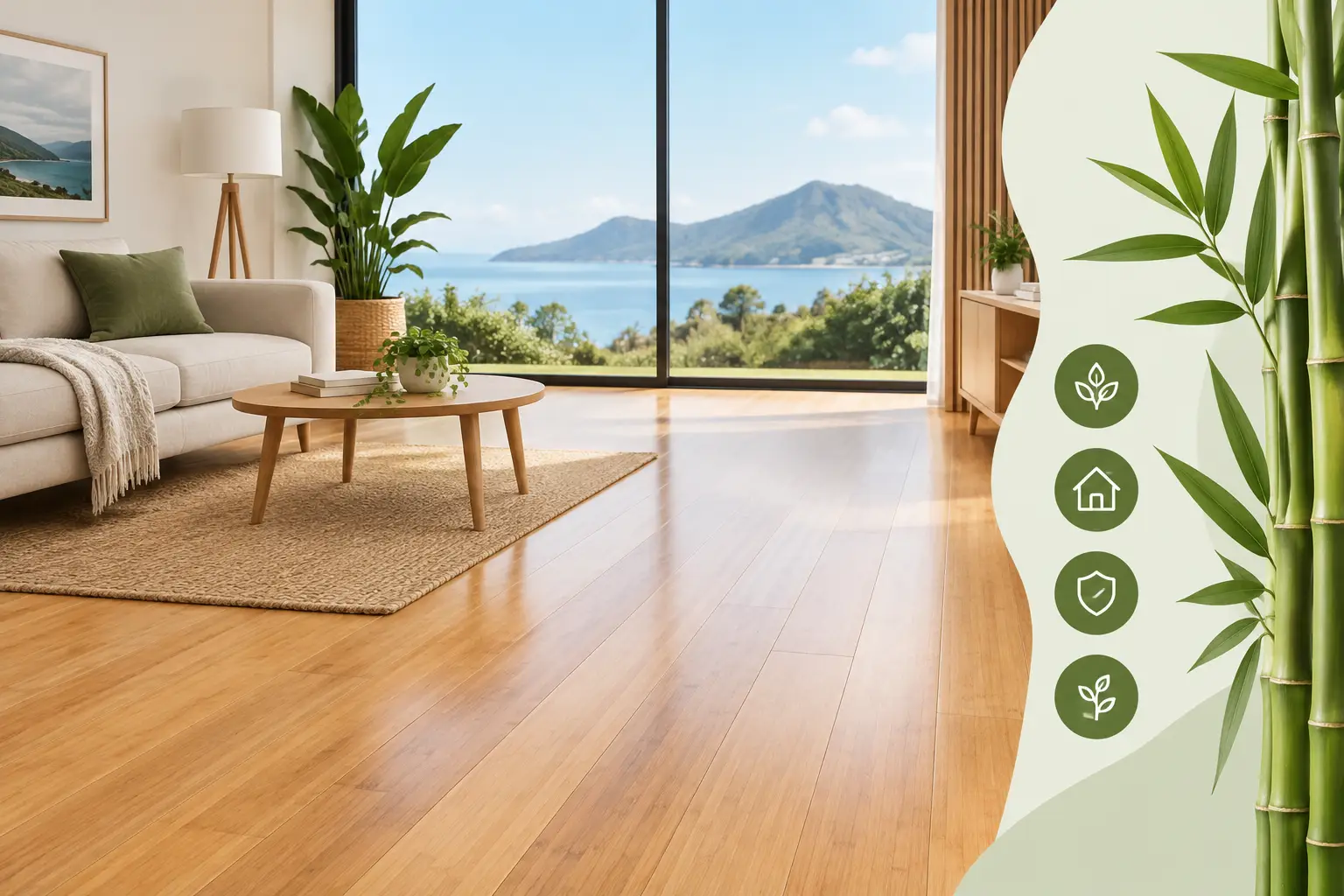
Bamboo also brings a cleaner visual continuity to open-plan homes. It works beautifully from living room to hallway and bedrooms, without the cold feel some people associate with tile. Pets get a more comfortable surface underfoot, and owners get a floor with genuine character rather than a printed imitation of wood.
That said, hardness is not the whole story. A floor can be very hard and still show scratches if its coating is poor, if grit is dragged across it, or if a dog’s nails are left long. The finish on the board is just as important as the board itself.
Scratch resistance is not scratch proof
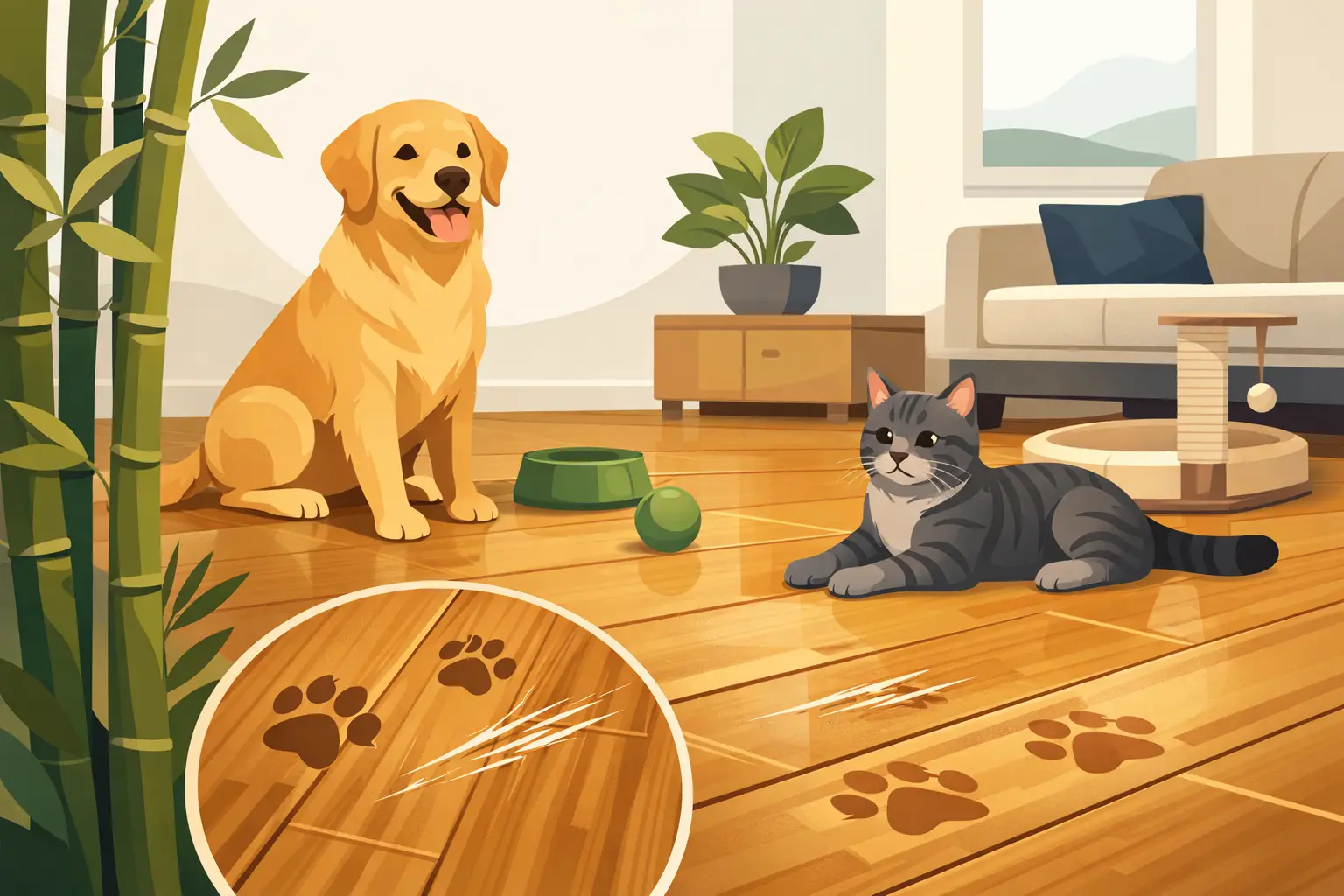
The phrase "scratch resistant" is useful, but it needs to be understood properly. It means the floor is designed to resist everyday wear. It does not mean a large dog sprinting after a tennis ball, repeatedly turning in the same spot, cannot mark it.
Dogs do the most damage when their nails are sharp and they push off hard from one area. This tends to happen near doors, around food bowls, beside the couch or at the bottom of stairs. A well-made bamboo floor will cope far better than soft wood, but simple habits protect every flooring investment: keep nails trimmed, use a proper mat at entries, and clean grit up before it becomes sandpaper under paws.
Cats are usually less of a concern for bamboo flooring. Their claws are fine, and normal walking rarely causes an issue. The bigger risk is a litter tray positioned directly on the floor with no waterproof mat underneath. Fine litter granules can be abrasive, while an unnoticed spill can sit at a board joint.
Colour choice makes a practical difference too. Very dark, very glossy floors can show dust, fur and fine scuffs more readily. A natural bamboo tone, brushed texture or lower-sheen finish is often the smarter choice for a household where paws, children and daily living come first. It still looks premium. It simply works harder between cleans.
What about accidents and spills?
Bamboo flooring handles the odd pet accident better than untreated timber, provided it is cleaned promptly. Wipe up urine, water-bowl splashes and wet paw prints rather than allowing moisture to sit. The concern is not one quick spill. It is repeated moisture reaching joins, soaking into an unprotected edge, or staying trapped under a mat.
If you are toilet-training a puppy or managing an older pet with regular accidents, be realistic about the room. Bamboo is a strong option for living areas, hallways and bedrooms, but a fully waterproof composite floor may be the better call for an entrance, laundry or any zone exposed to frequent wet mess. Choosing the right product for each space is better than forcing one material through the entire home.
The installation details that protect the floor
A quality board can still fail early if the preparation is rushed. This is where professional assessment matters, particularly in Northland homes where subfloor moisture, older concrete and large glazed areas can create conditions that need to be managed before flooring goes down.
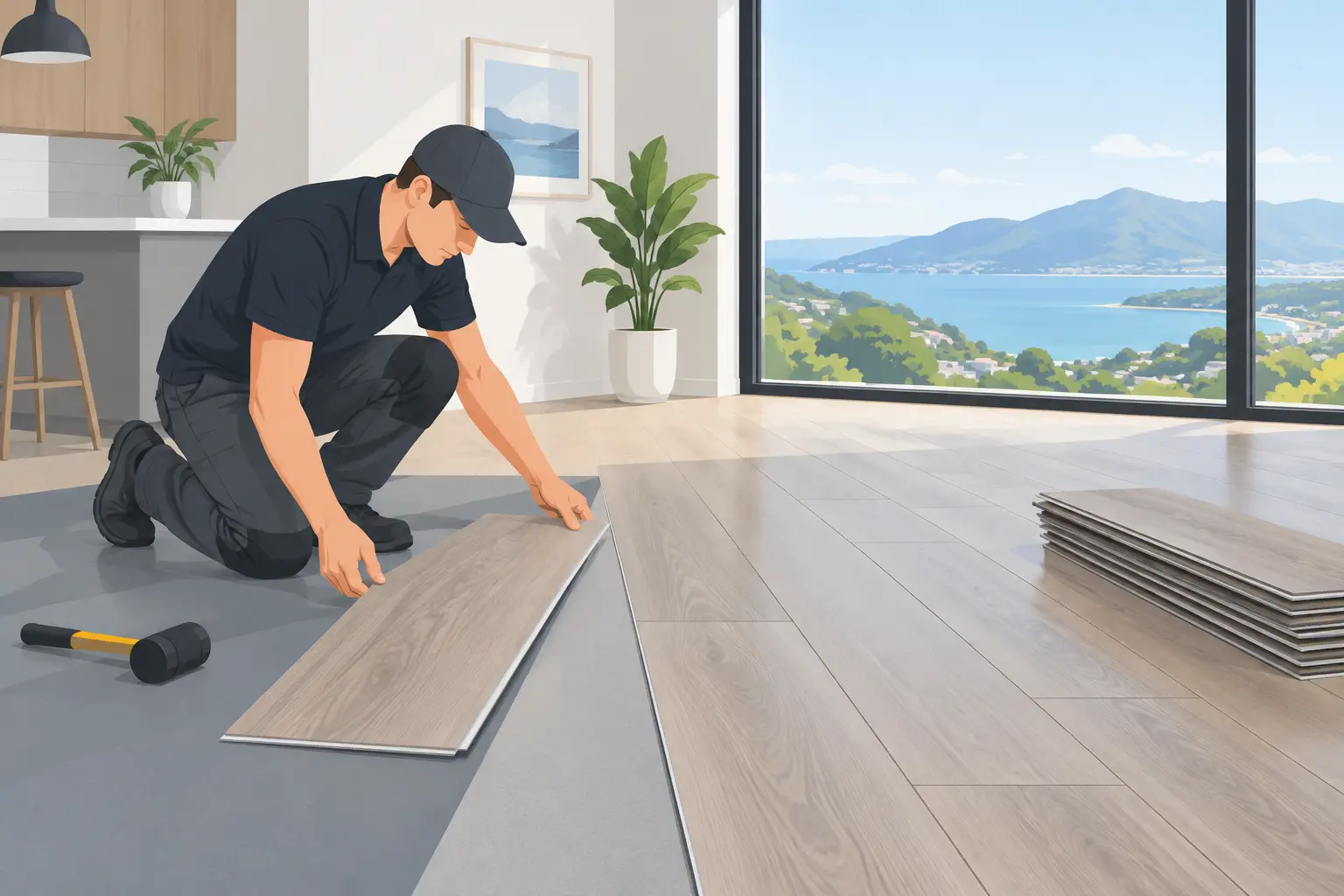
Bamboo needs a dry, level and properly prepared base. The correct underlay or moisture barrier is not an optional extra. It helps control vapour from below, reduces sound, and supports the floor’s long-term stability. Expansion gaps around the perimeter also allow the floor to respond naturally to seasonal changes without lifting or pinching.
Sun exposure deserves attention as well. A north-facing room with large windows can become seriously hot. Premium bamboo is made for real homes, but direct heat through glass should be considered during product selection and installation planning. Window coverings in peak sun and the right allowance around the room help avoid unnecessary stress on any hard flooring.
At Trade Flooring NZ, the job starts with the site, not a guess from a showroom rack. A free on-site measure identifies the details that affect performance: subfloor condition, moisture risk, sunlight, transitions to existing rooms and how your family actually uses the space. That is how flooring is installed to the point of perfection, rather than simply laid and hoped for.
A practical care routine for pet households
Bamboo does not need fussy maintenance. It does need sensible maintenance. Vacuum regularly using a hard-floor setting or sweep with a soft broom so sand, grit and pet hair are not ground into the surface. A lightly damp microfibre mop is usually all that is needed for routine cleaning.
Avoid flooding the floor with water, steam mops and harsh chemical cleaners. These can leave residue, dull the coating or introduce more moisture than the floor needs. Use cleaning products suited to finished hard flooring, follow the dilution instructions, and never allow liquid to pool along board edges.
Put a quality absorbent mat inside exterior doors, especially if the dog comes in from a wet lawn or the beach. Use a waterproof mat under water bowls and litter trays. Felt protectors under furniture are worthwhile, too - dogs often bump chairs and stools around more than people realise.
For homes with large dogs, placing a washable runner where they launch through the hallway can reduce wear in that high-turn area. This is not about hiding the floor. It is simply protecting the zone that gets the same hard use every day. A good floor plan accounts for traffic, whether it comes from people, pets or both.
When bamboo is the right choice - and when it is not
Bamboo is a strong choice for pet owners who want a natural-looking, sustainable floor with more warmth and authenticity than many synthetic alternatives. It suits homes where pets are part of the family but basic care is realistic: nails are trimmed, spills are cleaned and entry dirt is managed.
It may not be the best single solution if you need complete waterproof protection throughout the house, have several large dogs that regularly come inside wet and muddy, or expect frequent accidents. In those cases, advanced composite flooring can make more sense in the wettest, busiest areas. It is often possible to combine materials intelligently, keeping bamboo in the main living spaces and using waterproof composite flooring where water is simply unavoidable.
The best decision is not based on the hardest sales claim. It comes from matching the floor to your pets, your home’s exposure and the way you live. Get the site checked, look at full-size samples in your own light, and choose a finish you will still enjoy after the first wet walk, the first zoomie lap and the first real family gathering.