If you are asking, “what is MFB flooring?”, you are probably comparing modern composite floors against laminate, vinyl, timber or bamboo. MFB is a rigid-core flooring option designed for real homes: wet boots at the door, children, pets, busy kitchens and strong sun pouring through big glazed areas. It delivers the timber-look finish many homeowners want, without asking them to treat the floor like fine furniture.
MFB flooring is not a shortcut or a cheap-looking substitute when the right product is selected and installed properly. The performance comes down to the core construction, protective surface and the preparation underneath it. That is where product knowledge and proper installation matter.
What is MFB flooring made from?
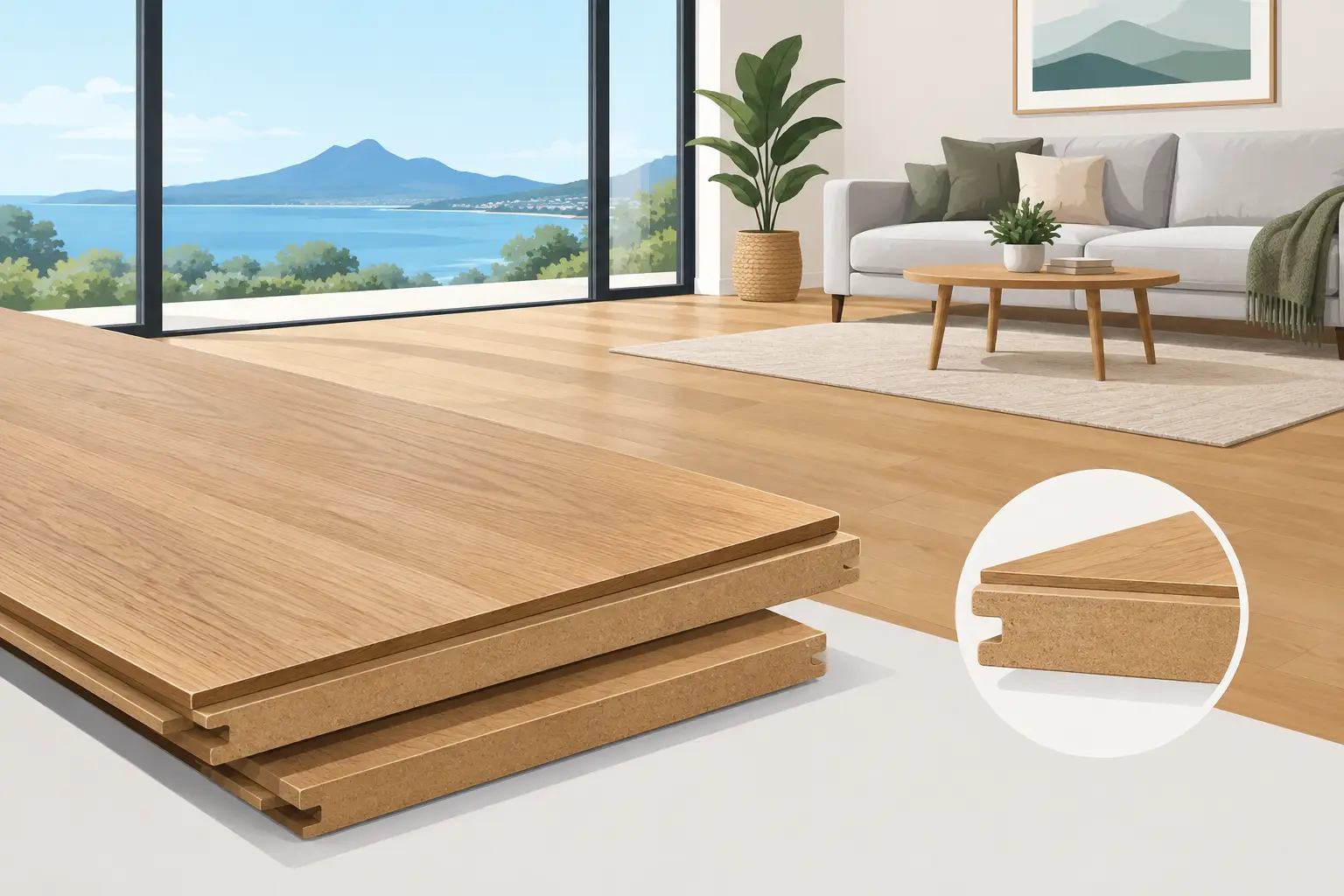
MFB usually stands for mineral fibre board. In flooring, it describes a dense, rigid composite core made with mineral-based materials and binders, rather than a conventional timber fibreboard core. It sits within the broader family of advanced composite flooring, alongside stone polymer composite, commonly known as SPC.
A typical MFB plank is built in layers. The top wear layer protects the printed timber design from daily scuffs and scratching. Beneath it sits the decorative layer, which creates the colour, grain and plank character. The rigid MFB core provides strength and dimensional stability, while the backing layer supports the plank and can help with comfort and sound reduction. Some products also include an attached acoustic underlay, although that does not remove the need to assess the subfloor properly.
The exact recipe varies between manufacturers. That matters. Two floors can both be described as MFB yet differ in core density, wear-layer quality, locking system, thickness, backing and warranty conditions. The label alone is not a guarantee of performance.
Why homeowners choose MFB flooring
The main attraction is practical durability with a finished, design-led appearance. Quality MFB flooring is highly water resistant and commonly specified as waterproof at the plank level, making it a strong candidate for kitchens, entry areas, laundries and open-plan living spaces. Spills can be dealt with without the panic associated with many timber-based floors.
It is also a hard-wearing option for family homes. A good surface coating stands up well to chair movement, pet claws, toys and the general traffic of a house that is actually lived in. It is not indestructible - dragging a heavy fridge, dropping a sharp object or letting grit build up can still mark any floor - but it is built for everyday use rather than careful living.
For Northland and Auckland homes, stability is a major consideration. Large windows and sliders create beautiful spaces, but they also expose floors to heat and temperature changes. A rigid mineral-based core can offer better stability than some traditional floating floor constructions. This makes MFB worth considering in bright living areas, provided the individual product is suitable for the site and the manufacturer’s heat-exposure requirements are followed.
MFB also gives homeowners a lot of visual choice. Oak-inspired boards, lighter coastal colours, warm natural tones and contemporary greys can all be achieved without the variation, maintenance demands or price of a solid timber floor. The result can look crisp and expensive, especially when the plank direction, trims and transitions are planned before installation starts.
MFB flooring versus SPC, laminate and timber
MFB is often compared with SPC because both are rigid-core composite floors with strong water resistance and straightforward click-lock installation. SPC generally has a stone polymer core and is known for its density and toughness. MFB uses a mineral fibre-based core, which can offer a different feel underfoot and acoustic profile depending on the product.
There is no automatic winner. An SPC floor may be the better fit where maximum dent resistance and a very rigid plank are the priority. MFB may appeal where you want a premium composite floor with a more balanced feel, strong stability and a refined timber-look finish. The actual product specification matters more than broad category claims.
Laminate flooring can look excellent and represents good value, but its core is commonly wood-based. That means water management is more critical. Even water-resistant laminate is not the same as a composite waterproof floor, particularly around wet entryways, kitchens and accidental spills.
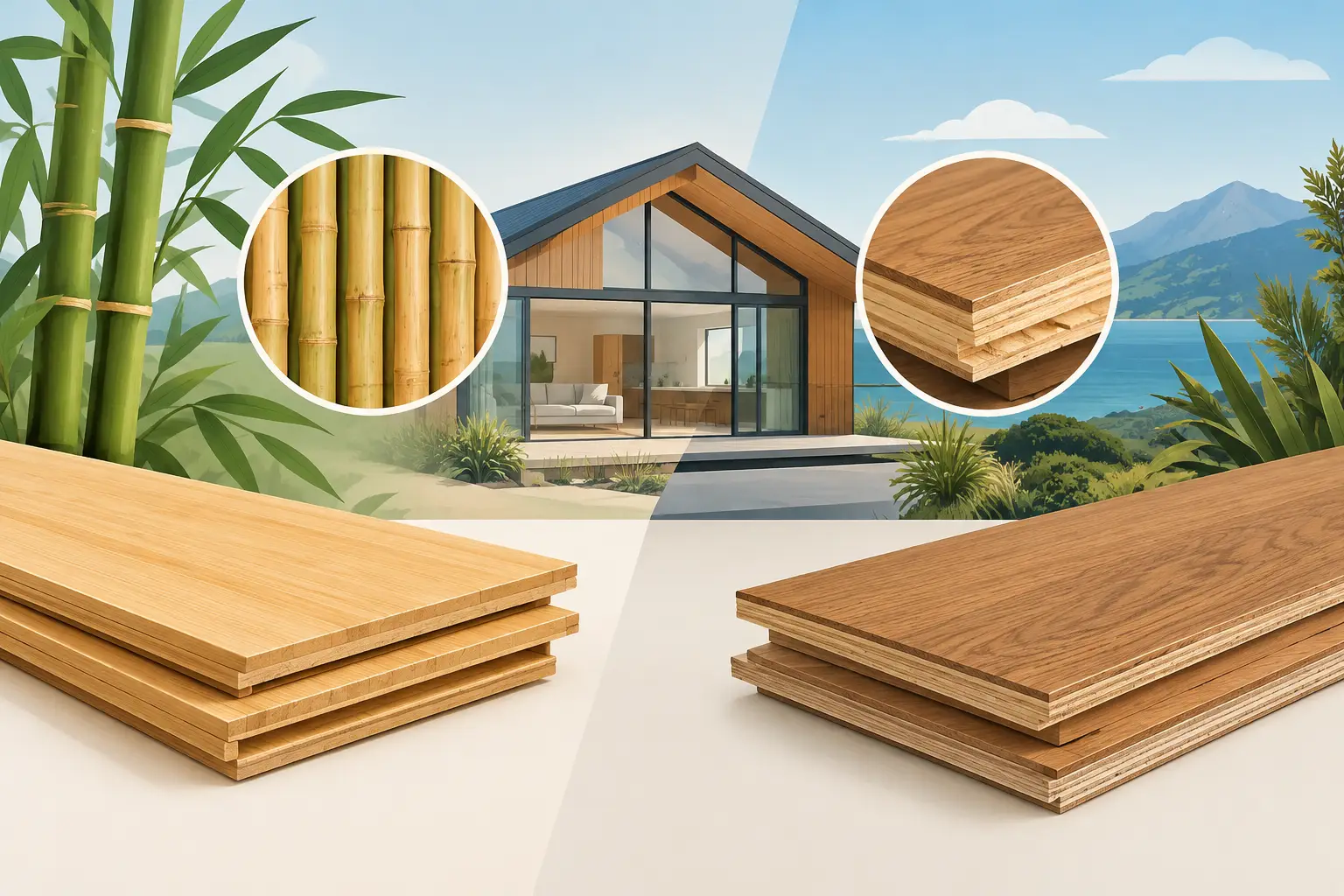
Engineered timber and bamboo bring genuine natural material into the home. They can be beautiful, repairable in some cases and a great choice for the right project. They also need a realistic approach to sun, moisture, scratching and maintenance. If your priority is a lower-fuss floor for dogs, children and a busy household, MFB can be the more practical option. If your priority is authentic timber character and you accept the care it requires, bamboo or engineered timber may be the better call.
Where MFB flooring works best
MFB flooring suits most dry internal areas and many of the spaces where family life gets messy. Living rooms, hallways, bedrooms, dining areas, kitchens and laundries are common choices. Used as one continuous floor through an open-plan layout, it can make a home feel larger and more considered.
Bathrooms need a more careful assessment. A waterproof plank does not mean every part of a bathroom installation is automatically waterproof. Water can still find its way through unsealed perimeter gaps, around toilets, at shower thresholds or through poor detailing. Wet-area requirements, existing waterproofing and the product’s stated suitability should be checked before committing.
It is generally not the floor for an exterior deck, uncovered porch or any space exposed to standing water and weather. Nor should it be installed over a subfloor with unresolved moisture issues. Flooring can only perform as well as the surface beneath it.
Installation is where performance is won or lost
Click-lock composite flooring can be quick to install, but quick is not the same as careless. The subfloor must be dry, clean, sound and level within the product’s tolerance. High spots, dips, loose floorboards, damp concrete and old adhesive residue can all create problems later, from movement and noise to damaged locking joints.
Expansion space around walls, cabinetry, pipes and fixed objects is also essential. MFB is stable, but every floating floor needs room to respond to normal environmental changes. Installing planks hard against a wall or trapping them beneath heavy fixed cabinetry is a reliable way to create avoidable stress.
Underlay selection is another detail that gets overlooked. Some MFB products have an attached backing and require no additional underlay. Others need a specific acoustic layer or moisture barrier, particularly over concrete. Adding the wrong underlay can make a floor feel unstable and may void the warranty. It is not an area for guesswork.
A professional measure before ordering helps identify these issues early. It also allows the installer to plan board direction, door clearances, transitions to carpet or tile, aluminium trims and the finish around sliders. Those details are what separate a floor that merely covers a room from one installed to the point of perfection.
How to choose the right MFB floor
Start with the room, not the sample. Consider how much direct sun the space receives, whether there are pets and children, what sits underneath the existing floor, and how the new surface will meet adjoining rooms. A pale board can brighten a darker home but may show dirt more readily. A deep charcoal tone can look sharp but may show dust and pet hair. There is always a trade-off between the look you love and the maintenance you are happy to live with.
Then compare the details: total plank thickness, wear layer, core construction, locking profile, backing, water-resistance claims, warranty and approved installation methods. Ask whether the product is suitable for large glazed areas and whether window coverings are recommended to manage extreme heat. Clear answers are more useful than flashy showroom talk.
At Trade Flooring NZ, the best outcome starts with an on-site look at the space, not a rushed decision under retail lights. Measuring, checking the subfloor and discussing how your household uses each room gives you a realistic recommendation and a cleaner quote from the start.
Caring for an MFB floor
MFB flooring is low-maintenance, not no-maintenance. Sweep or vacuum regularly with a hard-floor setting to remove grit. Use a well-wrung mop and a cleaner approved for the floor, rather than soaking the surface. Wipe spills promptly, place mats at entrances and use felt protection under furniture legs.
Avoid steam mops unless the manufacturer specifically approves them. Avoid abrasive powders, waxes and harsh solvent cleaners as well. If you move appliances or heavy furniture, lift them where possible or use proper floor protection. A few simple habits will protect the finish far better than any miracle cleaning product.
The right MFB floor gives you the freedom to enjoy a good-looking home without tiptoeing around it. Choose the product for the conditions, prepare the subfloor properly and insist on careful finishing. That is how a practical composite floor becomes a long-lasting part of the home.