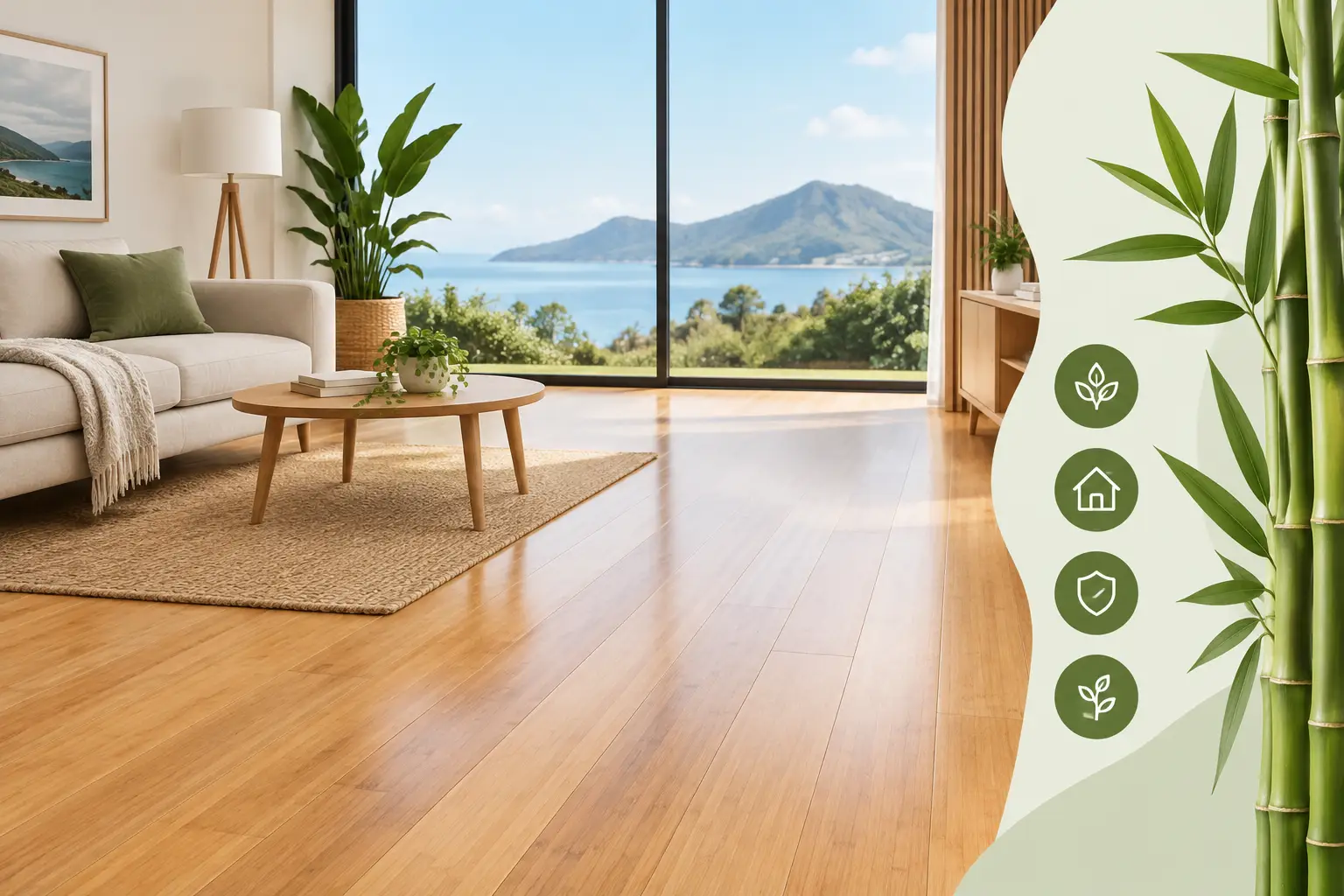
A warm floor on a cold Northland morning is hard to beat. But bamboo flooring for underfloor heating has to be specified and installed properly. Get the wrong board, underlay or temperature setting and the floor can move, gap or cup. Get the system right and you can have the comfort of radiant heat with a tough, good-looking sustainable floor built for family life.
The key is not simply asking whether bamboo can sit over underfloor heating. It can, provided the bamboo product is approved for it and the heating system is designed, commissioned and operated within the flooring manufacturer's limits. That is where proper product knowledge saves expensive repairs later.
Can bamboo flooring go over underfloor heating?
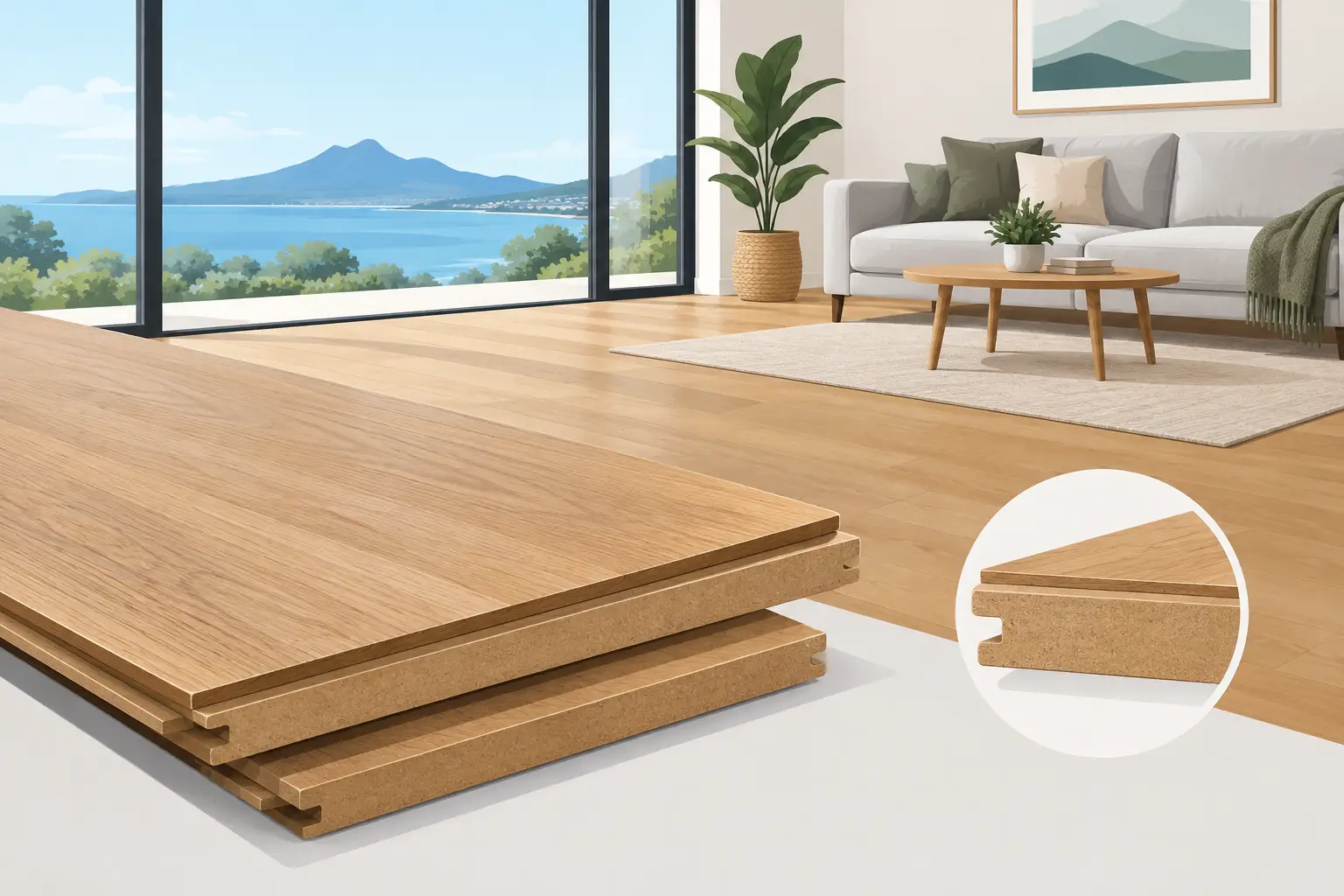
Yes, many quality engineered bamboo floors are suitable for underfloor heating. The important word is engineered. A well-made engineered construction is designed to be more dimensionally stable than a solid timber board as temperatures and humidity change through the seasons.
Bamboo is a natural material, even when it has been processed into a dense, durable flooring board. It will respond to its environment. Heat pulls moisture from the air and from the floor itself, while high humidity can cause expansion. Underfloor heating adds another variable, so the floor must be allowed to move in a controlled way.
Not every bamboo board is a safe choice. Product thickness, board construction, locking profile, adhesive system and the maximum permitted surface temperature all matter. Never assume a bamboo floor is compatible because another timber or hybrid product is. Check the written specifications for that exact product before it is ordered or installed.
For most approved bamboo systems, the finished floor surface should not exceed 27 degrees Celsius. That is a common maximum, but the product specification always takes priority. A thermostat with a floor sensor is not an optional extra here. It is what prevents hidden overheating beneath the boards.
The heating system matters as much as the floor
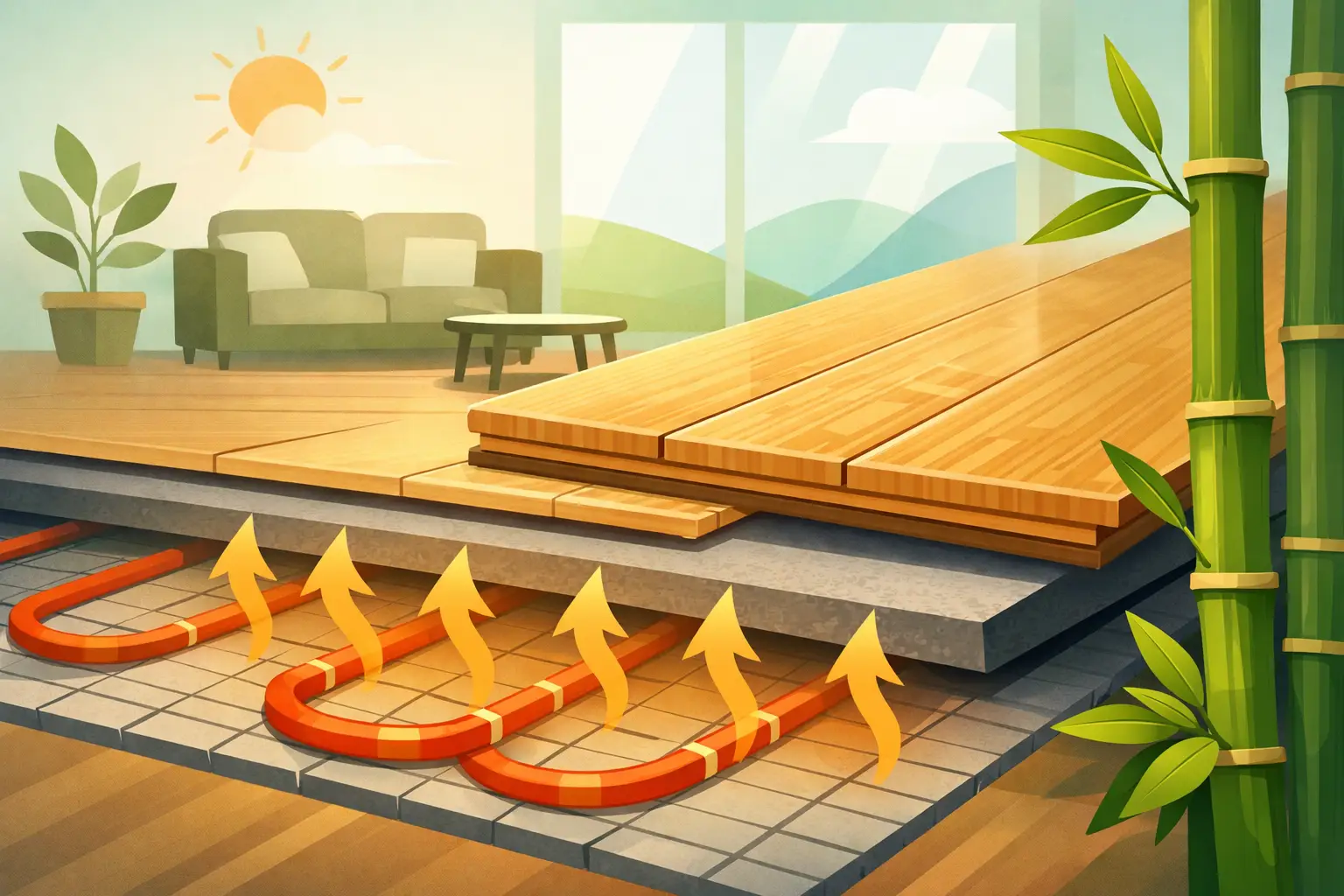
Hydronic and electric underfloor heating can both work beneath compatible bamboo flooring, but they deliver heat differently and need to be planned accordingly.
Hydronic systems circulate warm water through pipes below the floor. They are popular in new builds and major renovations because they provide even, steady heat across large spaces. When the system has been correctly commissioned, it is usually a very good match for a floating engineered bamboo floor.
Electric systems use heating cables or mats. They can be practical for smaller areas and renovations, particularly where adding water pipes is not realistic. The risk is concentrated heat if the system has been poorly designed, covered with insulating furniture, or run without accurate controls. Heat mats need to be rated for timber flooring installations, and the installer needs to follow both the heating supplier's and flooring supplier's instructions.
A floor does not like sharp temperature swings. Bring the heating up gradually, especially at the start of winter, rather than switching it straight from cold to maximum output. The same applies when turning it down. A gradual adjustment gives the bamboo time to settle rather than being forced to react overnight.
Do not trap heat under rugs and furniture
Large beanbags, thick rugs, floor mattresses and furniture with no clearance can trap heat. This creates hot spots that a thermostat positioned elsewhere may not detect. It is a common cause of localised movement and damage.
That does not mean the room has to look bare. Use rugs sensibly, avoid heavily insulated coverings over heated zones, and keep an eye on the manufacturer's guidance. In bedrooms, consider where beds sit before the heating layout is finalised. Practical planning beats finding a problem after the floor is down.
What sits beneath the bamboo floor?
The underlay is part of the heating system, not just a soft layer to walk on. It needs to provide the right balance of acoustic performance, moisture protection and low thermal resistance. If the underlay insulates too well, it slows heat transfer and makes the system work harder. If it is unsuitable for the subfloor or flooring method, moisture can become the bigger issue.
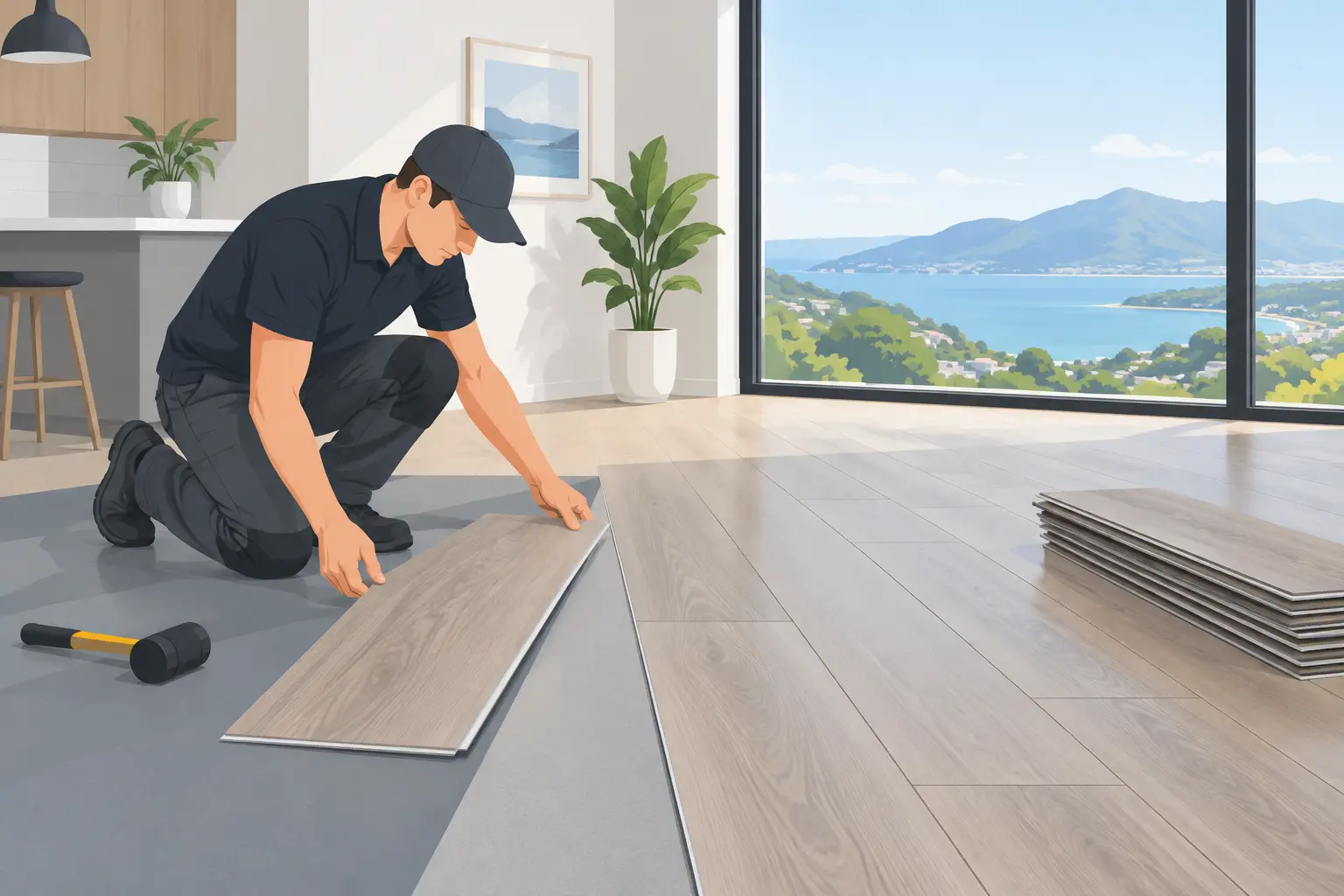
A floating bamboo floor is commonly installed over a purpose-selected underlay, with expansion space left around walls, kitchen islands, door jambs and fixed joinery. That perimeter gap is then neatly covered by skirting or trims. It is not sloppy workmanship. It is essential room for natural movement.
The subfloor must also be flat, dry and sound. Underfloor heating does not hide a poor substrate. In fact, it can magnify the consequences. A concrete slab needs proper moisture testing before installation, not a guess based on how long ago it was poured. Timber subfloors need to be secure, level and adequately ventilated.
Where the floor is being glued down, the adhesive must be specifically suitable for heated floors and applied at the correct coverage rate. A random adhesive from the shelf is not a shortcut. It can fail when exposed to repeated heating cycles.
Why acclimatisation and commissioning are non-negotiable
A beautiful floor can be ruined before the first board is clicked together if the heating schedule and site conditions have not been managed. Bamboo should acclimatise in the installation space according to the product requirements. The home should be enclosed, weather-tight and operating in normal living conditions, not still full of wet trades and open windows.
For new builds, the slab and heating system should go through a proper commissioning cycle before flooring arrives. This helps drive construction moisture out of the concrete and confirms that the heating system is operating evenly. The system is then reduced or switched off before installation, depending on the specified process, and brought back up gradually afterwards.
This is particularly relevant in Auckland and Northland homes where a project may have large glazed areas. Winter heating below and strong sun above can create a serious temperature range across one room. Dense bamboo handles daily life well, but no natural floor wants one section baking in direct sun while another is heated from below.
Good window furnishings, sensible thermostat zoning and a site assessment make a difference. If a living room has full-height north-facing glass, that is worth discussing before choosing the flooring, not after the boards have acclimatised and the furniture has arrived.
The trade-offs: comfort, efficiency and appearance
Bamboo is not automatically the best answer for every heated floor. Stone polymer composite flooring, for example, is often chosen where maximum water resistance and dimensional stability are the priority. It can be a practical option for busy entrances, kitchens and rental properties. Bamboo brings a warmer, more natural appearance and a sustainability story that many homeowners prefer, but it requires more discipline around heat and moisture.
Compared with carpet, bamboo will allow radiant heat to reach the room more effectively. Compared with tile, it feels less hard underfoot and gives living areas a more welcoming finish. It does not heat up as quickly as tile, and it should never be pushed beyond its approved temperature range. That is the honest trade-off.
For households with children, pets and busy kitchens, quality strand-woven bamboo offers impressive surface durability. It is scratch resistant in normal use, but it is not invincible. Felt pads under furniture, mats at exterior doors and prompt clean-up of spills remain part of owning any premium floor.
Questions to settle before you buy
Before selecting bamboo, confirm the heating type, the maximum floor temperature, subfloor construction and whether the chosen board is approved for the intended installation method. Ask what underlay or adhesive is required, where the floor sensor will sit, and how the heating system will be commissioned.
Also consider how the room is used. A stable, climate-controlled lounge is very different from a sun-drenched room with bi-fold doors left open through summer. The right floor is not just about a sample colour. It is about how that material will perform in your actual home.
At Trade Flooring NZ, that conversation starts with the site, not a sales pitch. A proper measure and assessment can identify heat exposure, subfloor preparation and transition details before they become surprises on installation day.
A bamboo floor over underfloor heating should feel effortless once it is finished: warm under bare feet, stable through the seasons and sharp enough to lift the whole room. The work is in getting the technical details right before the first board goes down.