A new home can have a beautiful kitchen, generous glazing and sharp joinery, then lose the effect with the wrong floor. The best flooring for new builds is not simply the product that looks good on a small sample. It must suit the way the home faces the sun, the demands of family life, the condition of the concrete slab and the standard of finish you expect on handover day.
For Northland and Auckland new builds, flooring takes more punishment than many buyers expect. Large glazed areas create serious heat exposure. Children, pets, sand, wet shoes and moving furniture test the surface from the first week. The smart choice is a floor that holds its colour, stays stable, cleans easily and is installed properly from the start.
What makes the best flooring for new builds?
Start with performance, then narrow down the look. A floor should work with your home rather than demand careful treatment from everyone living in it. That usually means considering four things at the same time: heat and sunlight, moisture, daily wear, and the construction programme.
Sun is a major consideration in modern homes. North-facing living spaces with expansive windows can become extremely hot, particularly when flooring runs right up to the glass. Some materials cope far better than others with changing temperatures and UV exposure. A floor may look perfect in a showroom but behave differently across a hot, open-plan room in January.
New concrete also needs respect. A slab can look dry while still carrying moisture that affects an unsuitable flooring system. Correct moisture testing, subfloor preparation and underlay selection are not optional extras. They are the difference between a floor that performs and one that creates trouble after you move in.
Then there is real life. If the household includes a labrador, toddlers, teenagers, dining chairs and an outdoor area that leads straight into the living room, choose accordingly. A pale, high-maintenance finish may suit a low-traffic home, but it is not always the practical winner for a busy family build.
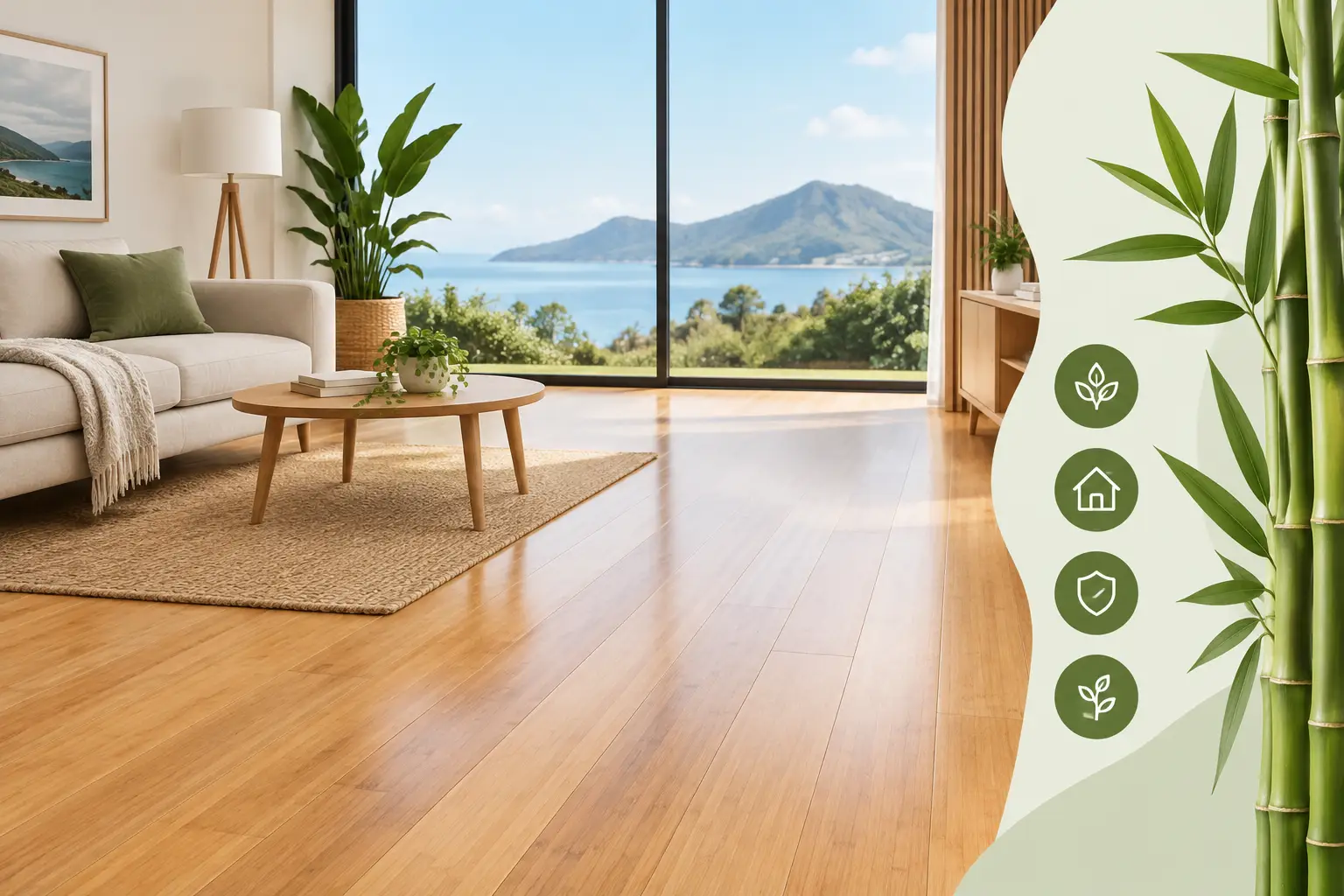
Bamboo flooring for warmth and natural character
Bamboo is a strong option when you want the warmth and visual depth of a natural floor without going down the conventional hardwood route. Quality bamboo brings a clean, contemporary look that works particularly well in open-plan homes, coastal builds and renovations where timber character matters.
Its sustainability credentials are a genuine advantage. Bamboo is fast-growing, giving homeowners a more considered material choice without compromising on a premium finish. It also provides the solid feel underfoot that many people want in main living areas, bedrooms and hallways.
That said, bamboo is not a one-size-fits-all answer. Like any natural-based flooring product, it needs the right site conditions, correct expansion allowances and experienced installation. Homes with intense direct sun through large areas of glazing need careful product selection and design advice. This is where technical knowledge matters more than a quick sale.
For the right new build, bamboo delivers a floor with presence. It feels less manufactured than many alternatives and gives a home a finish that is hard to replicate with a printed surface. If you value natural texture, warmth and a sustainably minded choice, it deserves a close look.
Where bamboo works best
Bamboo is often at its best in living rooms, bedrooms, dining spaces and corridors where you want a continuous timber-style finish. It can also be a good choice for homeowners who are prepared to use sensible entry mats, felt protection under furniture and regular cleaning rather than treating the floor as indestructible.
SPC flooring for hard-working family homes
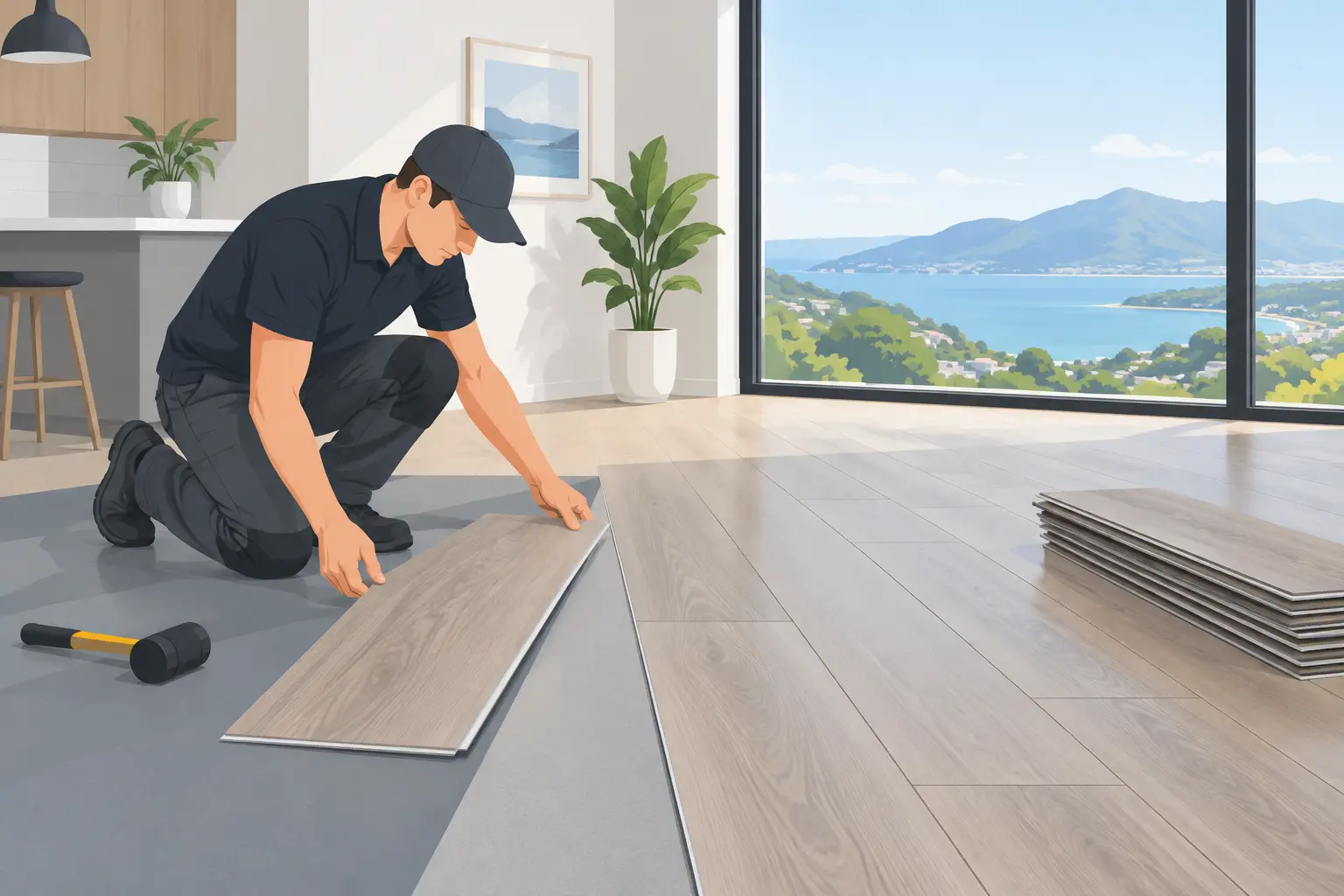
Stone polymer composite, commonly called SPC flooring, has become a leading choice for new builds because it is practical without looking cheap. A quality SPC floor is stable, durable and well suited to households where spills, paws and daily traffic are part of the deal.
DualCore® SPC flooring is particularly useful where heat exposure, moisture resistance and quick installation are high priorities. It is a smart contender for kitchens, open-plan living areas, entrances and rental or renovation projects where you need a tough finish that still looks sharp. The right plank design can deliver convincing timber visuals with a more forgiving day-to-day surface.
SPC also suits the realities of a build schedule. It can be installed efficiently once the site is ready, helping avoid unnecessary delays at the final stages. Unlike some flooring options, it does not demand a long wait before normal use. That matters when appliances, furniture removals and handover dates are all competing for space.
The trade-off is feel. SPC does not have the same natural depth as bamboo, and not all SPC products are equal. Cheap boards can look flat, sound hollow or have limited resistance where it counts. The underlay, locking system, plank thickness and wear layer all matter. A good composite floor should be selected as a system, not bought as a box of boards based on colour alone.
Best rooms for SPC
For many new-build families, SPC makes sense across kitchens, dining areas, living rooms, hallways and bedrooms. It is especially practical if children move freely between the garden and the house, or if pets are part of the household. It is scratch resistant, paw-tested in the real-world sense, easy to maintain and built for a home that gets used.
MFB flooring when stability is the priority
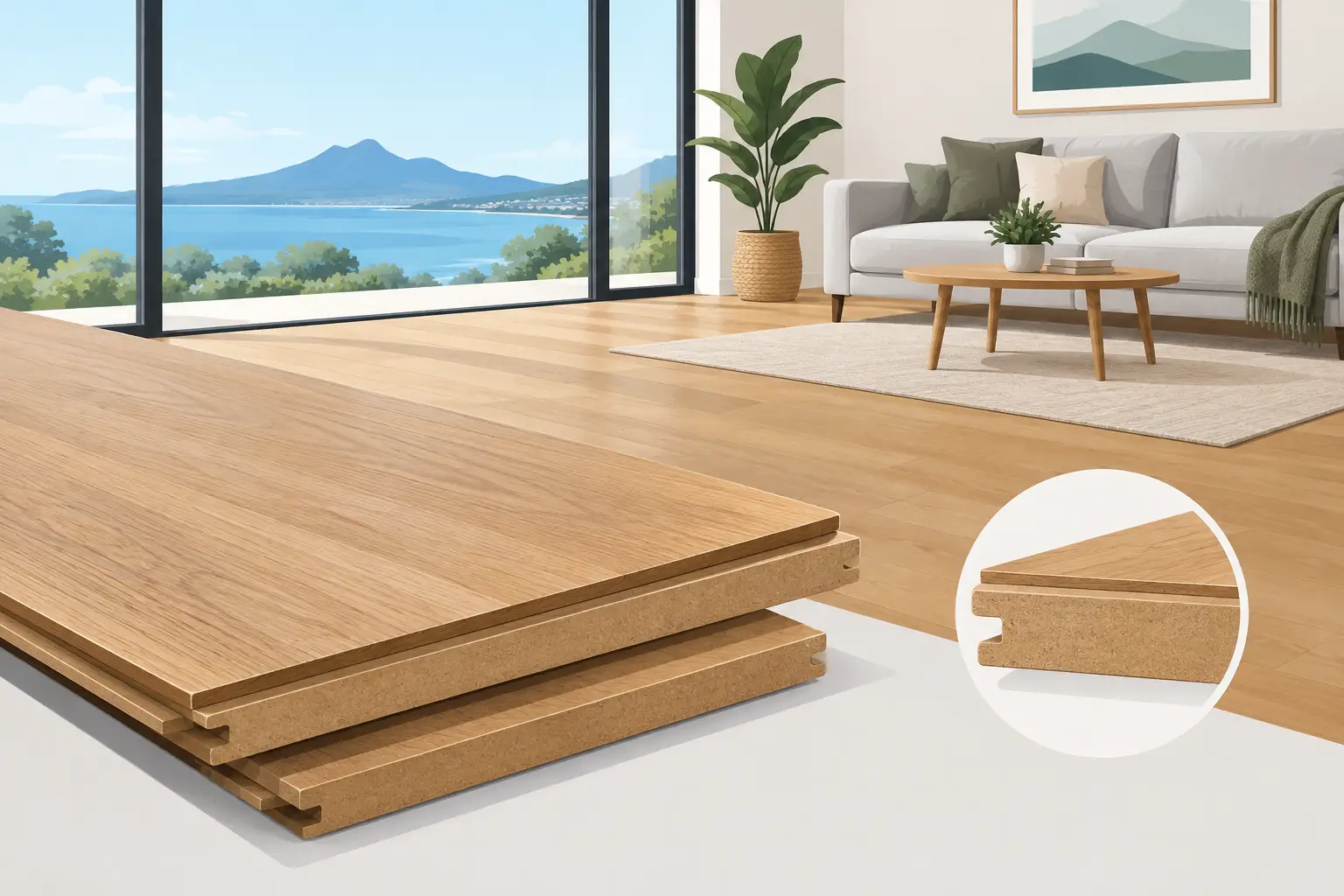
DualCore® MFB flooring offers another advanced composite option for homeowners who want a refined timber-look floor with strong stability. It can be a very good fit in new builds where the desired look is more architectural and the homeowner wants performance that stands up to changing conditions.
The right MFB selection can provide a premium visual finish while remaining practical for modern living. As with SPC, the important conversation is not just about colour. It is about where the floor will go, what sits beneath it, how much sun reaches it and what transition details are required between rooms.
This is also where a free on-site measure earns its place. Plans are useful, but they do not always reveal the full story. Floor levels, window orientation, slab condition, joinery details and the route between indoor and outdoor spaces all affect the final recommendation.
Do not leave flooring until the last minute
Flooring is often treated as a late-stage decision, after kitchens, paint colours and bathroom tiles are locked in. That is how homeowners end up choosing from whatever is available immediately, rather than choosing what is right for the home.
Bring flooring into the conversation early enough to coordinate colour, plank direction, room transitions and skirting details. If you want flooring beneath kitchen cabinetry or prefer it to finish cleanly against the cabinetry toe-kick, that decision needs to be made before installation. The same applies to island benches, sliding doors, stair nosings and aluminium trims.
A proper site assessment should confirm the finished floor heights and identify where levelling or preparation is required. Skipping this work may save money on paper, but it can lead to poor transitions, movement, visible gaps or a floor that does not sit as it should.
Value is more than the square-metre price
New-build budgets are under pressure, and flooring is an easy place for builders or homeowners to accept a lower-grade option. That can be false economy. The cheapest quote may exclude preparation, underlay, trims, delivery, moisture checks or the installation detail needed around doorways and glazing.
A better comparison looks at the complete installed result. Ask what product is being supplied, what preparation is included, how the floor will handle heat and moisture, and who is accountable if something is not right. One specialist who measures, advises, supplies and installs has a clear reason to get every part of the job right.
Trade Flooring NZ works this way: direct-import pricing, permanent stock availability and one experienced point of contact from product selection through to final installation. No costly showroom. No unnecessary middlemen. Just the right floor, fitted to the point of perfection.
Choose for the life you will live in the house
The floor you choose should suit the home after the builders have left, not just impress during the first walkthrough. Think about bare feet on a winter morning, sun across the living room, dogs racing in from outside and chairs being pulled back from the dining table every day. Choose a material that can handle that life, then make sure it is measured, prepared and installed with the same care that went into building the home.