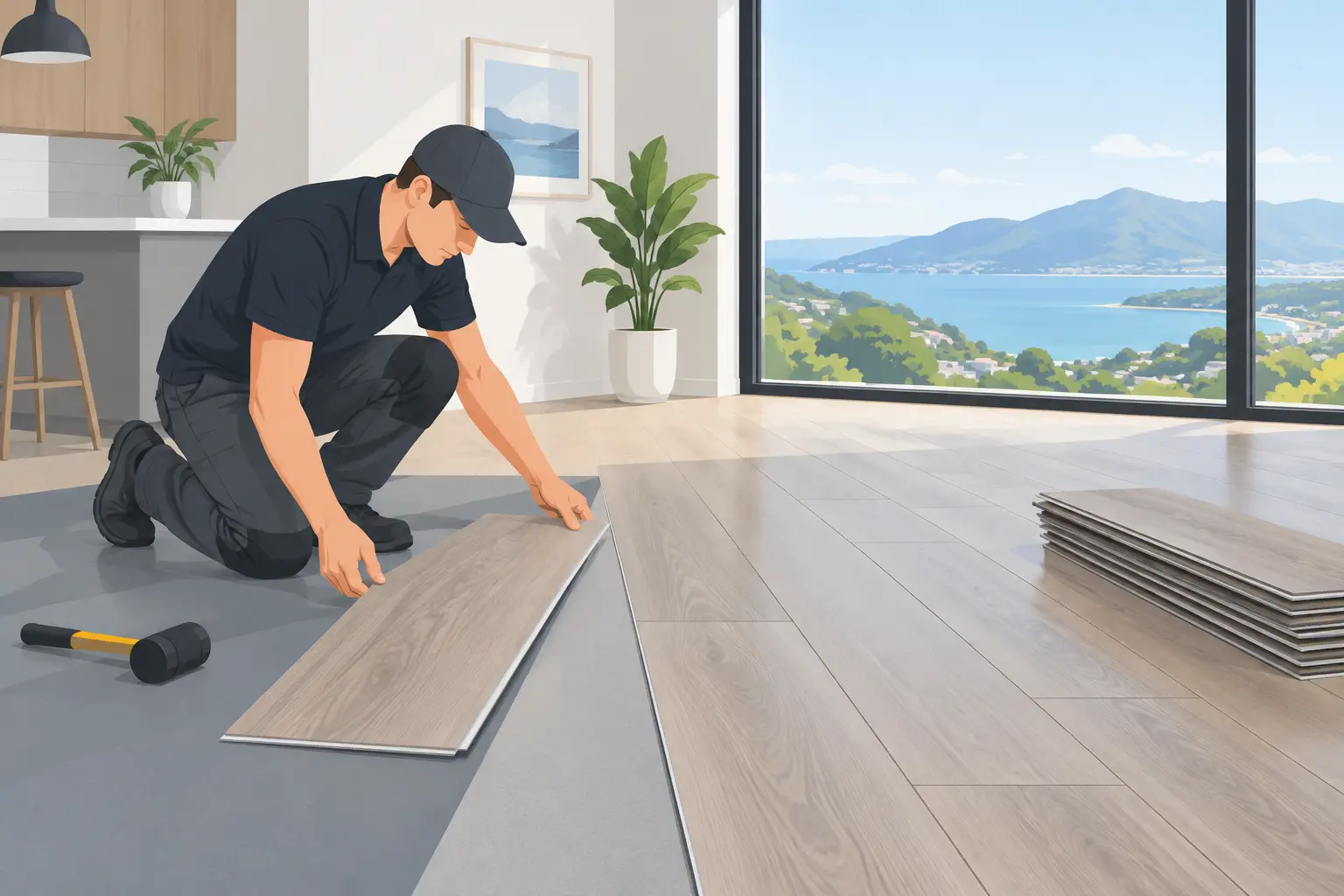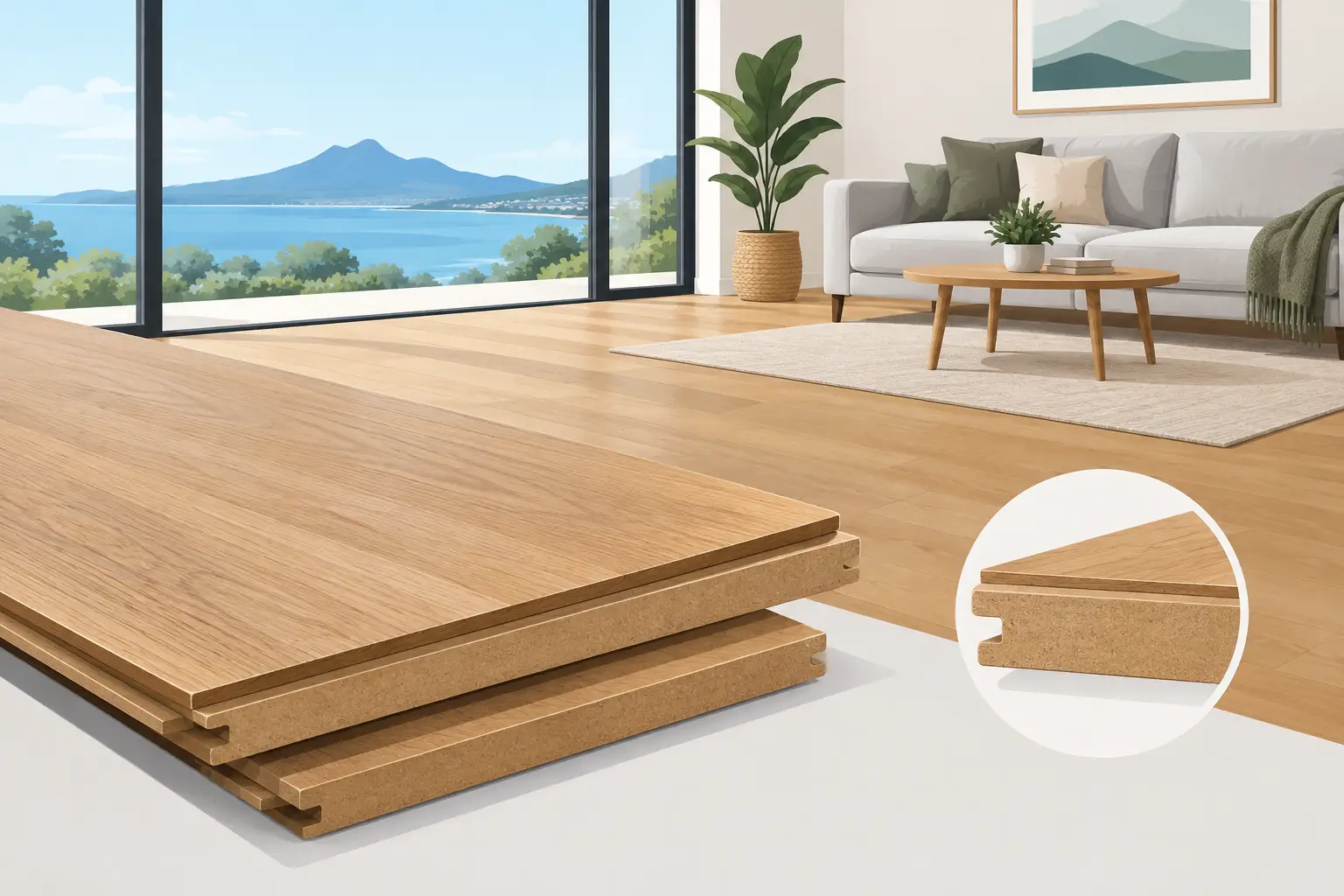

A new floor can look like a simple line item on a renovation quote - until retail margins, freight mark-ups, showroom costs and installation extras start appearing. Direct importer flooring savings change that equation. By buying from the importer rather than through a conventional retail chain, Northland and Auckland homeowners can commonly save around $20 per square metre without settling for a lesser floor or taking on the installation risk themselves.
That matters on a real project. Across a 100m² renovation, $20 per m² is roughly $2,000 that can stay in the budget for appliances, painting, landscaping or simply a better-quality finished floor. The point is not to buy cheap flooring. It is to stop paying for costs that do not improve what goes under your feet.
Where direct importer flooring savings come from
A standard flooring supply chain has plenty of hands in it. A manufacturer sells to an importer, who sells to a distributor or retailer, who operates a showroom and pays sales staff, rent, display costs and advertising. Each layer needs a margin. By the time the flooring reaches your home, the price can have little to do with the material itself.
A direct-import model cuts out much of that layering. Product is sourced, held in local stock and supplied directly to the customer. There is no costly showroom network to fund and no unnecessary middlemen taking a slice before the floor gets to site.
That does not mean there is no service behind the price. In fact, the best value comes when the same flooring specialist can advise on the product, measure the site, prepare a clear quote and install it properly. You get a direct answer from someone who understands both the box of flooring and the conditions it will face in your home.
Low price is not the same as real value
There is a difference between importer pricing and bargain-bin flooring. A low upfront price can become expensive fast if boards move, edges lift, joins open, the surface marks easily, or the floor struggles with sun and temperature changes.
For homes across Whangarei, the North Shore, Auckland and wider Northland, heat through large glazed areas is a practical consideration, not a sales detail. A floor near stacker doors or a north-facing window can deal with much more movement and heat than a shaded bedroom. Product choice, expansion allowances, subfloor preparation and installation method all need to suit that reality.
This is why material selection should come before colour selection. Colour matters, of course, but it should be chosen from products that are right for the household and the site. A busy family with a dog has different priorities from a couple renovating a low-traffic apartment. A new build with big glass and open-plan living needs a different conversation again.
Choose the floor for how you live
Bamboo and advanced composite floors can both offer excellent results, but they are not interchangeable. The right answer depends on the room, the subfloor, the amount of sunlight, moisture exposure and how hard the household is on its floors.
Bamboo for natural warmth and sustainable appeal
Premium bamboo flooring gives a home a natural, finished feel that works especially well in living spaces, hallways and bedrooms. It is a strong option for homeowners who want genuine material character along with a sustainability story that makes sense. Bamboo is fast-growing and, when properly manufactured and installed, provides a durable floor with visual depth that printed products cannot fully copy.
Like any timber-based floor, bamboo needs the correct site assessment. Moisture levels, flatness and expansion space are not optional details. If a product is installed against unsuitable conditions, even a premium floor can disappoint. Proper preparation protects the investment and keeps the finish looking sharp.
DualCore® composite flooring for demanding homes
DualCore® stone polymer composite, or SPC, flooring is built for practical living. It is stable, water-resistant and well suited to households with children, pets and busy daily traffic. It can be a sensible choice for kitchens, entry areas and open-plan spaces where muddy shoes, paws and spills are part of normal life.
DualCore® MFB flooring adds another advanced composite option for projects needing a tough, attractive floor with strong everyday performance. The exact product still needs to match the site. Not every composite floor is equal, and the underlay, trim details and installation system matter just as much as the boards themselves.
A good flooring recommendation should be specific. It should account for whether you are replacing carpet, laying over an existing surface where suitable, working around cabinetry, or coordinating the floor with a renovation schedule. Generic showroom advice is rarely enough when the final result is meant to last.
The savings can disappear when installation is treated as an afterthought
Buying flooring direct is only smart if the project is measured, specified and installed correctly. Flooring is not a product you simply click together and forget. The subfloor must be checked for flatness, moisture and soundness. Door jambs, perimeter gaps, transitions to tile or carpet, stair details and aluminium trims all need a plan before boards start going down.
This is where DIY or supply-only pricing sometimes stops being cheap. A small mistake at the start can affect every row that follows. An uneven subfloor can leave movement or hollow spots. The wrong expansion allowance can cause pressure at the edges. Poorly finished transitions can make a new floor look unfinished, even when the material itself is excellent.
Professional installation gives you a cleaner result and clearer accountability. At Trade Flooring NZ Ltd, the process includes advice, samples, viewing by appointment, a free on-site measure and quote, design support, supply and precision installation. One specialist stays across the technical details from the first conversation through to the final trim, backed by a 12-month installation warranty.
What to compare before accepting a flooring quote
When two quotes look far apart, compare the full scope rather than the headline square-metre rate. Ask whether the price includes underlay, moisture barrier requirements, trims, delivery, floor preparation, furniture moving where needed, removal of existing flooring and installation. Also check whether there is stock available locally or whether your project depends on an uncertain shipment date.
It is worth checking the product specification too. Wear layer, core construction, locking profile, warranty terms and suitability for your space all affect long-term value. A cheaper board with a weaker locking system or poor heat stability can cost more later if it needs repair or replacement.
The strongest quote is not necessarily the lowest one. It is the one that makes clear what floor you are getting, how it will be installed and who is responsible for the finish. No vague allowances. No surprise extras after the old floor comes up.
Direct supply also means faster decisions on site
Renovations rarely run exactly to plan. A builder may bring a date forward, another trade may delay access, or an existing floor may reveal a levelling issue once removed. Permanent local stock and an owner-operated service make these changes easier to manage than a process built around retail ordering and call-centre handovers.
That responsiveness matters for builders and renovators as much as homeowners. A reliable flooring partner can inspect the site, flag risks early and coordinate a practical installation date. The goal is straightforward: get the right material down properly, without holding up the rest of the job.
Direct importer flooring savings are most useful when they buy you confidence as well as a better price. Put the saved money towards the floor that suits your home, insist on a proper site assessment, and choose workmanship that leaves every edge, join and transition finished to the point of perfection.