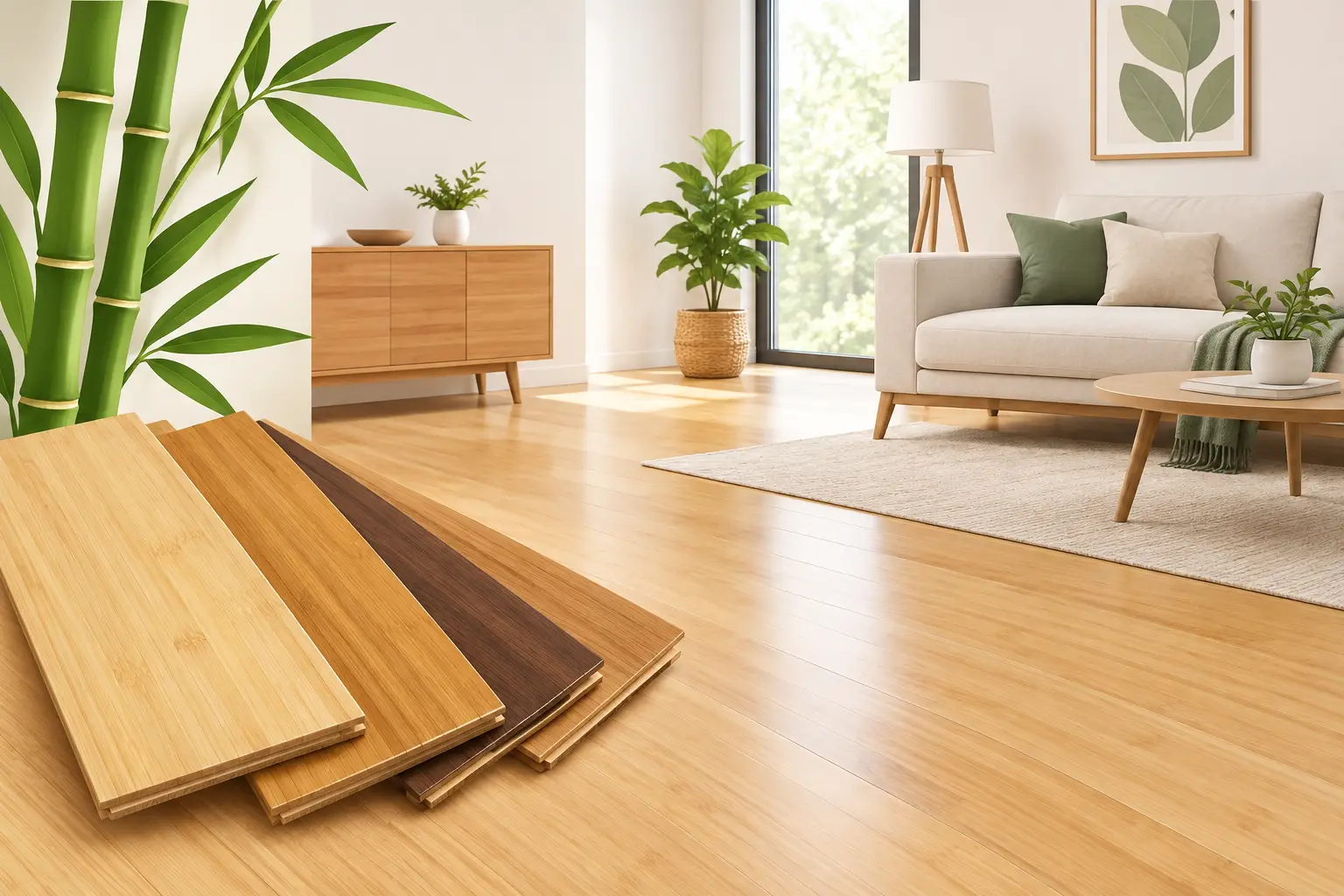
A bamboo floor can look outstanding on a sample board and still be the wrong choice for your home. The difference usually comes down to what is underneath it, how it is made, where it will be installed and who is responsible for the final finish. If you are working out how to choose bamboo flooring, start with your room conditions and lifestyle - not the cheapest square-metre price.
For Auckland and Northland homes, flooring needs to deal with real life: wet shoes at the entry, kids, pets, open-plan living, big sliders and strong sun pouring through glazed areas. Good bamboo can handle a busy household beautifully. The right product, prepared subfloor and accurate installation are what make that happen.
How to choose bamboo flooring for your lifestyle
Bamboo is a fast-growing grass, not timber, but quality bamboo flooring is engineered into a dense, stable board. It offers a clean, contemporary timber look with a strong sustainability story. That does not mean every bamboo board performs the same way.
Start by being honest about how the room is used. A quiet upstairs bedroom has very different demands from a kitchen, living area and hallway shared by children, dogs and visitors. Consider foot traffic, direct sunlight, the chance of spills and whether you want a floor that hides everyday marks or shows every speck of dust.
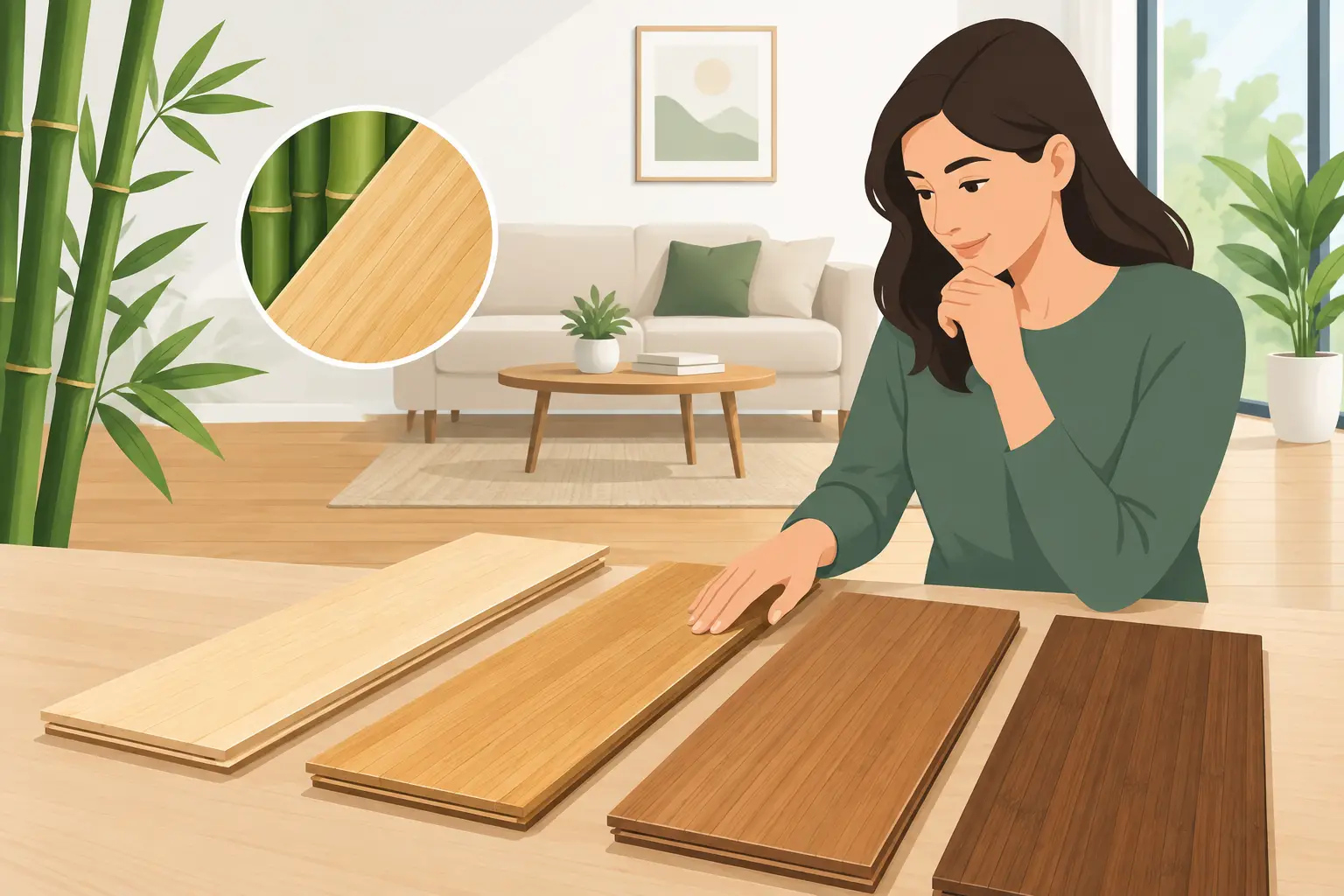
Colour matters here as much as style. Pale natural tones can make a compact room feel more open, while deeper colours bring warmth and contrast. Mid-tone boards are often the most forgiving in family homes. Very dark flooring can show dust, pet hair and light scratches more readily. Very pale flooring may show muddy footprints. There is no universal best colour - there is only the colour that suits the way you live.
Take a proper sample home and view it morning, midday and evening. A showroom light, or a mobile photo, will not tell you how the floor will look beside your cabinetry, wall colour and existing furnishings.
Check the construction, not just the surface
A bamboo floor should be judged from the bottom up. Ask what the board core is made from, how the bamboo layer is constructed, what finish protects it and whether the locking profile is designed for a floating installation or the product is intended to be glued down.
Strand-woven bamboo is commonly chosen for its density and distinctive grain pattern. It is made by compressing bamboo strands under heat and pressure, producing a tougher, more consistent material than basic horizontal or vertical bamboo constructions. That density is useful in active homes, but hardness alone does not guarantee a better floor. Board stability, coating quality and installation method still matter.
Look closely at the coating system. A quality factory-applied finish is your first defence against normal scuffing, minor spills and household wear. Ask how the surface should be cleaned, whether it can be recoated later, and what is excluded from the product warranty. A floor described as scratch resistant is not scratch proof. Grit dragged in from outside, furniture legs without felt protectors and dog claws can mark any hard surface over time.
Board dimensions deserve attention too. Wider, longer boards can make a large open room feel calmer and more premium, with fewer visible joins. They also demand a flatter, drier subfloor and more careful planning. Cheap boards with inconsistent milling can create gaps, noisy movement or difficult joins before the floor has even had a chance to settle.
Match the floor to heat, moisture and sunlight
This is where expert advice can save a costly redo. North-facing rooms, large glazed walls and conservatory-style spaces can build serious heat. That heat affects not only the surface temperature underfoot but also how flooring expands and contracts.
Before selecting bamboo, assess the room’s solar exposure. Window coverings, low-E glazing, ventilation and the product’s stated temperature limits all influence the right decision. Some rooms may be perfectly suitable for bamboo with sensible sun management. Others may be better served by a high-performance composite floor designed for more extreme heat and moisture conditions.
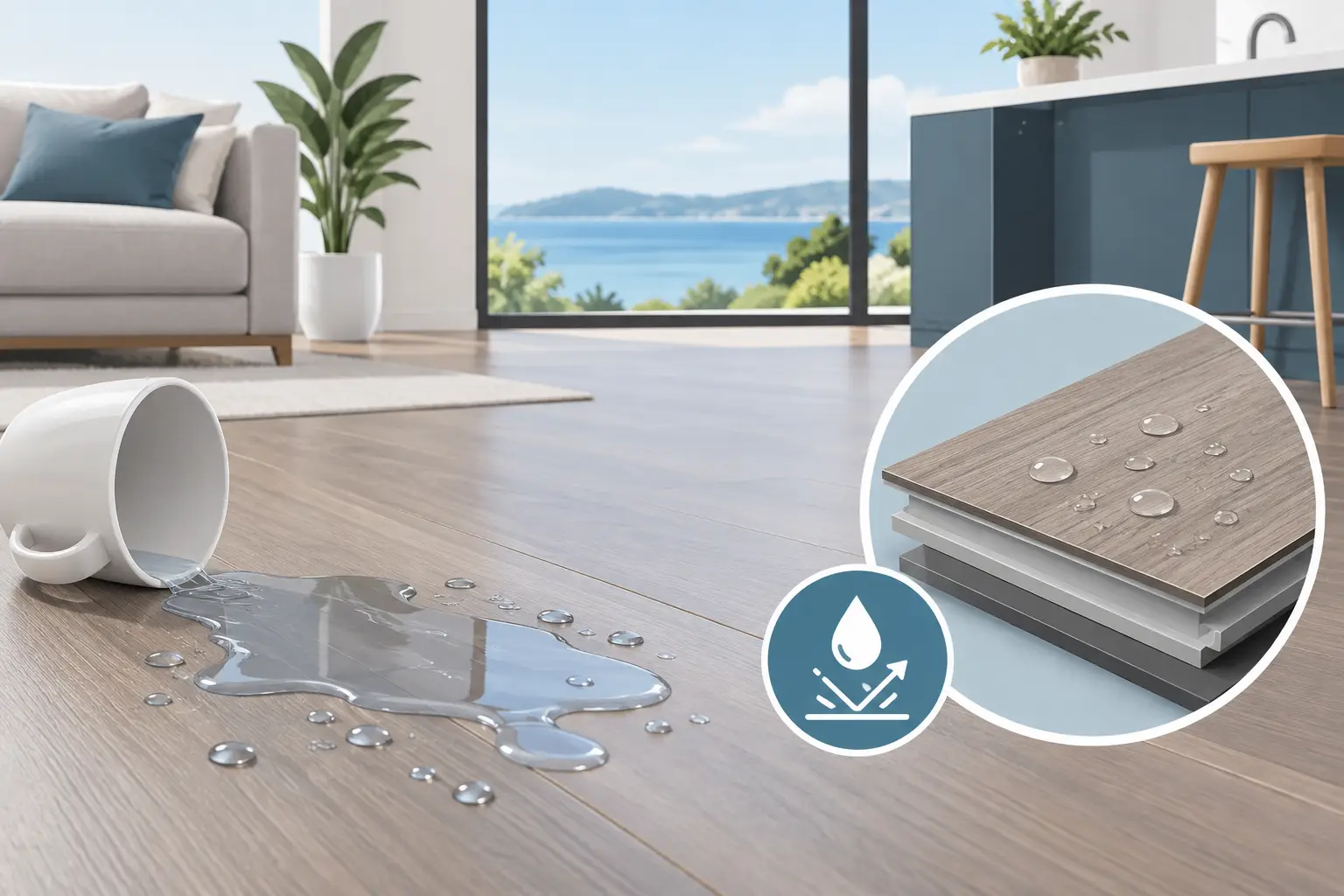
Bamboo is suitable for many dry interior spaces, including living rooms, bedrooms, hallways and dining areas. Kitchens can work well when spills are cleaned promptly and the installation is properly detailed. Bathrooms, laundries and areas exposed to frequent standing water are a different proposition. Do not assume a water-resistant coating turns a bamboo board into a waterproof floor.
Moisture below the floor is just as important as water above it. Concrete slabs need moisture testing before installation. Timber subfloors need to be checked for ventilation, movement and flatness. Skipping this stage is false economy. Excess moisture can lead to cupping, swelling, joint movement and warranty problems, regardless of how good the boards are.
Decide whether the installation method suits the site
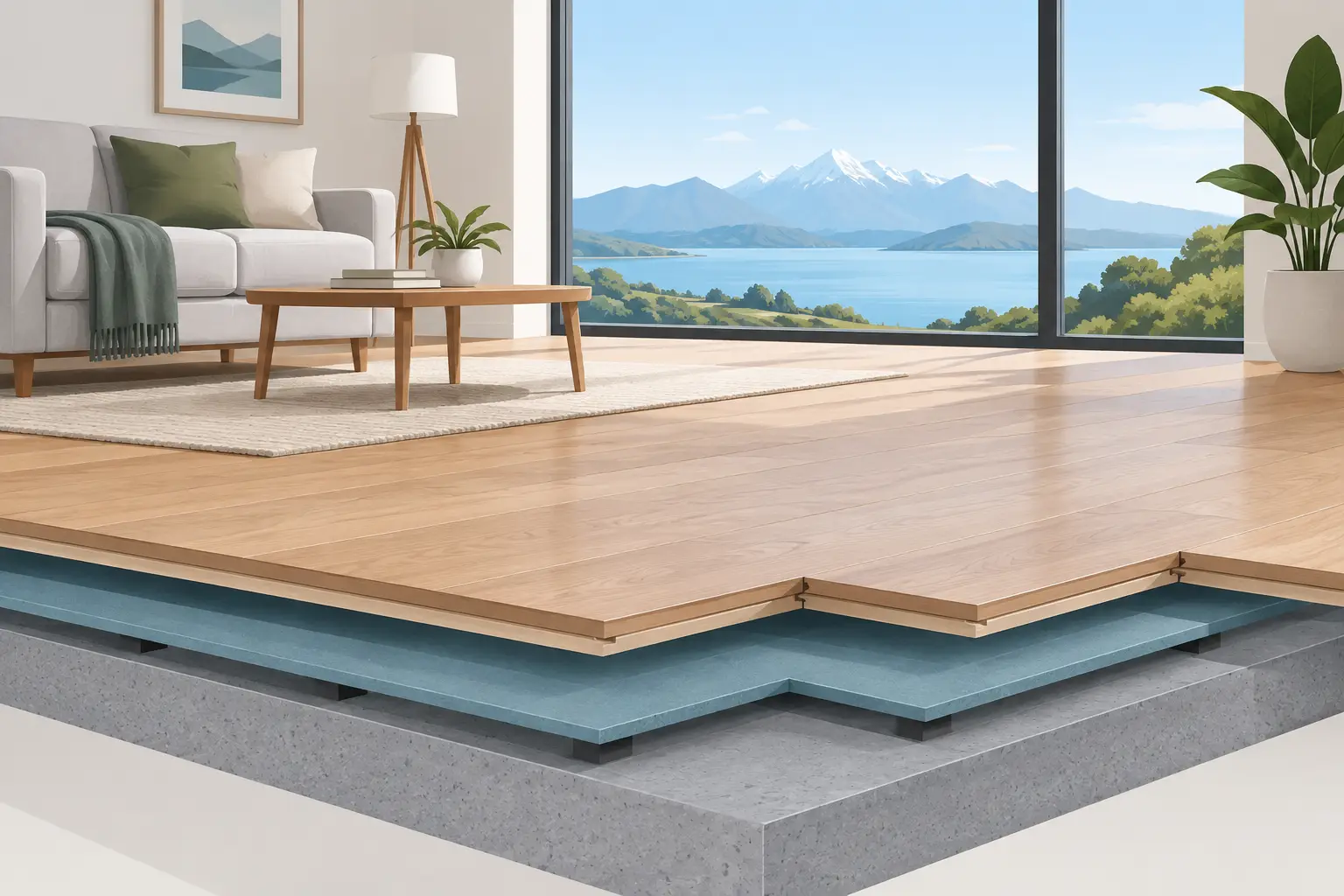
Floating floors are popular because they are efficient to install and do not require every board to be fixed directly to the subfloor. The boards lock together over a suitable underlay, leaving an expansion gap at walls and fixed objects. This allows for normal seasonal movement and can make future access easier.
The quality of the underlay is not an afterthought. It can assist with sound reduction, minor subfloor variation and moisture management where appropriate. The wrong underlay, or no proper vapour barrier on a slab where one is required, can undermine an otherwise good flooring choice.
A glued-down installation can provide a more solid feel underfoot and may suit particular products or site conditions. It is also less forgiving of subfloor issues and requires the correct adhesive, surface preparation and installer experience. Neither method is automatically superior. The correct method depends on the bamboo product, the substrate and the performance you expect.
Expansion gaps, transition trims, door clearances and the sequence of other trades all need planning. Flooring should not be squeezed tight against walls, kitchen islands or heavy fixed cabinetry. Those small technical details are what separate a tidy installation from a floor that starts complaining after its first hot summer.
Compare value over the full job
A low box price is not the full cost of a floor. Compare like for like: boards, underlay, trims, moisture preparation, removal of existing flooring, furniture moving, delivery and installation. Then compare the product specification and warranty conditions.
Direct-import pricing can make premium flooring far more attainable, but only if the supplier has permanent stock, understands the product and can stand behind the installation. A bargain becomes expensive quickly if extra packs cannot be matched later, the installer has not checked the slab, or problems are passed between a retailer, contractor and manufacturer.
Ask who will measure the site, who will identify risks, who is fitting the floor and who will return if something needs attention. One accountable specialist is worth more than a chain of excuses. At Trade Flooring NZ, that practical responsibility runs from product advice and site measure through to the final trims and installation warranty.
Questions worth asking before you order
Ask for the board’s construction and finish specification, its recommended installation method, its suitability around sun-exposed glazing and the required subfloor moisture limits. Confirm how much extra material is allowed for cuts and waste, particularly in rooms with angled walls, fireplaces or multiple doorways.
Also ask what daily care actually involves. Most bamboo floors are best maintained with regular vacuuming or sweeping using a soft attachment, prompt cleanup of spills and a cleaner approved for the finish. Avoid soaking the floor, steam mops unless the manufacturer explicitly permits them, and harsh products that leave residue or damage the coating.
Finally, inspect installed examples where possible. Samples show colour. Completed rooms show board variation, joins, transitions and the overall effect at scale.
The best bamboo flooring is not the one with the loudest hardness claim or the lowest advertised price. It is the board that suits your home’s light, moisture, traffic and design - installed on a properly prepared subfloor by someone prepared to get every detail right. Choose that combination, and your floor will keep earning its place long after the renovation dust is gone.