A bamboo floor can look outstanding in a Northland villa, a modern Auckland build or a busy family home - but only when the board suits the room, the subfloor and the way you actually live. Knowing how to choose bamboo floorboards means looking beyond a sample’s colour. Construction, finish, sunlight, moisture and installation details will decide whether your floor still looks sharp years from now.
Bamboo is a strong sustainable choice, with a clean, contemporary grain and excellent durability in the right specification. It is not one generic product, though. Board quality and installation planning vary widely, and cheap shortcuts tend to show up after the installers have left.
Start with the way your home is used
Before choosing a colour, consider the traffic your floor will carry. A quiet upstairs bedroom has very different demands from an open-plan kitchen where children, pets, dining chairs and wet shoes all meet. Bamboo works well in living areas, bedrooms, hallways and many kitchens, provided spills are wiped up promptly and the floor is installed correctly.
For active family homes, look for a high-density bamboo product with a tough factory-applied coating. Strand-woven bamboo is generally the strongest option because the bamboo fibres are compressed under high pressure and bonded together. It has a more uniform, modern appearance than traditional bamboo styles and handles everyday knocks well.
That does not mean it is indestructible. Grit under shoes, dragged furniture and sharp pet claws can mark any hard floor. A good floor is only part of the answer. Entry mats, felt pads under furniture and sensible cleaning protect the finish far better than any sales claim about being “scratch proof”.
Choose the right bamboo board construction
The construction under the surface matters as much as the surface itself. When comparing bamboo floorboards, ask exactly what you are buying rather than relying on broad labels.
Strand-woven bamboo for hard-working spaces
Strand-woven bamboo is the practical choice for most busy homes. It is dense, stable when properly manufactured and available in a broad range of natural, light, smoked and darker tones. Its density gives it strong resistance to dents and everyday wear, making it a sensible option for hallways, lounges and family areas.
Quality is critical. A well-made strand-woven board uses reliable bonding, controlled manufacturing and a durable finish. A poor-quality board may look similar in a small sample but can be more prone to movement, coating failure or joint issues over time.
Horizontal and vertical bamboo for a different look
Horizontal bamboo shows the recognisable nodes of the bamboo stalk, creating a more traditional, patterned appearance. Vertical bamboo has finer, straighter lines. Both can be attractive, but they are usually selected for visual character rather than maximum density.
If durability is your first priority, strand-woven is normally the better place to start. If you are fitting out a low-traffic room and want visible bamboo character, horizontal or vertical styles may suit the design better. There is no universal winner - it depends on where the boards are going.
Solid versus engineered options
Solid bamboo is made through its full thickness from compressed bamboo material. It can offer a substantial feel and is often suitable for traditional timber-flooring installation methods, depending on the specific product and subfloor.
Engineered bamboo combines a bamboo wear layer with a stable core. This can be a useful choice where dimensional stability is especially important. Do not assume one is automatically superior. The correct decision depends on the board specification, the subfloor moisture reading, room conditions and whether the floor is being floated, glued or fixed down.
Look at the finish, not just the colour
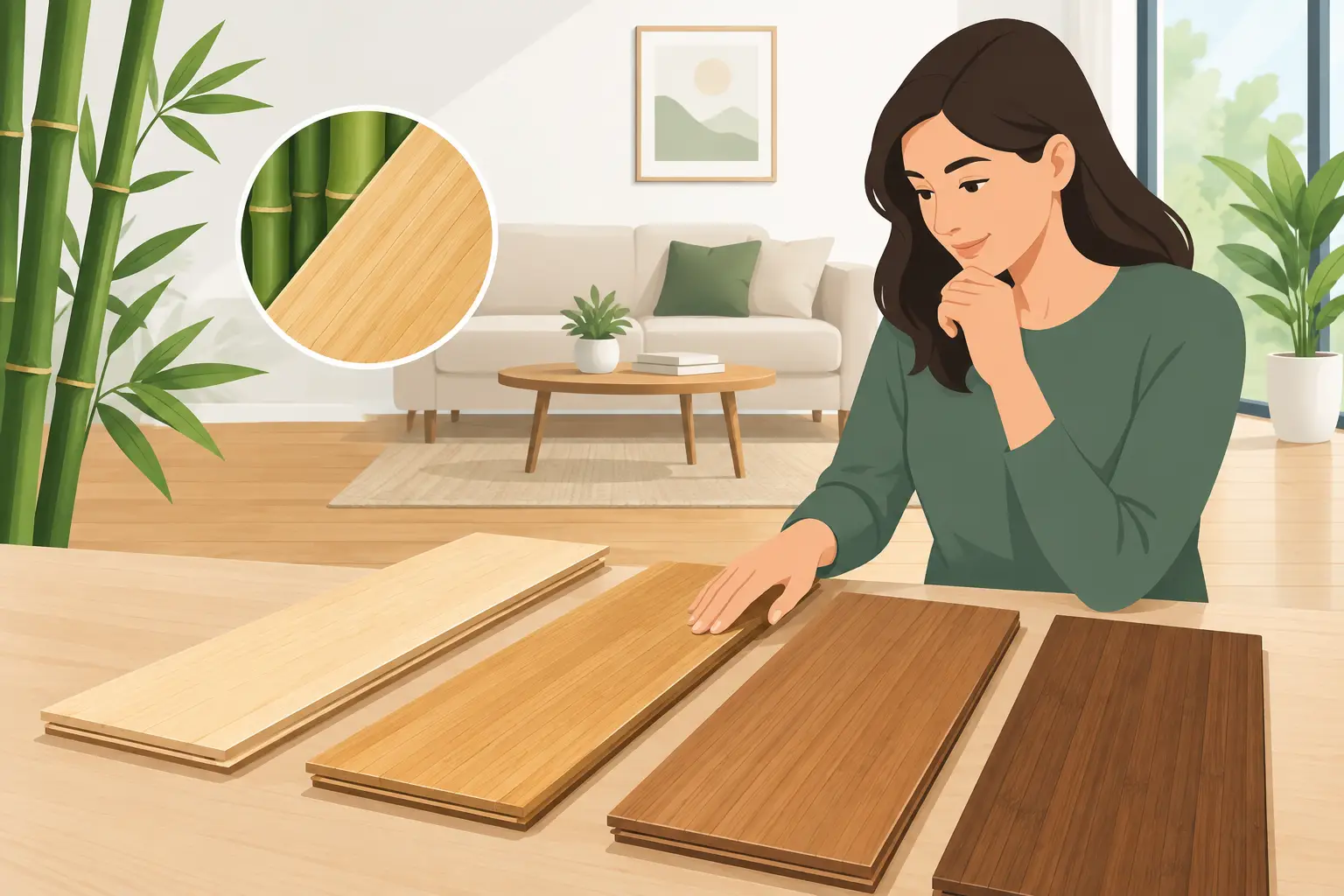
Flooring samples can be misleading under showroom lights or on a kitchen bench. Take samples into the actual room and look at them morning, midday and evening. North-facing windows, warm artificial lighting and surrounding wall colours can all change the way bamboo reads.
Natural bamboo has a lighter, warmer tone that keeps spaces open. Smoked or carbonised bamboo offers a richer caramel colour, while darker stains can add contrast and suit more dramatic interiors. Keep in mind that very dark floors tend to show pale dust and pet hair more readily, while very pale floors can make dark debris more obvious. Mid-tones are often the most forgiving for a busy household.
Also inspect the sheen. A high-gloss finish can look smart when new, but it generally highlights scuffs, smears and surface scratches. Matte and satin finishes are usually easier to live with, particularly with children and pets. They give a more natural look and disguise the small signs of daily use better.
Ask what protective coating is used and how it should be maintained. A quality prefinished board saves finishing work on site and gives more consistent coverage, but it still needs the right cleaner. Steam mops, harsh chemicals and excessive water are not the answer for bamboo floors.
Be realistic about water, moisture and kitchens
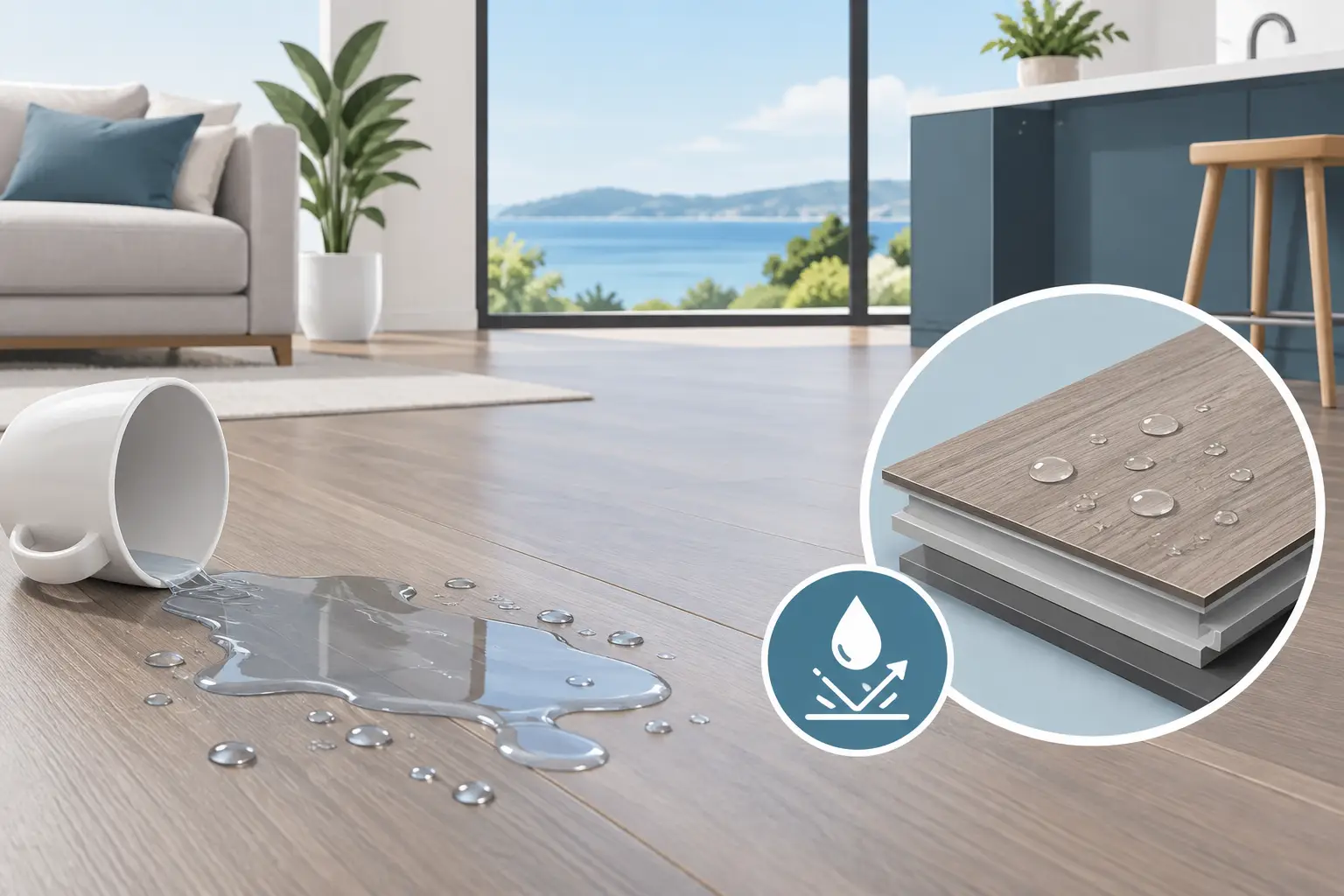
Bamboo is more moisture-resistant than many people expect, but it is not a waterproof floor. Water sitting on joins can work its way into vulnerable areas, especially if spills are left unattended. For kitchens, bamboo can perform very well with normal care, a stable subfloor and a good installation detail around cabinetry and doorways.
Bathrooms, laundries and areas with regular standing water need more caution. In these locations, a waterproof composite floor may be the smarter choice. This is not about talking you out of bamboo. It is about putting the right material in the right room and avoiding an expensive mistake.
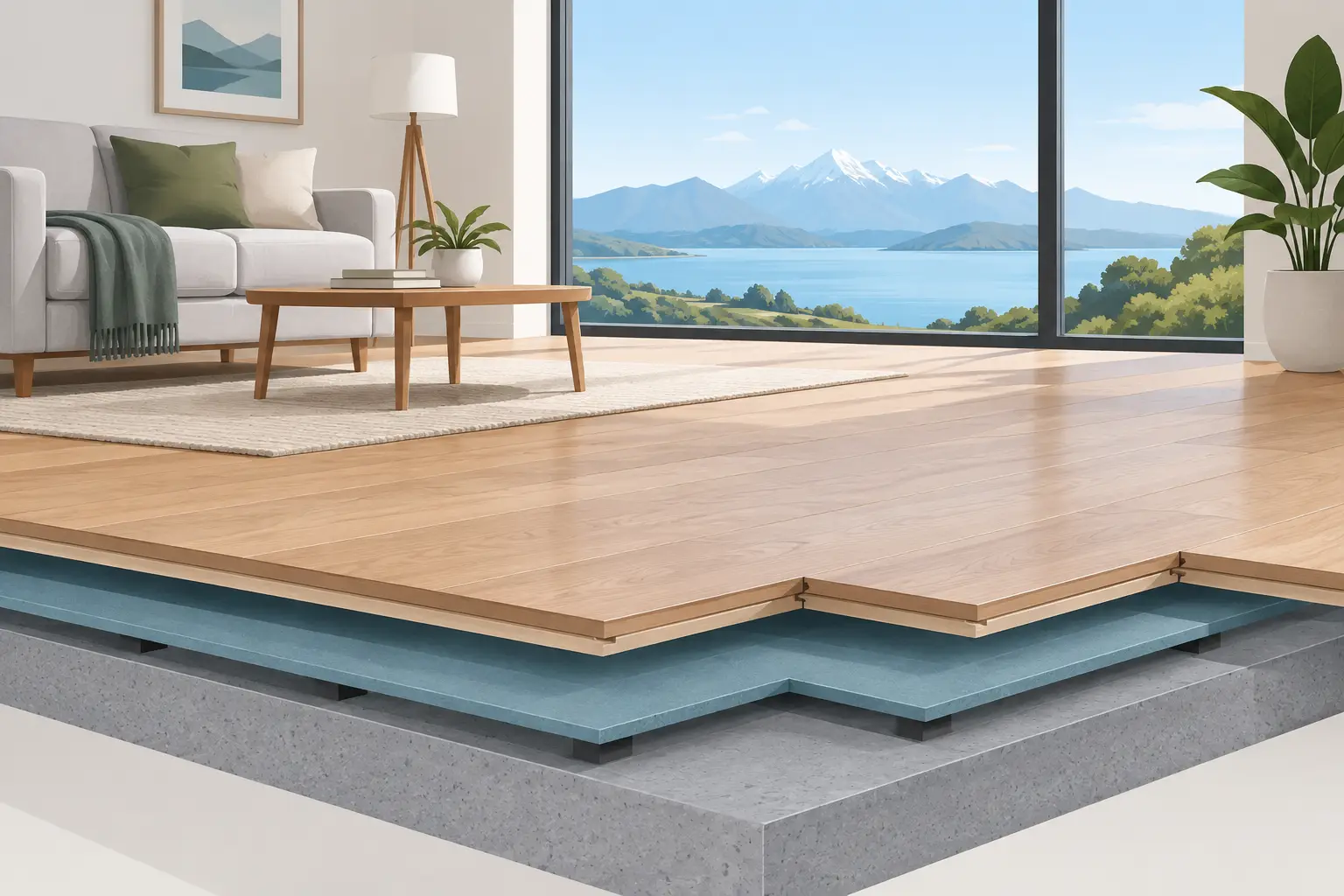
Moisture beneath the floor is just as important as water above it. Concrete slabs must be tested before installation, and the right moisture barrier or underlay needs to be selected for the product and site. Timber subfloors should be dry, sound and adequately ventilated. Skipping these checks can lead to movement, cupping or gaps that are wrongly blamed on the floorboards themselves.
Plan for sunlight and heat through glass
Large glazed doors and sun-filled rooms are common in newer Auckland and Northland homes. They are great for living, but direct sun can create high surface temperatures that put pressure on any flooring system.
When working out how to choose bamboo floorboards for a room with extensive glazing, discuss the orientation, window coverings and expected heat exposure before ordering. A board may need a particular installation method, expansion allowance or product specification to cope with the conditions. Rugs can also trap heat, particularly in direct sun, so they should be used thoughtfully rather than assumed to be harmless protection.
Blinds, curtains and external shading help manage heat and reduce uneven colour change over time. Like timber, bamboo can naturally mellow with exposure to light. Moving rugs occasionally during the first months can help the floor age more evenly.
Do not treat installation as an afterthought
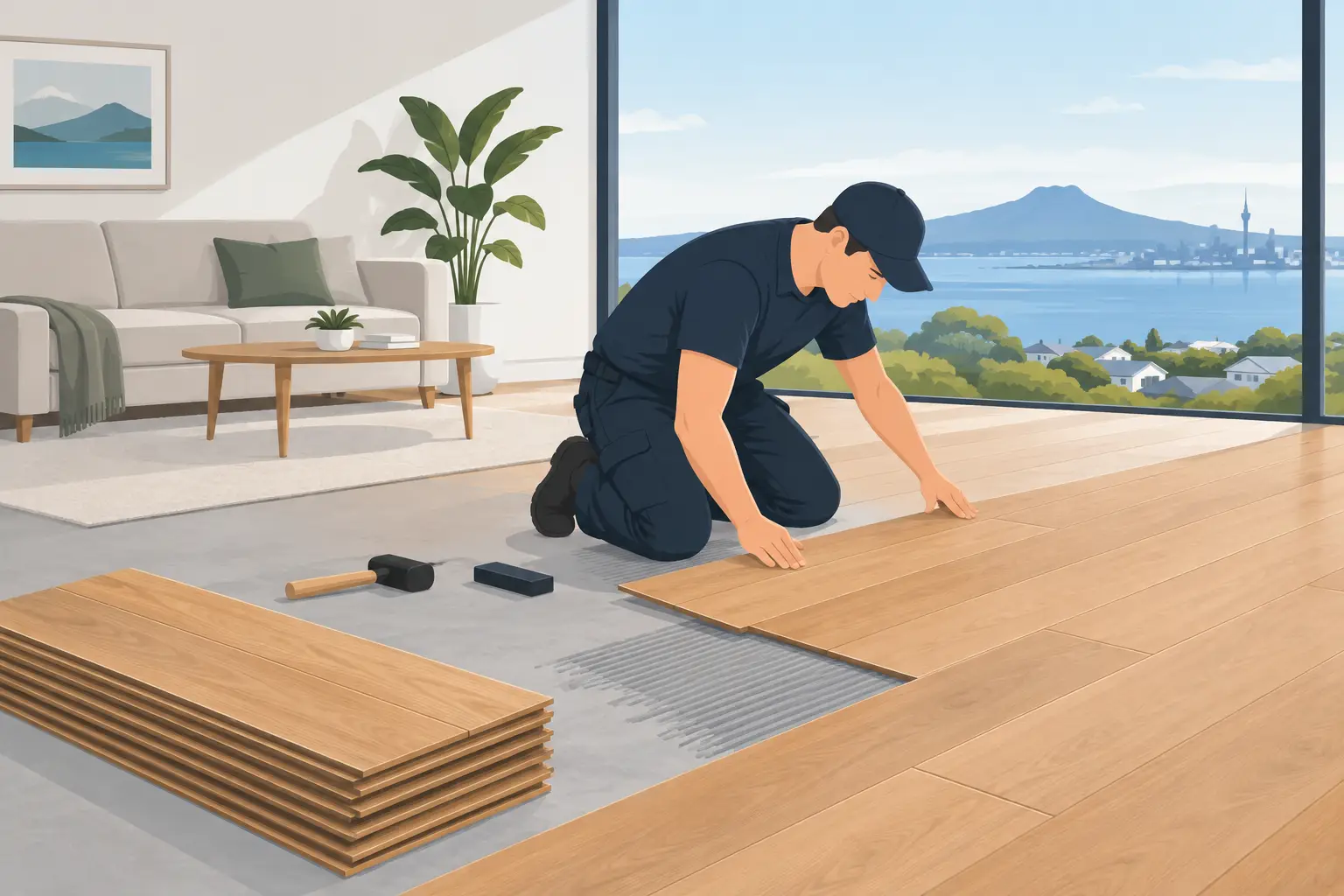
A premium board installed over an uneven or damp subfloor is not a premium floor once the job is complete. Site assessment is where hidden problems are found before they become visible problems.
The installer should check flatness, moisture, access, transitions to adjoining rooms and the height around doors, stairs and cabinetry. They should also allow for correct perimeter expansion. Floorboards need room to respond to normal seasonal changes. That gap is concealed with skirting or trims, not eliminated because it looks neater on installation day.
Underlay is another detail that should be chosen for the job, not grabbed off the shelf. The right underlay can improve acoustic comfort, manage minor subfloor imperfections and support moisture control where required. The wrong one can affect the floor’s performance and feel underfoot.
Floating floors can offer efficient installation and straightforward future repairs in some situations. Glue-down installation can provide a firmer, quieter feel and may be better suited to particular board types or site conditions. Neither approach is automatically best. The board manufacturer’s requirements and the actual site should drive the decision.
Compare the full cost, not the ticket price
Flooring quotes are only comparable when they include the same scope. One price may cover boards alone, while another includes underlay, trims, moisture preparation, removal of old flooring, delivery and installation. The cheaper-looking figure can become the expensive one once the missing work is added.
Ask what happens if the subfloor needs preparation, whether stock is available for your project, and what installation warranty is provided. It is also worth confirming how many extra boards are allowed for cuts, waste and future repairs. A small spare quantity stored safely can be valuable years later.
Trade Flooring NZ combines direct-import pricing with site measurement, product advice and professional installation, so the board choice and installation method are considered together rather than treated as separate jobs.
Make the final decision in the room, not on a screen
The best bamboo floorboard is the one that suits your household, light conditions and subfloor - then is installed with the care the product requires. Take home a sample, place it beside your cabinetry and paint, walk through the rooms at different times of day, and be honest about muddy shoes, pets and sun exposure.
A floor should not require a perfect household to stay looking good. Choose a quality bamboo board with the right construction and finish, get the site checked properly, and you will have a warm, durable surface that earns its place under every busy day at home.