A floor can look brilliant in a small showroom sample, then behave very differently across a sun-soaked lounge, a busy kitchen and a hallway full of sandy shoes. That is why choosing sustainable bamboo flooring for homes is about more than picking a colour. The board construction, the quality of the bamboo, the condition of the subfloor and the installation method all decide whether your new floor still looks sharp years down the track.
For homeowners across Northland and Auckland, bamboo offers a compelling mix: a natural-looking floor with real strength, fast-growing raw material and a clean, contemporary finish. Get the product and installation right and it is a practical choice for families, pets, renovations and new builds. Get either wrong and even an expensive floor can disappoint.
Why bamboo is a more sustainable flooring choice
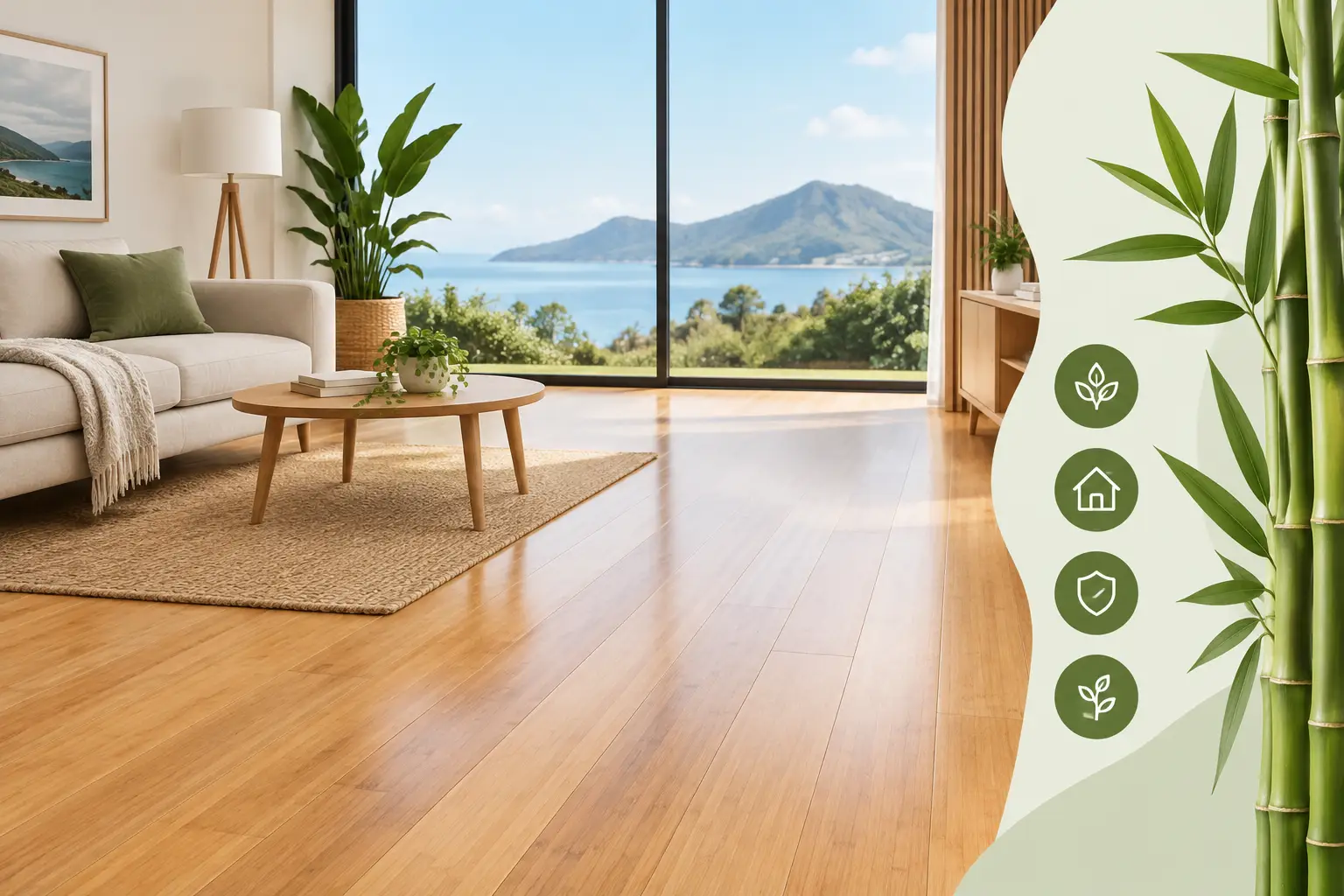
Bamboo is a grass, not a slow-growing hardwood tree. It reaches harvest maturity far faster than traditional timber species and regrows from its established root system after harvesting. That makes it an efficient renewable material when it is responsibly produced and manufactured.
But sustainability should not be reduced to one claim on a brochure. A floor that needs replacing early is not a sustainable outcome, regardless of what it is made from. The better question is whether the flooring will perform in your home, be installed properly, and remain something you want to live with for the long haul.
Quality bamboo flooring combines a renewable surface material with a dense, engineered construction. It gives homeowners the warmth and visual character associated with timber while avoiding the long growth cycle of many hardwoods. It can also be a sensible option where you want a premium result without paying conventional retail showroom mark-ups.
Not all sustainable bamboo flooring for homes is built alike
The word “bamboo” does not tell you enough about a floor. Manufacturing quality varies widely, and the structure beneath the visible surface matters just as much as the colour you choose.
Strand-woven bamboo brings serious density
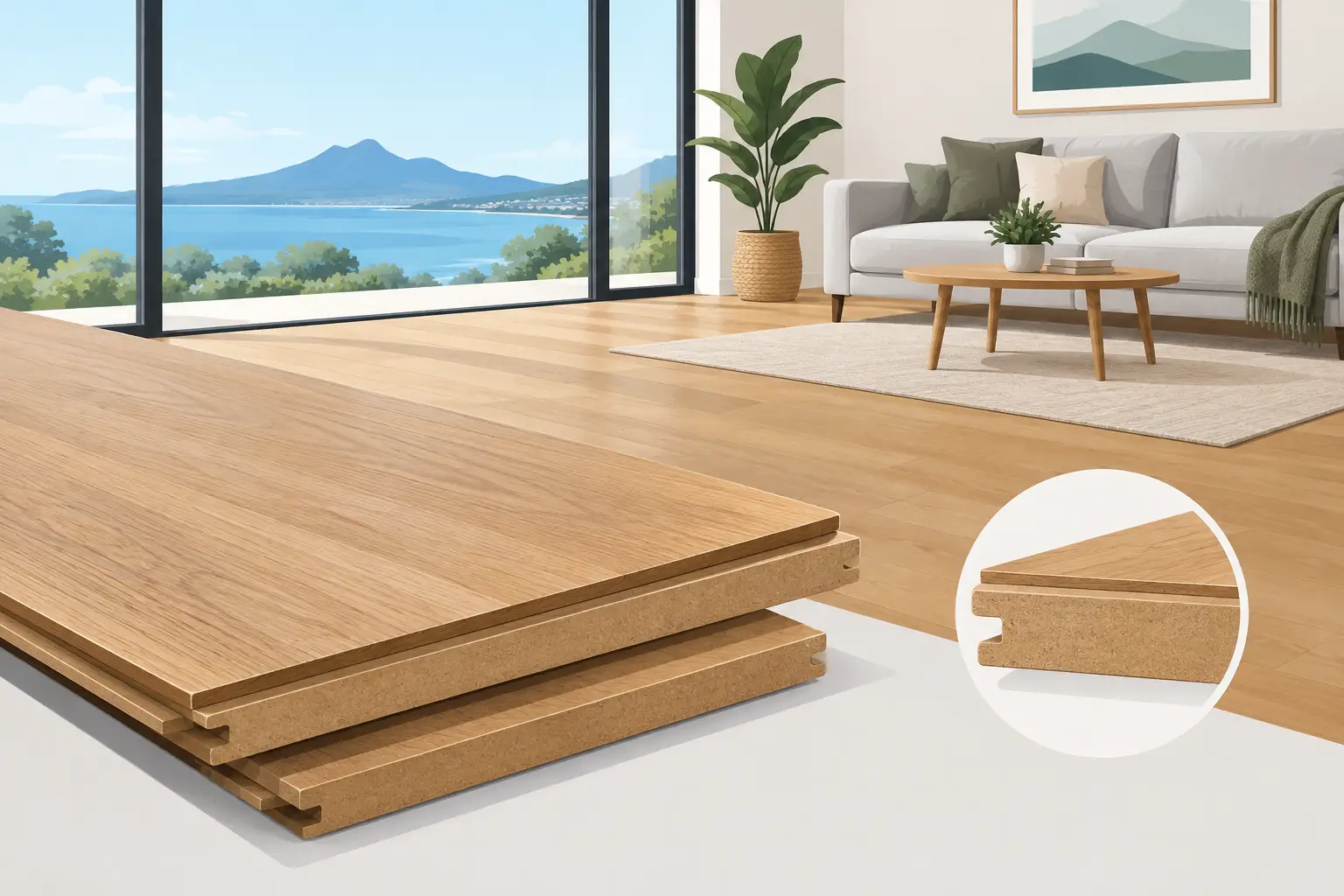
Strand-woven bamboo is made by compressing bamboo fibres under heat and pressure with binding resins. The result is a very dense board with a distinctive, consistent grain. This density is a major reason homeowners choose it for active households. It stands up well to everyday knocks, moving chairs, children’s toys and the regular traffic of family life.
That does not mean it is indestructible. Sharp grit under shoes, dragged furniture and poorly fitted doors can damage any floor. The point is to choose a construction that gives you a proper margin for real life, rather than a delicate surface you have to tiptoe around.
Engineered construction improves stability
In a well-designed bamboo floor, stability is as important as hardness. New Zealand homes experience seasonal changes in temperature and humidity. Large glazed areas can also create serious heat exposure, especially in north-facing living rooms.
An engineered bamboo board is designed to manage these conditions better than a simple solid board. The layers help resist excessive movement, provided the subfloor is dry, flat and prepared correctly. Expansion gaps at walls, cabinetry and fixed joinery are not optional details. They are what give the floor room to respond naturally without lifting or crowding.
Finish affects how the floor lives
A durable factory finish helps protect the surface from daily wear and makes cleaning straightforward. Matte and low-sheen finishes are particularly practical because they tend to hide fine dust, paw prints and small marks better than a high-gloss surface.
Colour deserves a practical conversation too. Pale bamboo can make compact rooms feel open and bright, while richer tones create contrast and a more grounded look. Mid-tone colours are often the forgiving choice in busy homes because they disguise everyday dust and minor scuffs more easily than very dark or very light floors.
Match the floor to the way your household actually works
The best flooring decision starts with an honest look at your home. A quiet apartment, a beachfront family home and a rental renovation have different demands.
If you have children and pets, focus on a dense board, a low-sheen finish and good entry protection. A quality doormat inside and outside the front door does more to prevent surface scratching than most people expect. Keep felt pads under dining chairs and furniture feet, and lift heavy furniture rather than dragging it.
For open-plan homes with big windows, heat needs careful attention. Direct sun can create high surface temperatures, even in a home that otherwise feels comfortable. Window coverings, sensible furniture placement and the right product selection all matter. This is where a site visit is worth far more than choosing from a sample online. The room orientation, glazing, subfloor and planned layout should be assessed before boards are ordered.
Bamboo is generally suited to dry internal living areas, bedrooms, hallways and kitchens where spills are dealt with promptly. It is not the automatic answer for every wet area. Bathrooms, laundries and spaces with a continuing moisture risk need a flooring system specifically designed for that environment. Honest advice matters here. For some rooms, advanced composite flooring may be the better-performing option.
Installation is where performance is won or lost
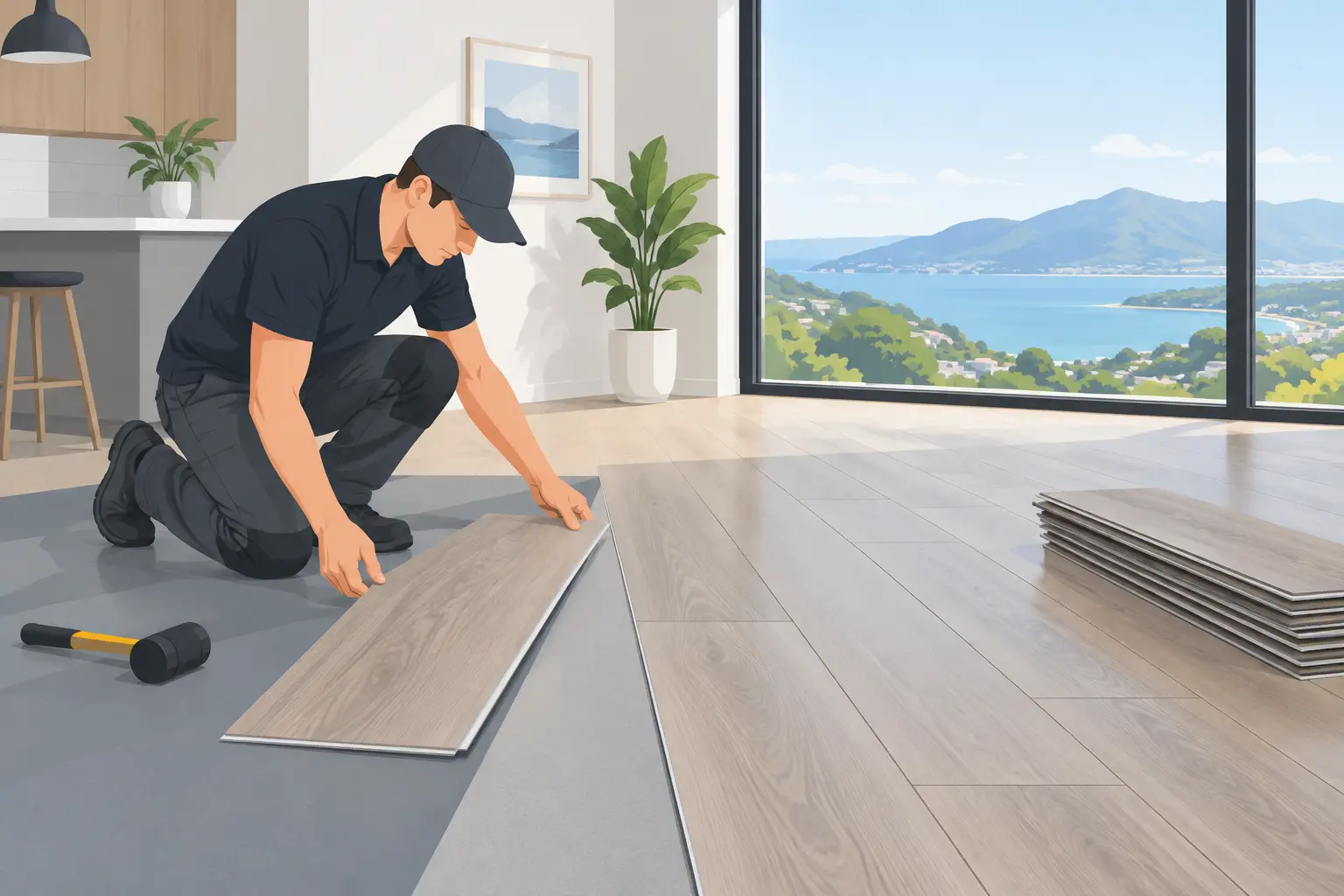
A premium board cannot make up for a rushed installation. Subfloor preparation is the foundation of a long-lasting result, and it is often the part homeowners never see once the job is finished.
Before installation, the existing floor needs to be checked for moisture, level and soundness. Concrete may require moisture testing and a suitable moisture barrier. Timber subfloors need to be secure, flat and free from movement. High spots, dips and loose areas should be corrected before laying begins, not disguised underneath the new flooring.
The flooring should also be acclimatised in the home before installation where required. This allows the material to adjust to the site conditions rather than making a sudden change from a warehouse environment to a heated or humid house.
Professional installation also means planning the details: board direction, transitions between rooms, expansion allowances, stair nosings, trims and the finish around door jambs and skirting. These are the areas that separate a floor that merely looks acceptable from one installed to the point of perfection.
Trade Flooring NZ takes an end-to-end approach because the product choice and the installation cannot be treated as separate jobs. A free on-site measure and quote gives you a chance to discuss the real conditions in your home before the work begins, with one accountable specialist handling the technical detail from selection through to final finish.
What bamboo flooring costs - and where value really sits
The cheapest quote is rarely the cheapest finished floor. It may leave out subfloor preparation, underlay, trims, moisture protection or the labour needed to deal with difficult areas. Those costs do not disappear. They usually turn up later, either as variations during the job or as problems after it.
A useful flooring quote should clearly account for the boards, accessories, preparation, installation and removal or disposal where needed. It should also explain what is assumed about the existing subfloor. That gives you a fair basis for comparison and reduces the risk of unwelcome surprises.
Direct-import supply can make a meaningful difference to the final price by removing layers of retail overhead and middlemen. But value is not simply a lower square-metre figure. It is having permanent stock available when your project is ready, selecting a product fit for the site, and having skilled installation that avoids costly rework.
Caring for bamboo without making it a full-time job
Bamboo flooring is easy to live with when basic habits are in place. Vacuum with a hard-floor setting or sweep regularly to remove grit. Use a lightly damp mop with a cleaner suitable for finished timber or bamboo floors, rather than flooding the surface with water.
Wipe spills promptly, especially around kitchen benches and pet bowls. Avoid steam mops, abrasive powders and harsh chemicals, as these can dull or damage the protective finish. Keep indoor humidity reasonably consistent where possible, and use curtains or blinds during the strongest afternoon sun in heavily glazed rooms.
Small care habits protect the finish, but they also preserve the floor’s appearance. That is what makes a sustainable choice worthwhile: you are not replacing it because it stopped coping with normal family life.
A good bamboo floor should feel like part of the house, not another fragile surface to worry about. Start with a proper site assessment, choose the construction for your conditions, and insist on installation that respects the details. Then you can enjoy the warmth of a natural floor built for muddy paws, busy mornings and the years ahead.