
A kitchen floor gets tested harder than almost any other surface in the home. Dropped utensils, wet shoes, the dog’s water bowl, a leaking dishwasher hose and years of chairs moving in and out can quickly expose a floor that only looks good in the showroom. Waterproof SPC flooring for kitchens is built for exactly this kind of daily punishment - but only when the product, preparation and installation are right.
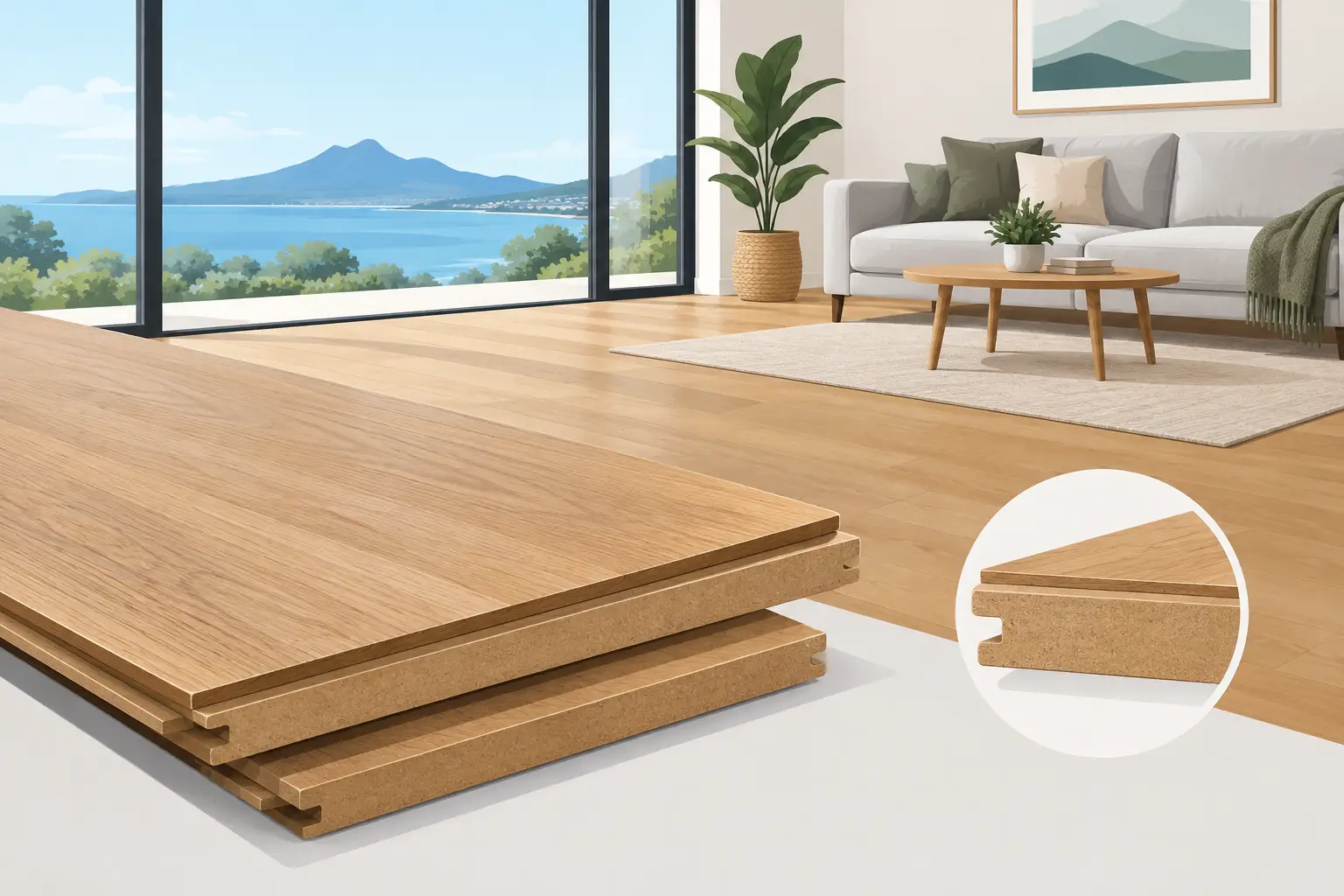
SPC stands for stone polymer composite. It is a rigid, multi-layer plank flooring with a dense mineral-based core, a decorative timber-look layer and a tough protective wear layer. The result is a stable, practical floor that gives a kitchen the warmth and visual appeal of timber without asking you to panic over every splash.
Why waterproof SPC flooring suits real kitchens
The key benefit is straightforward: the plank itself does not absorb water like timber, laminate or many older composite floors can. A spill from the sink, a child’s drink bottle or muddy paw prints can be wiped up without the plank swelling, cupping or staining.
That matters in busy Northland and Auckland homes, where kitchens often open directly to decks, patios or living spaces. People come in from the rain. Kids run through with wet feet. Pets do not stop at the mat. A floor needs to cope without turning normal family life into a maintenance routine.
SPC also has a hard-wearing top surface that stands up well to everyday scuffs and scratches. It is not indestructible - dragging a cast-iron table or sharp grit under furniture can still mark any finished floor - but it is a strong choice for family kitchens, rental upgrades and new builds where durability is non-negotiable.
The other advantage is comfort underfoot. Compared with ceramic tiles, SPC feels warmer and less unforgiving when you are standing at the bench for a long dinner prep. It also produces less noise from dropped items and foot traffic, particularly when paired with the correct acoustic underlay where the system requires it.
Waterproof does not mean water can be ignored
This is where clear advice matters. Waterproof SPC flooring means the planks are highly resistant to water. It does not mean a kitchen can be left with standing water for days, or that a concealed plumbing leak beneath the floor will cause no damage to the subfloor, cabinetry or walls.
Water should still be cleaned up promptly. The floor’s click joins, perimeter gaps, appliance penetrations and transitions need to be handled properly. If water repeatedly reaches the edges of a floating floor, it may find its way underneath. The SPC planks may be fine, but trapped moisture below is never a good outcome.
For a standard kitchen, this is easily managed with professional planning. The floor is installed with the correct expansion allowance around walls and fixed cabinetry, then finished with suitable skirtings, scotia or trims. Dishwasher and fridge connections should be accessible and checked, not hidden and forgotten.
If your kitchen has an existing moisture issue, a recent slab pour, a suspected leak or a floor that feels soft underfoot, sort that out before any new flooring goes down. Flooring is the final layer. It cannot fix a bad substrate.
What to look for in kitchen SPC flooring
Not all SPC is made to the same standard. The cheapest plank can look convincing in a small sample, then reveal its limitations through weak click joints, obvious pattern repeats, poor stability or a surface that marks too easily. Price matters, but so does what sits beneath the printed timber grain.
A stable core and reliable click system
Kitchen floors experience concentrated loads from fridges, islands, stools and dining furniture. A quality rigid core and precise click profile help keep joins tight and the finished floor looking consistent. Poorly made click systems can chip during installation or leave joins vulnerable to separating over time.
Ask how the flooring performs under direct sun as well. Large glazed doors and north-facing kitchen windows create serious heat exposure in many New Zealand homes. SPC is generally more stable than traditional timber-based products in these areas, but every product has installation limits. The floor needs to be assessed for glazing, room size, window coverings and expected surface temperatures rather than selected on a broad claim alone.
A wear layer suited to household traffic
The wear layer protects the decorative surface. For an active home with children, pets and frequent entertaining, choose a product designed for daily residential traffic rather than one selected purely because it is the lowest-cost option.
Texture is worth considering too. A lightly embossed timber finish can look more natural and help disguise minor marks, while an overly glossy surface tends to show every crumb, streak and paw print. The best colour is often not the palest or darkest option, but one with enough grain variation to work with real life.
A design that works beyond the kitchen
Open-plan homes benefit from carrying one flooring finish through the kitchen, dining and living areas. It makes the space feel larger and avoids awkward transitions between rooms. Timber-look SPC can deliver that clean, continuous result while still handling the kitchen’s wet-zone demands.
Consider the cabinets, benchtop and natural light before settling on a colour. Warm oak tones soften white or charcoal kitchens. Mid-tone boards are practical for busy households. Lighter colours can brighten compact rooms, although they may show darker grit sooner. Samples should be viewed in your home, at different times of day, not judged under showroom lighting alone.
Installation is where the floor earns its keep
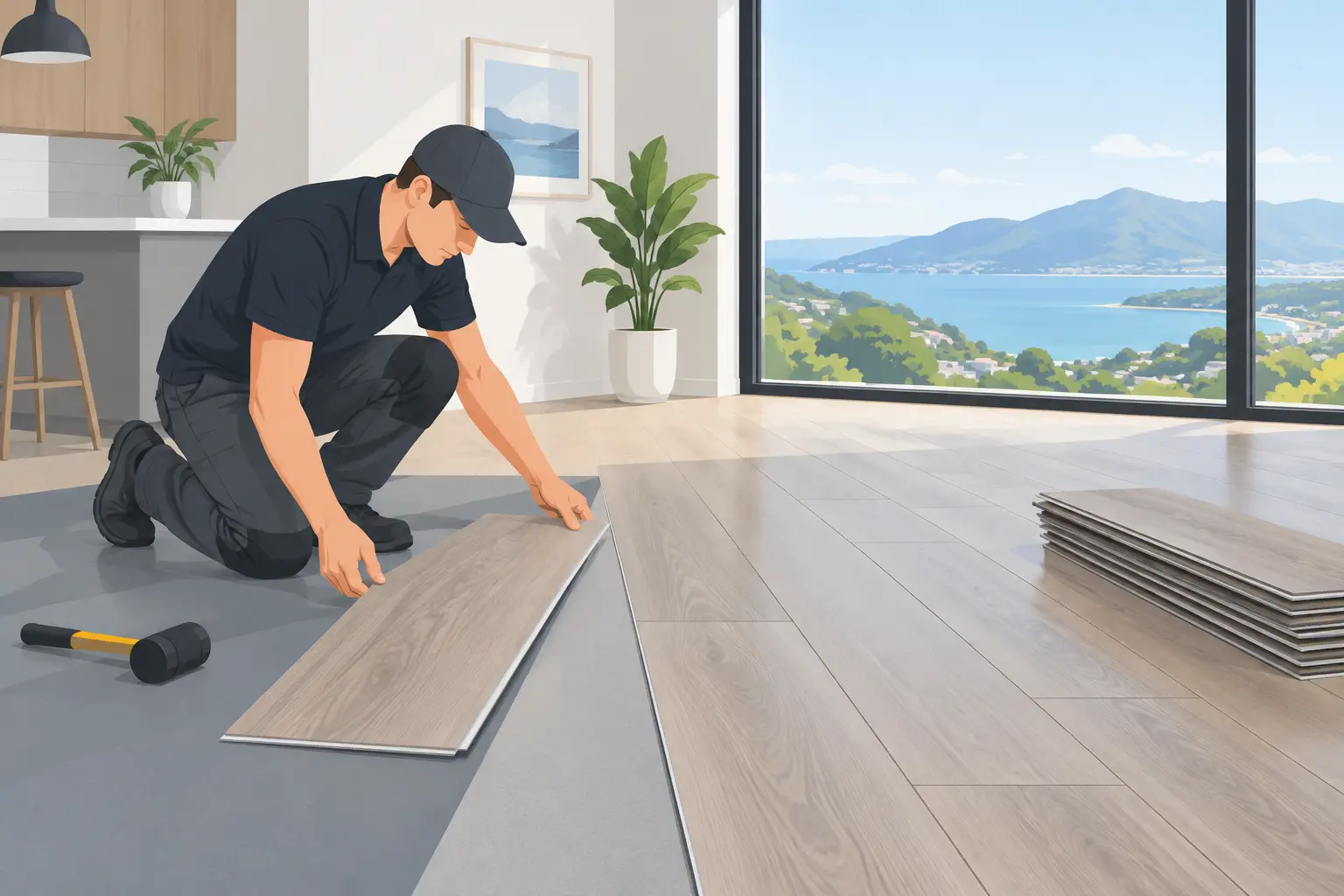
A premium plank installed over an uneven or damp base is still a problem waiting to happen. The subfloor must be dry, clean, sound and within the product’s flatness tolerances. High spots need to be ground down, low areas levelled and old floor coverings assessed honestly rather than covered over blindly.
Floating SPC flooring is designed to move as one connected surface, so it must not be pinned down by fixed joinery, door jambs or badly placed trims. Kitchen islands, cabinetry and heavy fixed units require a proper installation plan. Whether flooring runs beneath certain elements or finishes neatly against them depends on the layout, the manufacturer’s specification and how the kitchen is being built or renovated.
This is also why measuring properly matters. Kitchens are full of cuts around kickboards, pantry returns, island ends, doorways and appliances. Narrow slivers of plank at a wall or a poorly planned starting line can spoil an otherwise good floor. A professional installer considers the board layout before the first row is clicked together.
Underlay should never be an afterthought. Some SPC products include an attached backing; others require a compatible underlay selected for the subfloor and acoustic requirements. The wrong underlay can compromise the click system, create excess movement or affect warranty coverage. Likewise, aluminium trims and finishing details should be selected to suit traffic, expansion and the adjoining floor height.
Day-to-day care is refreshingly simple
One reason homeowners choose SPC for kitchens is that it does not demand specialist maintenance. Sweep or vacuum using a hard-floor setting to remove grit, then use a well-wrung damp mop and a pH-neutral cleaner when needed. Avoid steam mops, abrasive pads, waxes and harsh chemicals that can leave residue or dull the surface.
Use felt protectors beneath dining chairs and stools, particularly where chairs are moved constantly. Put mats at exterior doors, but avoid rubber-backed mats that can react with some floor finishes over long periods. If something spills, wipe it up. That is generally the full care plan.
For homeowners who want a kitchen floor that looks sharp, handles family life and does not carry conventional retail mark-ups, Trade Flooring NZ can assess the site, provide samples, measure and quote, then install the right system with one accountable specialist overseeing the details.
Choose the plank for the way your kitchen is actually used, not for a promise on a packet. A well-specified SPC floor, installed on a properly prepared base, gives you the freedom to cook, host, clean and live without treating the floor like a fragile finish.