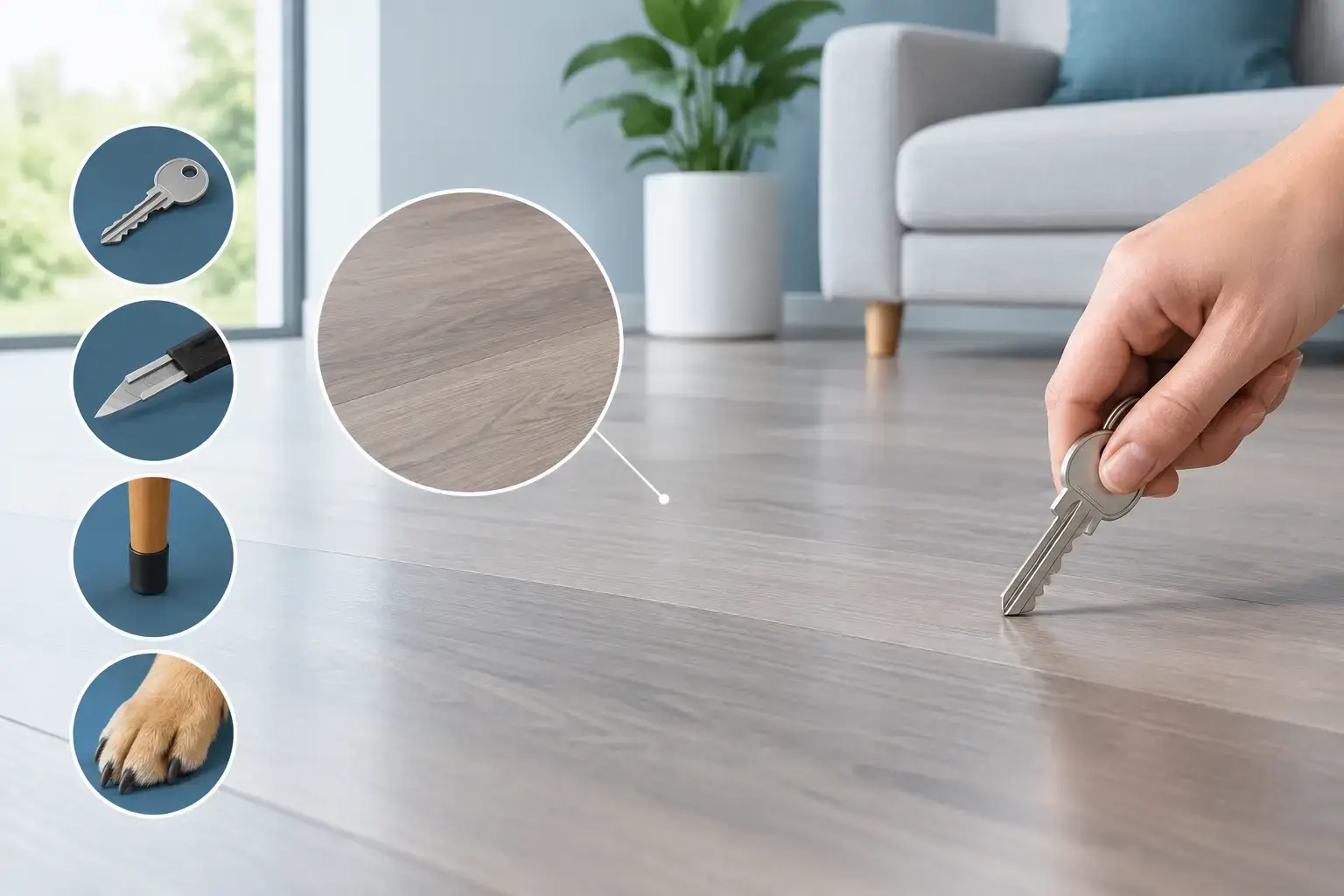
A dog racing in from the garden, school bags dragged across the hallway, dining chairs pushed back after dinner - these are the real tests of a floor. So, are composite floors scratch resistant? Quality composite flooring is highly scratch resistant and built for busy homes, but no flooring is completely scratch-proof.
That distinction matters. A good composite floor can handle the daily knocks that quickly mark softer timber, cheap laminate or poorly finished surfaces. It will not, however, shrug off sharp grit ground under a chair leg, a heavy appliance dragged across the room or a damaged furniture pad. Choose the right product, install it properly and look after it sensibly, and composite flooring is one of the most practical options for Northland and Auckland households.
Are composite floors scratch resistant in real homes?
Composite flooring is designed as a layered product. The decorative surface is protected by a tough wear layer or coating that resists scuffing, scratching and staining from ordinary household use. In stone polymer composite flooring, commonly called SPC, the rigid core adds stability beneath that surface. This helps the board cope with the movement, impacts and temperature changes that come with modern family living.
For homes with children, pets and plenty of visitors, that protection makes a noticeable difference. Paw marks from a relaxed dog walking through the lounge are unlikely to cause trouble. Toy cars, dropped cutlery, daily foot traffic and the occasional muddy shoe are also well within the job description of a quality composite floor.
The honest answer is that resistance varies between products. A low-grade board with a thin surface layer will not perform like a premium floor designed for residential wear. The installation also matters. If the subfloor is uneven or the floor has not been allowed the correct expansion space, boards can move or flex unnecessarily. That is not a material failure. It is an avoidable installation problem.
What actually scratches a composite floor?
Most marks blamed on pets or children are caused by grit. Fine sand, small stones and driveway debris can act like sandpaper when trapped under shoes, furniture feet or a moving doormat. In coastal areas and homes with outdoor living, this is the issue to manage first.
Sharp, concentrated pressure is the other culprit. Dragging a fridge into place, sliding a heavy sofa or pulling a bar stool with worn plastic feet can score almost any finished floor. Composite boards are tough, not indestructible.
Pet claws are usually less of a concern than people expect. Kept-trimmed claws and normal indoor activity rarely create visible scratches on a good SPC floor. A large, energetic dog repeatedly launching itself around a tight corner is a different scenario, particularly if dirt has been brought in from outside. The floor will still be far easier to live with than many softer alternatives, but it deserves a mat at the door and a quick sweep when needed.
SPC, MFB and bamboo: different surfaces, different expectations
Not every hard floor reacts to wear in the same way. The right choice comes down to how you live, where the floor is going and the finish you want.
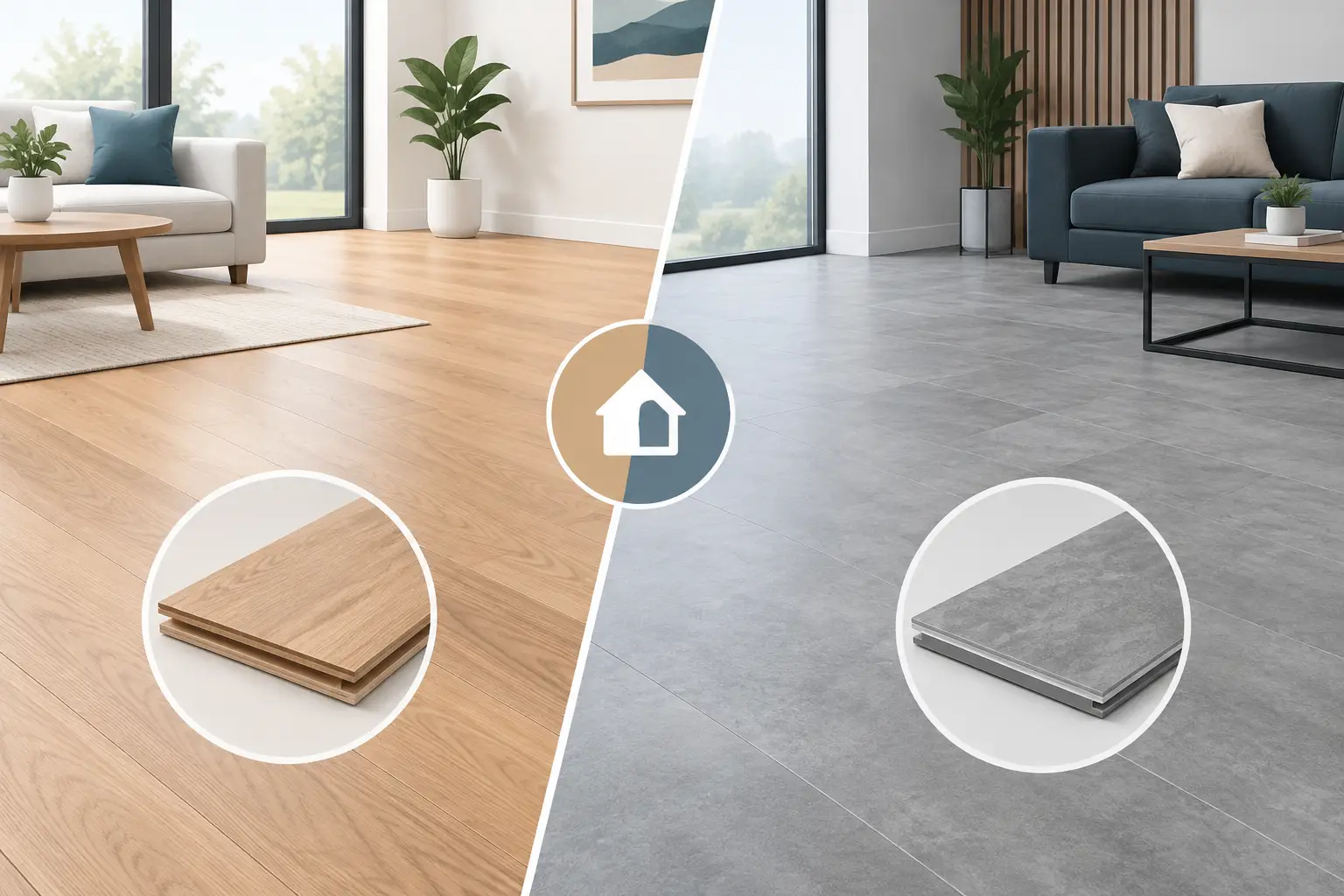
SPC flooring for hard-working areas
DualCore® SPC flooring is a strong choice for kitchens, hallways, family rooms, rental properties and homes where wet shoes and active pets are part of the routine. Its stable composite core and protective top surface make it particularly well suited to busy spaces. It is also comfortable underfoot and quieter than many people expect when paired with the correct underlay.
SPC is not only about scratch resistance. It is also highly practical around everyday moisture, making it a sensible option for open-plan living areas that connect to decks, gardens and pool zones. Wipe up spills promptly, as you would with any floor, but you are not dealing with the same moisture sensitivity as traditional timber products.
MFB flooring for a refined timber look
DualCore® MFB flooring offers a different construction and feel, with the visual appeal many renovators want from a timber-style floor. The surface is still built for daily wear, but product selection should reflect the room and household. A quiet formal lounge has different demands from a kitchen shared by two children, a Labrador and a back door that opens straight onto the lawn.
For either option, the sample is where good decisions start. Look at the surface in your own light, run your hand over the texture and consider whether a lighter or more textured finish will disguise dust and minor marks better. A pale, ultra-matte floor may look brilliant, but it can show black scuffs more readily than a mid-tone timber design with natural variation.
Where bamboo fits
Bamboo is a premium sustainable flooring choice with genuine character, but it is not the same as a composite floor. It can be exceptionally hard, depending on the product, yet a natural surface will develop its own story over time. For homeowners who want that authentic material quality, it is a feature rather than a flaw. For those who want the most forgiving option for dogs, school bags and constant traffic, composite flooring is often the safer call.
Scratch resistance also depends on colour and finish
A floor can be performing perfectly and still show marks more than you would like because of its colour. Dark, smooth boards reveal dust, pale pet hair and surface scuffs more easily. Very light, flat colours can show dark rubber marks. High-gloss finishes reflect light and expose every small imperfection.
Textured, low-sheen finishes are often the smart middle ground. They give a convincing timber appearance while being more forgiving between cleans. Boards with natural colour variation also make the occasional minor mark less obvious than a perfectly uniform design.
Large glazed areas deserve their own conversation. Northland and Auckland homes often have expansive windows and doors, and direct sun can create serious heat at floor level. A suitable composite floor handles these conditions better than many traditional products, but the product, room layout and window coverings must be assessed properly. Blindly choosing a floor from a showroom display is how expensive mistakes happen.
Keep scratches from becoming a problem
You do not need a complicated maintenance routine. The goal is simply to stop grit being ground into the surface and prevent sharp objects from being dragged over it.
Use quality entry mats at exterior doors, preferably one outside and one inside where practical. Sweep or vacuum regularly using a hard-floor setting, especially near entrances. Wipe spills with a damp mop rather than flooding the floor, and avoid harsh abrasive cleaners that leave residue or dull the finish.
Felt protectors under chairs and furniture are cheap insurance. Check them occasionally because pads collect grit and wear out. Lift heavy furniture rather than dragging it, and use protective boards or sliders when moving appliances. If a chair is used constantly in the same place, replace worn pads before they become hard plastic against the floor.
This is not precious-floor behaviour. It is straightforward care that protects any quality surface and keeps it looking new for longer.
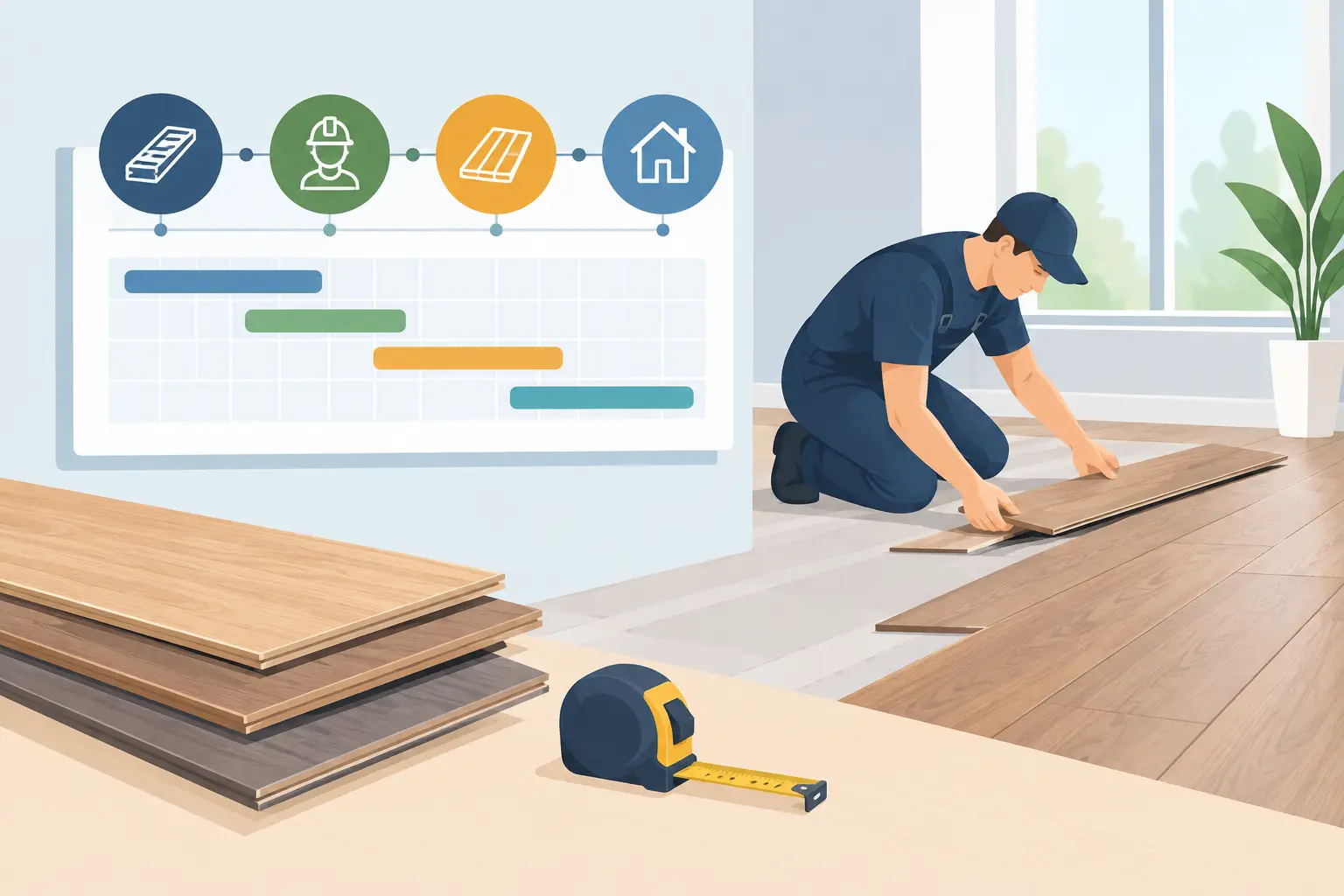
Why professional installation protects the finish
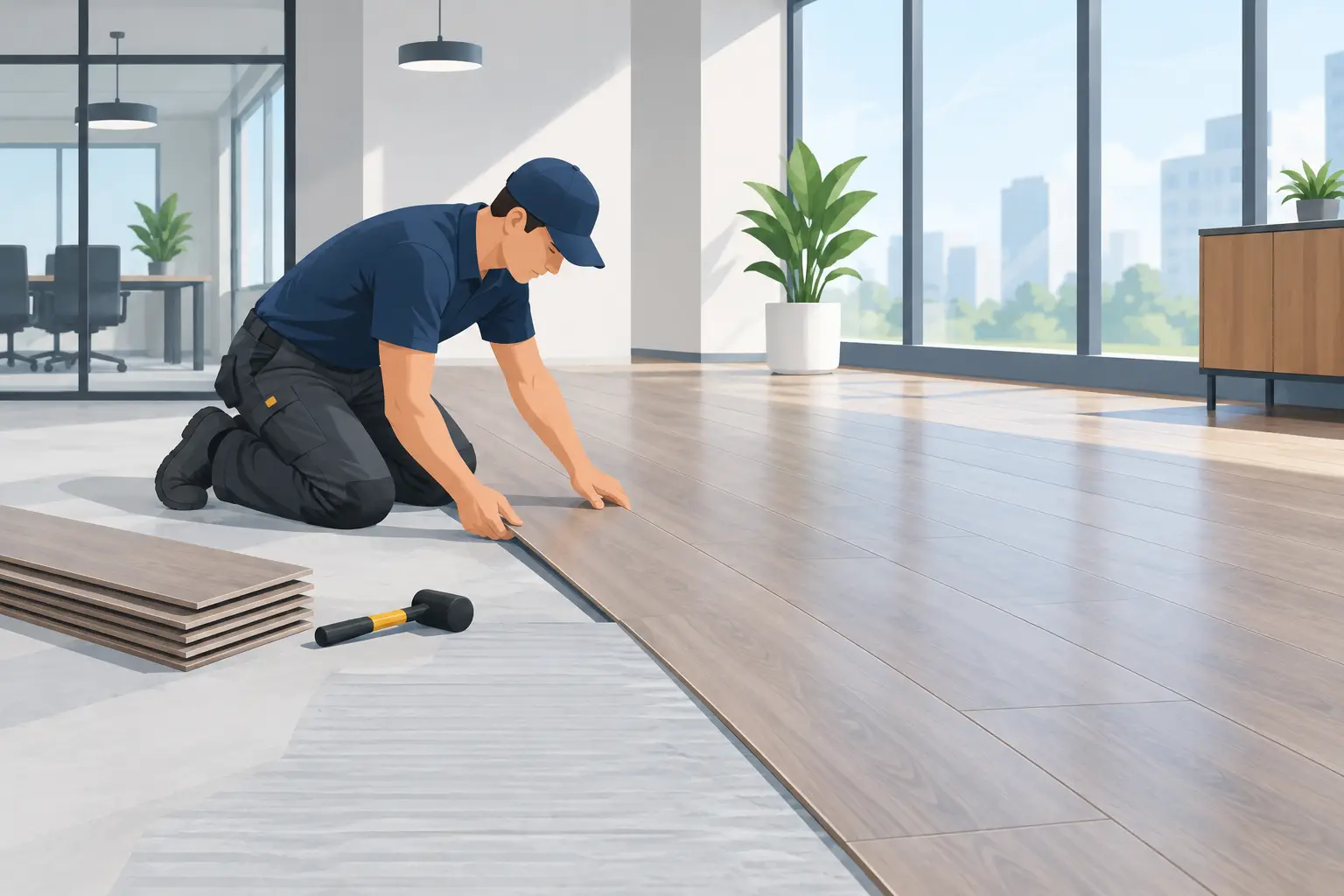
Scratch resistance starts before the first board is laid. The subfloor must be clean, dry and suitably level. The correct underlay, perimeter expansion allowance and finishing trims all contribute to a stable floor that performs as intended.
A floating composite floor needs room to respond to normal temperature changes. Pin it under heavy cabinetry, jam it against a wall or skip the proper transition details, and pressure can build where it should not. That can lead to movement, edge damage and a finish that does not look right, even if the board itself is excellent.
Trade Flooring NZ combines product advice, site measurement and installation because those details are where a floor either earns its keep or becomes a callback. The aim is simple: select a finish that suits your household, prepare the site correctly and install it to the point of perfection.
If your home is busy, your floor should be ready for it. Bring your room photos, pet-and-kid realities and sun-exposure questions to the selection process. The best composite floor is not the one with the boldest scratch-resistant claim - it is the one matched properly to the life happening on top of it.