The first damage on a new floor rarely comes from a dramatic accident. It is usually grit under shoes at the ranchslider, a chair scraped back at dinner, wet paws after a run outside, or a dropped school bag. The SPC wear layer is the clear protective surface designed to take that daily punishment before it reaches the printed timber or stone-look design underneath.
For homeowners choosing composite flooring, wear-layer thickness is worth understanding. It is one of the clearest indicators of how well a floor will stand up to real family use. But it is not the only one. The quality of the coating, the stability of the board, the finish, the installation and how the room is used all matter.
What is an SPC wear layer?
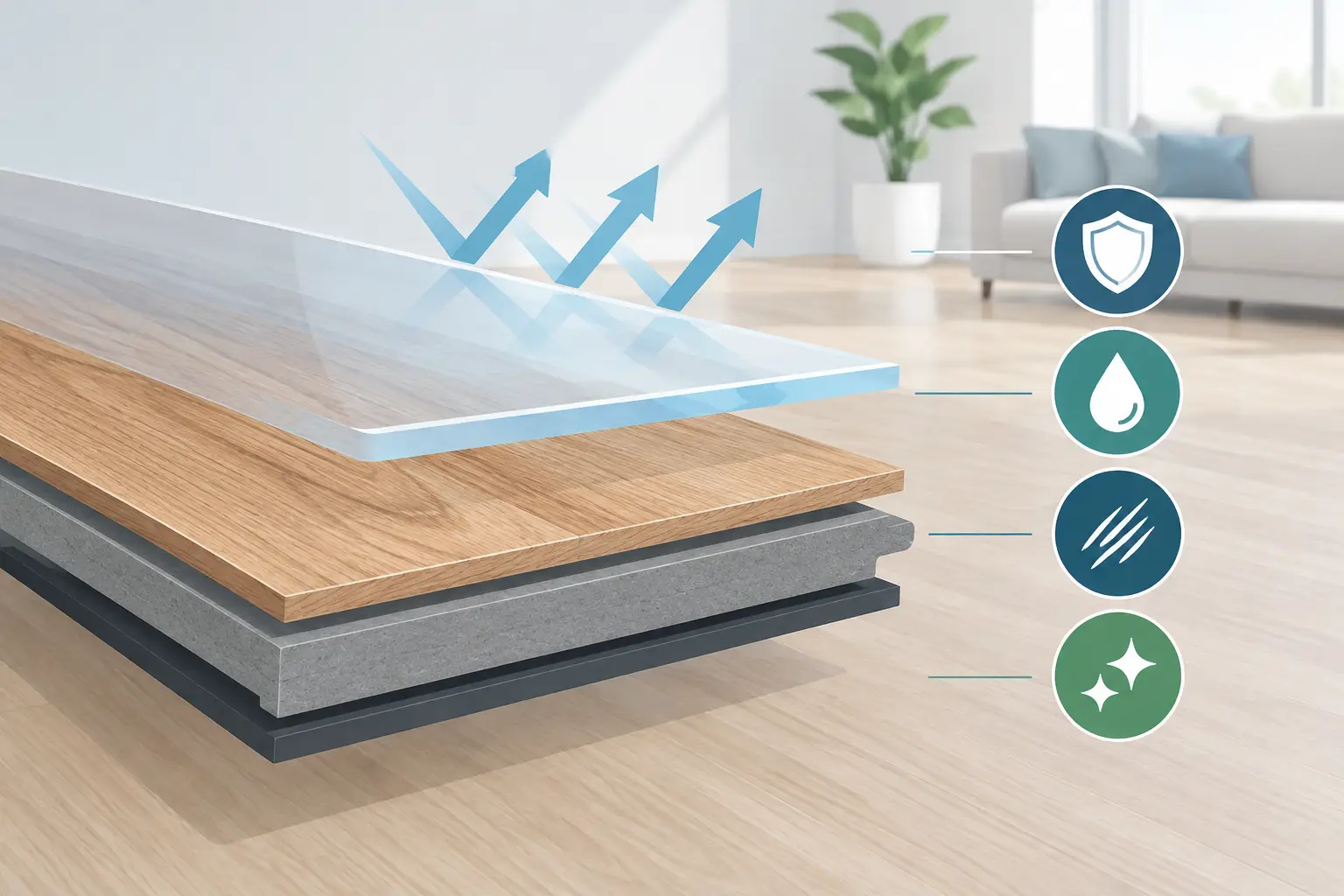
SPC stands for stone polymer composite. An SPC plank is built in layers: a rigid mineral-based core provides strength and dimensional stability; a decorative film creates the chosen timber or stone appearance; and the wear layer sits over the top as the protective barrier. Many products also have an attached acoustic backing beneath the core.
The wear layer is transparent, so it allows the grain, texture and colour of the decorative film to show through. Its job is to resist surface abrasion, scuffs, light scratching and staining from ordinary household life. It is normally finished with a factory-applied UV coating that provides another level of surface protection and makes cleaning easier.
A useful distinction: the wear layer is not the whole plank, and it is not the same thing as the core. A thick SPC board with a thin wear layer may feel solid underfoot, but its decorative surface can still have less protection than a thinner board with a better wear layer. When comparing flooring, ask for both measurements.
SPC wear layer thickness: what the numbers actually mean
Wear layers are commonly stated in millimetres or mils. A mil is one-thousandth of an inch, not a millimetre. That catches plenty of people out.
As a guide, 0.3 mm is close to 12 mil, while 0.5 mm is close to 20 mil. For a quiet bedroom, a lighter wear layer may be perfectly sensible. For an open-plan kitchen, hallway, living room or rental property, a 0.5 mm wear layer generally provides more reserve for the knocks and abrasion that build up over years.
That does not mean the thickest number automatically wins. A reputable 0.3 mm product with a high-quality coating can outperform a poorly made product that makes a big claim on paper. Texture also matters. A convincing embossed surface can disguise minor marks better than a very smooth, high-gloss finish, which tends to show every scuff and footprint.
For most busy Northland and Auckland homes, the sensible question is not, “What is the cheapest SPC plank?” It is, “What surface protection suits the way we actually live?” Children, pets, sandy feet, a busy kitchen and regular entertaining all point towards a more substantial domestic wear layer.
Thickness does not make a floor scratch-proof
No flooring supplier should promise a scratch-proof floor. Fine grit is abrasive. Drag a metal leg, sharp-edged toy or heavy appliance across any finished surface and it can mark. A wear layer improves resistance. It does not make a floor indestructible.
The practical payoff is that a better wear layer gives you more tolerance for everyday abuse. It helps the floor retain its appearance when life gets busy, rather than looking tired after a few seasons. That is particularly valuable where the floor runs continuously through kitchen, dining and living areas, because there is nowhere to hide wear in a high-traffic zone.
Wear layer versus UV coating
These terms are often used together, but they do different jobs. The wear layer is the clear vinyl surface above the decorative image. The UV coating is the protective treatment at the top of that surface. Depending on the product, it may be described as ceramic bead, polyurethane, anti-scratch or UV-cured coating.
A good coating helps reduce everyday scuffing, supports stain resistance and makes routine mopping straightforward. It can also affect the sheen of the floor. Matte finishes are popular because they look more like natural timber and are forgiving in family homes. They tend to hide dust and light marks better than a shiny floor.
When assessing samples, do not only look at the colour. Feel the texture, view it in strong side light and ask how the product performs in areas exposed to sun, foot traffic and furniture movement. A floor needs to work on a Monday morning as well as it looks in a sample board.
Heat, large windows and sun exposure
Large glazed areas are a feature of many modern New Zealand homes. They bring in light and warmth, but they can also create serious surface temperatures. The wear layer helps protect the design surface, yet it cannot solve every heat-related issue on its own.
The SPC core is valued because it is more stable than many traditional floating-floor constructions. Even so, every installation needs to account for direct solar gain, room temperature, expansion allowances and the manufacturer’s limits. A dark floor in front of north-facing glazing will absorb more heat than a pale one. Internal blinds, exterior shading and the right product selection may all be part of the answer.
This is where an on-site measure matters. A flooring decision made from a tiny sample in a showroom or on a mobile screen can miss the conditions that will affect the finished floor. Check the direction of the sun, the size of the glazing, the subfloor, transitions to other rooms and the practical use of the space before committing.
The wear layer can only perform on a sound installation
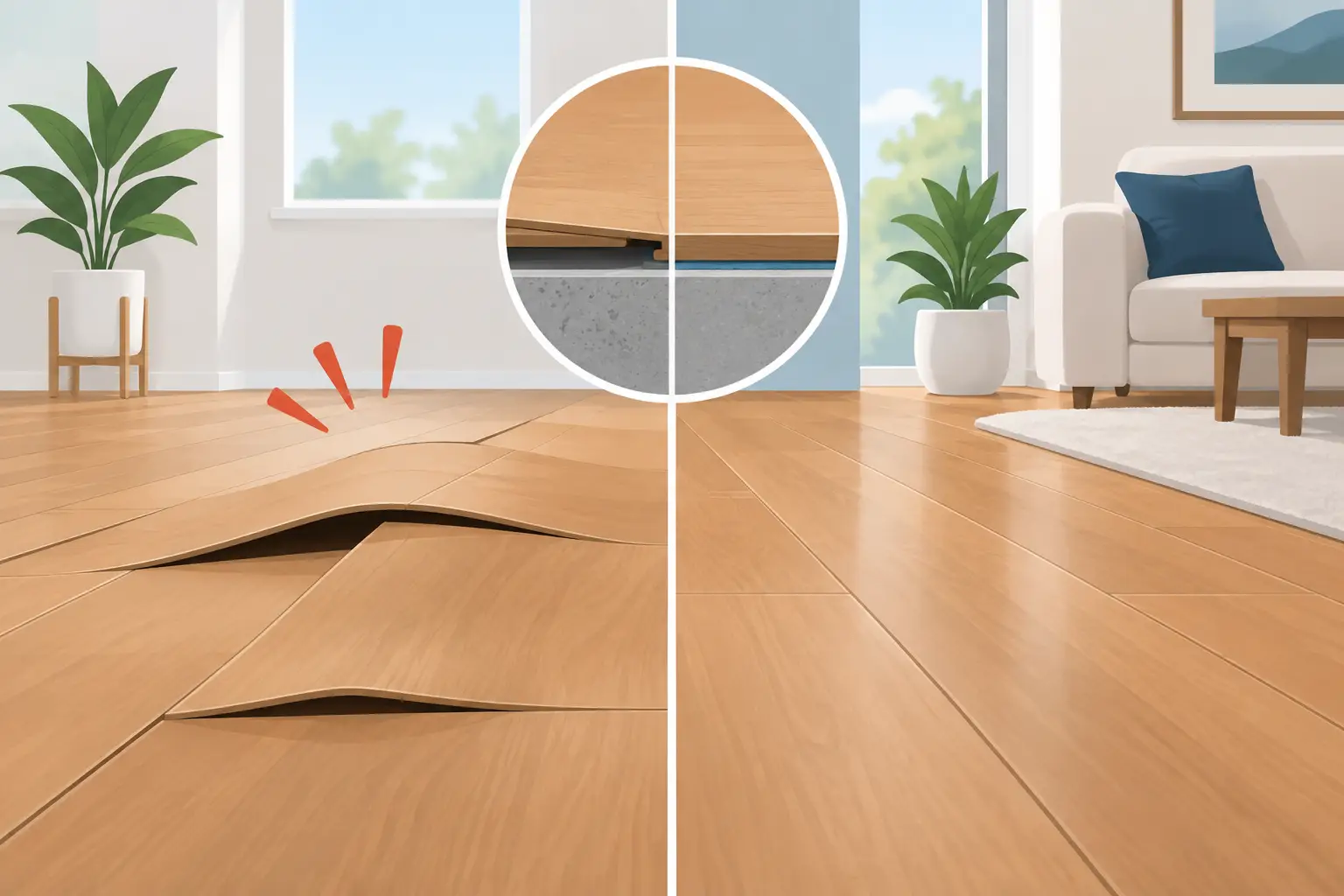
A premium plank fitted over an uneven or damp subfloor is still a problem waiting to happen. Movement beneath a floating floor can stress click joints, create noise and leave the floor feeling poor underfoot. Poor preparation can also lead to telegraphing, where imperfections in the substrate become noticeable through the finished surface.
The subfloor must be assessed for flatness, moisture and condition. Correct underlay, expansion gaps, perimeter detailing and appropriate trims are not optional extras. They are part of a floor that stays looking right.
Furniture protection also deserves attention. Fit suitable pads under chairs and table legs, particularly on dining chairs that move every day. Use mats at exterior doors to capture grit, but avoid rubber-backed mats unless they are approved for use with the flooring. When moving a fridge, piano or heavy cabinet, lift it or use suitable protection rather than dragging it across the planks.
Trade Flooring NZ approaches SPC as a complete system: the right board, the right preparation, the right accessories and an installation finished to the point of perfection. It avoids the false economy of buying a decent product and then cutting corners where it matters most.
Cleaning an SPC floor without wearing it out
SPC is low-maintenance, not no-maintenance. Regular dry sweeping or vacuuming with a hard-floor setting removes the grit that causes most fine abrasion. For routine cleaning, use a well-wrung microfibre mop and a cleaner approved for vinyl or SPC flooring. Excess water is unnecessary and can work into joins or around room edges.
Avoid steam mops, abrasive powder cleaners, harsh solvents and wax-based products. They can damage or dull the surface coating, leave residue, or create a slippery film. A small spill is normally simple: wipe it up promptly, then clean the area with a damp cloth if needed.
If a mark appears, start gently. Often a soft cloth and appropriate floor cleaner will do the job. Aggressive scrubbing is rarely the answer and may create a more obvious dull patch than the original mark.
Choosing the right protection for your home
A pale oak-look SPC floor with a quality 0.5 mm wear layer can be an excellent choice for a family home with dogs, children and open-plan living. A lower-spec option may still suit a spare room, a low-traffic office or a budget-conscious renovation where the room will see limited use. The right answer depends on the space, not a one-size-fits-all sales pitch.
Ask to see the full product specification, not just a photo and a price per square metre. Confirm the wear-layer thickness, overall plank thickness, coating, warranty conditions and suitability for your subfloor and sun exposure. Then have the site measured properly before the order is placed.
A floor is touched, walked on and lived on every day. Choose the surface protection for the life happening in your home, and the finished result will keep earning its place long after installation day.