A floor can look excellent in the showroom and still be the wrong choice for a busy Northland or Auckland home. Heat pouring through large glazed doors, wet shoes at the entry, dogs racing down the hall and children dropping everything from toys to toast all test a floor properly. When comparing MFB versus vinyl flooring, the key difference is not just the look of the plank. It is what sits beneath the surface and how that construction performs once it is installed in your home.
Vinyl has earned its place as an affordable, practical option. MFB is a newer composite flooring category built for homeowners who want greater stability, a more substantial underfoot feel and better performance in challenging conditions. Neither is automatically right for every room or budget. The right decision comes down to the product construction, the subfloor and the way you live.
MFB versus vinyl flooring: start with the core
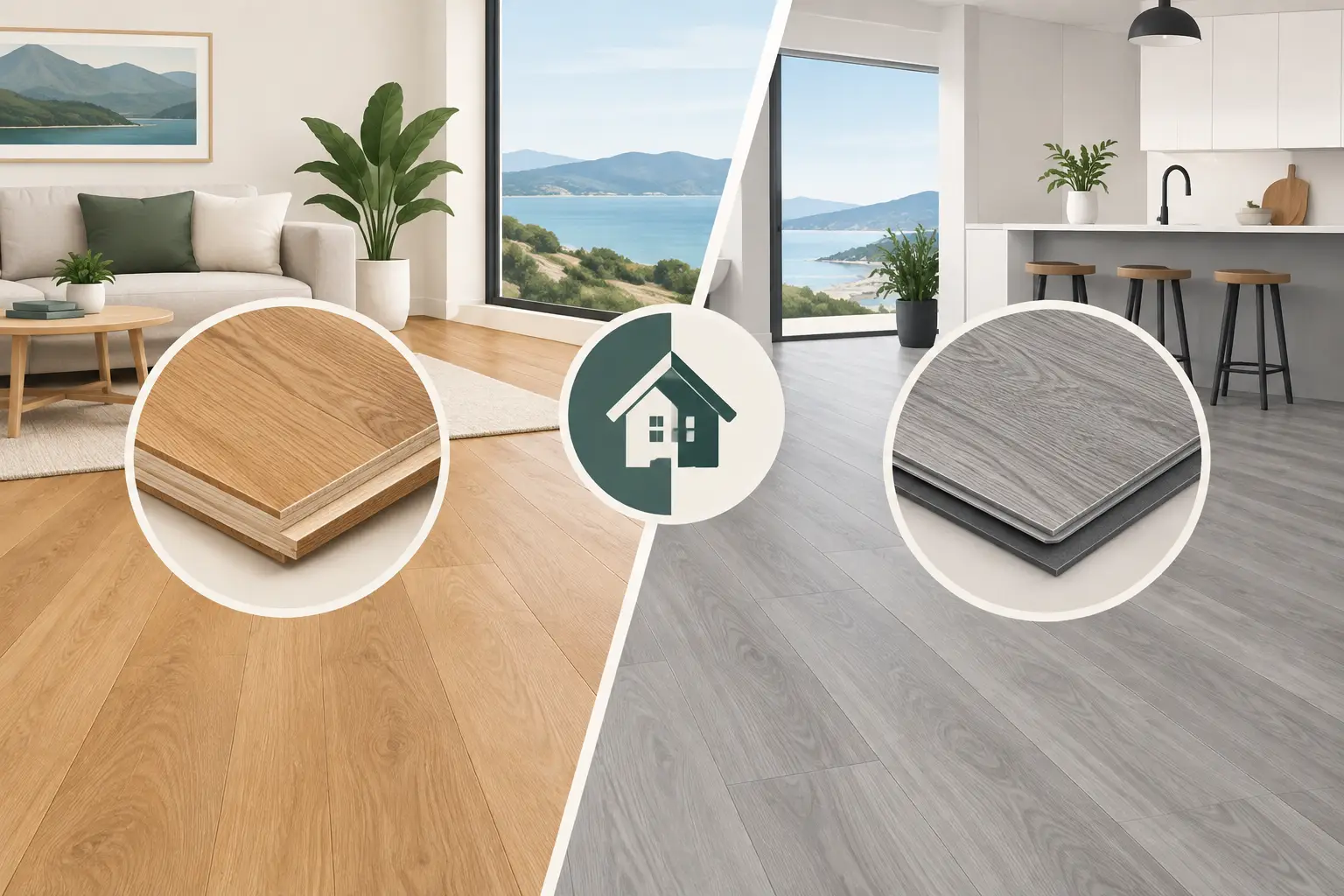
Vinyl flooring is a broad term. It can mean traditional sheet vinyl, glue-down luxury vinyl planks or tiles, and click-together vinyl flooring. Most vinyl products rely on PVC-based layers, with construction and thickness varying significantly between ranges. A quality vinyl plank can be hard-wearing, water resistant and convincing in appearance, but budget products often reveal their limits through a thinner wear layer, softer construction or less stable core.
MFB stands for mineral fibre board. In an MFB floor, the decorative surface and protective wear layer sit over a dense, engineered mineral fibre core. The core is the point of difference. It gives the plank more weight and rigidity than many standard vinyl options, helping it feel more like a solid floor once laid.
That added structure matters when a home has wide open spaces, active family traffic or strong sun exposure. A well-made MFB plank is designed to stay flatter and more stable through changing indoor temperatures. It is not a licence to ignore installation rules, expansion gaps or manufacturer limits. It is simply a stronger platform to start from.
How each floor handles everyday family life
Both MFB and quality vinyl are practical choices for kitchens, living areas, hallways and family rooms. They are far easier to live with than carpet in a muddy household and more forgiving underfoot than tile. The details, however, are worth looking at closely.
Water resistance is not the whole story
Many vinyl floors are marketed as waterproof, and the surface itself generally will not be damaged by everyday spills. MFB products are also designed to handle normal household moisture and are well suited to kitchens and open-plan living. Wipe up water rather than leaving it sitting around joins, particularly near dishwashers, sliding doors and pet bowls.
Water resistance should never be confused with suitability for a permanently wet area. Bathrooms, laundries with floor drains and other high-moisture rooms need a flooring system approved for that exact use, with the correct preparation and edge detailing. The installer should assess the room rather than relying on a label on a sample board.
Scratches, dents and dropped objects
The visible durability of either option comes largely from its wear layer and surface coating. A good-quality vinyl product with a strong wear layer can cope well with paws, dining chairs and normal household use. MFB also needs a quality protective surface, but its denser core gives the plank better resistance to movement and a more solid feel under furniture.
No decorative floor is indestructible. Dragging a loaded fridge, allowing grit to build up at the front door or moving furniture without protective pads can mark virtually any surface. For families with dogs, children and regular entertaining, choose a realistic timber or stone pattern with texture. It tends to disguise the small signs of a well-lived home better than a very dark, glossy finish.
Comfort and sound underfoot
Vinyl is often softer and quieter underfoot, especially glue-down vinyl installed over a smooth, prepared base. It can be a good choice where a little cushioning is the priority. Click vinyl varies considerably: thinner boards can feel hollow if the subfloor or underlay is not right.
MFB has a firmer, more substantial feel. With the correct acoustic underlay and professional subfloor preparation, it gives a stable walking surface without the cold hardness associated with ceramic tile. The underlay is not an optional afterthought. It supports acoustic performance, manages minor imperfections where appropriate and protects the locking system from unnecessary stress.
Heat through glass: where construction counts
Large windows and stacker doors are a feature of modern New Zealand homes, but they create a flooring challenge. Direct sun can heat a section of floor far beyond the room temperature, particularly in north-facing rooms. That heat can cause expansion, movement or joint problems if the product and installation method are not suited to the space.
Standard vinyl flooring can perform well in stable indoor conditions, but some products have tighter temperature limits. Glue-down vinyl may be the better vinyl solution in certain sunny locations because it is bonded across the full floor. It also demands excellent subfloor preparation. Any unevenness, moisture issue or adhesive failure can telegraph through the finished surface.
A quality MFB floor is often a strong option for homes with extensive glazing because its rigid mineral fibre core is built for dimensional stability. Even then, product-specific heat limits matter. Direct sun, window coverings, expansion allowances and floor layout all need to be considered before ordering. This is where a site visit beats guesswork from a retail aisle.
Installation is where cheap flooring becomes expensive
The price tag on a box of flooring does not show the full cost of the job. Floors fail because of poor moisture testing, uneven concrete, inadequate expansion gaps, incorrect underlay, rushed joins and badly finished doorways. Those errors do not care whether the floor is MFB or vinyl.
MFB is commonly installed as a floating click floor. This can make installation efficient, particularly across large living areas, and it allows the floor to be used soon after completion. The existing subfloor still needs to meet flatness requirements. A floating floor will not fix a wavy slab or damaged particleboard.
Vinyl installation depends on its type. Click vinyl can also be quick to lay, while glue-down vinyl is more labour-intensive and unforgiving of poor preparation. Sheet vinyl has different requirements again. Comparing a click MFB quote with a glue-down vinyl quote without checking what is included is not a fair comparison.
Ask whether the quote includes moisture testing, levelling where required, underlay, removal of existing flooring, trims, door clearances and furniture moving. A precise measure and clear scope prevent nasty surprises halfway through the job.
Appearance, value and the long view
Vinyl offers a huge range of timber, concrete and stone looks, often at a lower initial product cost. It is a sensible answer for rentals, light commercial areas and renovations where the budget is tightly controlled. The best vinyl floors can look very convincing, but low-cost products often have repetitive patterns, shallow texture and narrow design choices.
MFB generally sits higher on the performance ladder and may cost more upfront, depending on the range. In return, you are paying for a denser core, a more solid feel and a floor better positioned for demanding open-plan homes. It is particularly worth considering when you want a timber-look floor but do not want the maintenance sensitivity of natural timber in a high-traffic household.
Value is not simply the lowest square-metre rate. It is the product that suits the room, is correctly installed and continues to look sharp after the first summer, the first birthday party and the first wet winter. Importer-direct pricing can make premium composite flooring more attainable without paying for expensive showroom overheads.
Which one should you choose?
Choose quality vinyl when you need a proven, water-resistant floor at a sharp price, especially for a room with stable temperatures and a well-prepared subfloor. It can be a very good practical choice, provided you do not buy solely on colour and price.
Choose MFB when your priority is a more stable, substantial composite floor for open-plan living, busy family use and areas affected by sun-generated heat. It is a particularly compelling option for homeowners who want the look of a premium timber floor with scratch-resistant, paw-tested practicality.
At Trade Flooring NZ, Martin looks at the actual site before recommending a system. That means checking the subfloor, light exposure, room transitions and how the floor will be used, rather than selling the same product to every household. Bring the samples into your own light, stand on the boards and let the conditions in your home help make the decision. The floor that suits your life is the one you will still be pleased to walk on years from now.