A coastal home can look immaculate on handover day, then face a hard reality: wet togs at the door, sand under shoes, salty air through open sliders and intense sun pouring across the floor. The best flooring for coastal homes is not simply the one that looks beachy in a sample. It needs to suit how the house is actually used, where the water comes in and how much heat the rooms receive.
For Northland, Auckland and North Shore homeowners, the right choice usually comes down to a practical balance of water resistance, scratch resistance, stability and appearance. Get that balance right and you have a floor that handles family life without becoming another maintenance job.
What coastal flooring needs to handle
Salt air gets the blame for plenty of coastal wear, but it is rarely the only issue inside the home. Fine sand is abrasive. It finds its way in from decks, footpaths, driveways and the back of the ute, then works under chair legs and across busy walkways. Add damp towels, wet dogs, children rushing in from the beach and high humidity, and the floor has a demanding job.
Sun exposure matters just as much. Large glazed areas are a feature of many coastal builds, but direct summer sun can create serious heat build-up. Some flooring products can expand, fade, cup or develop gaps when they are not selected and installed for the conditions. A beautiful floor needs to stay stable when the living room is doing its best impression of a greenhouse.
The practical questions are simple. Is this a high-traffic entry? Will people come in wet? Does the room receive strong afternoon sun? Is there a dog, a young family or both? The answers should guide the material selection before colour and plank width take over the conversation.
Best flooring for coastal homes: SPC composite flooring
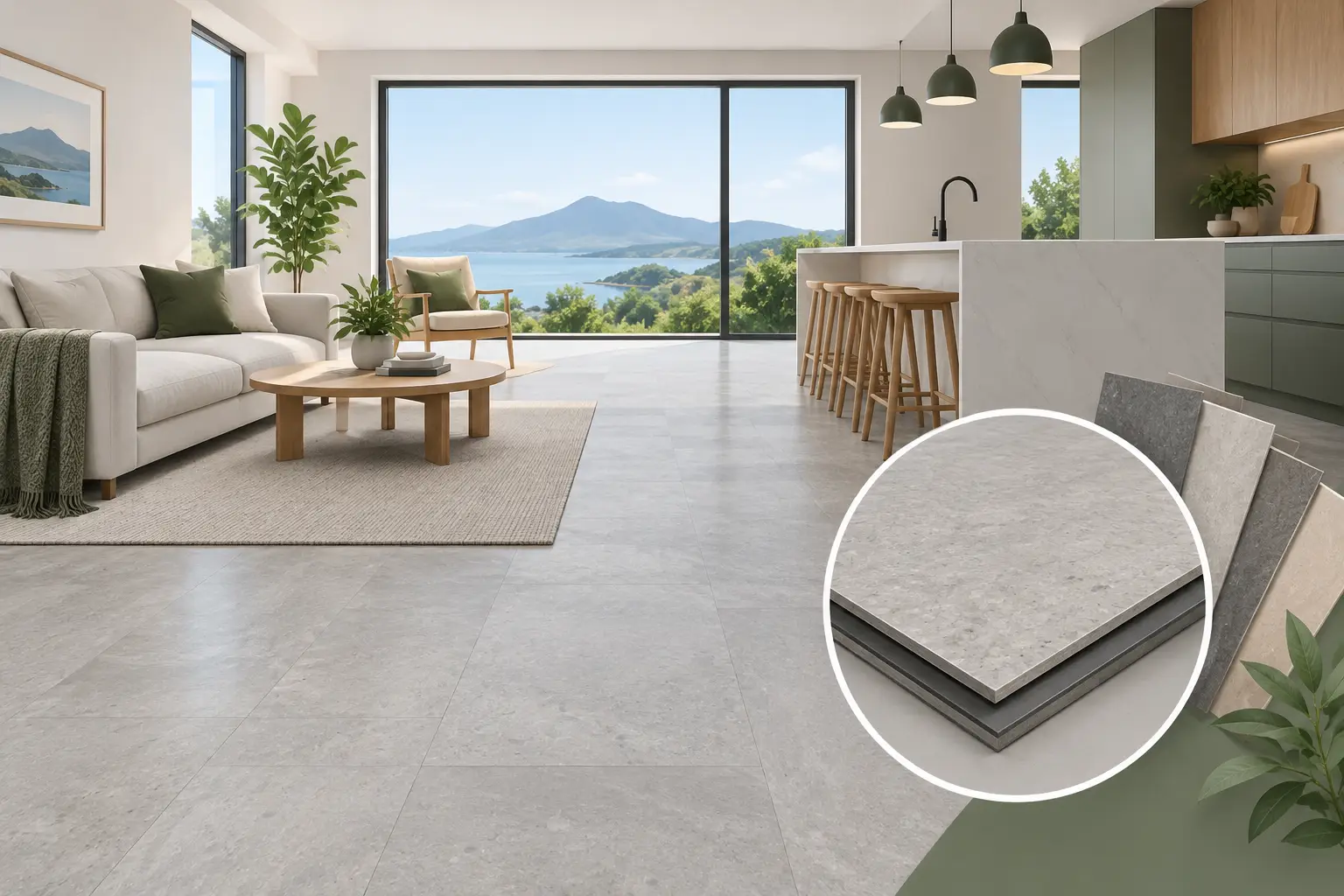
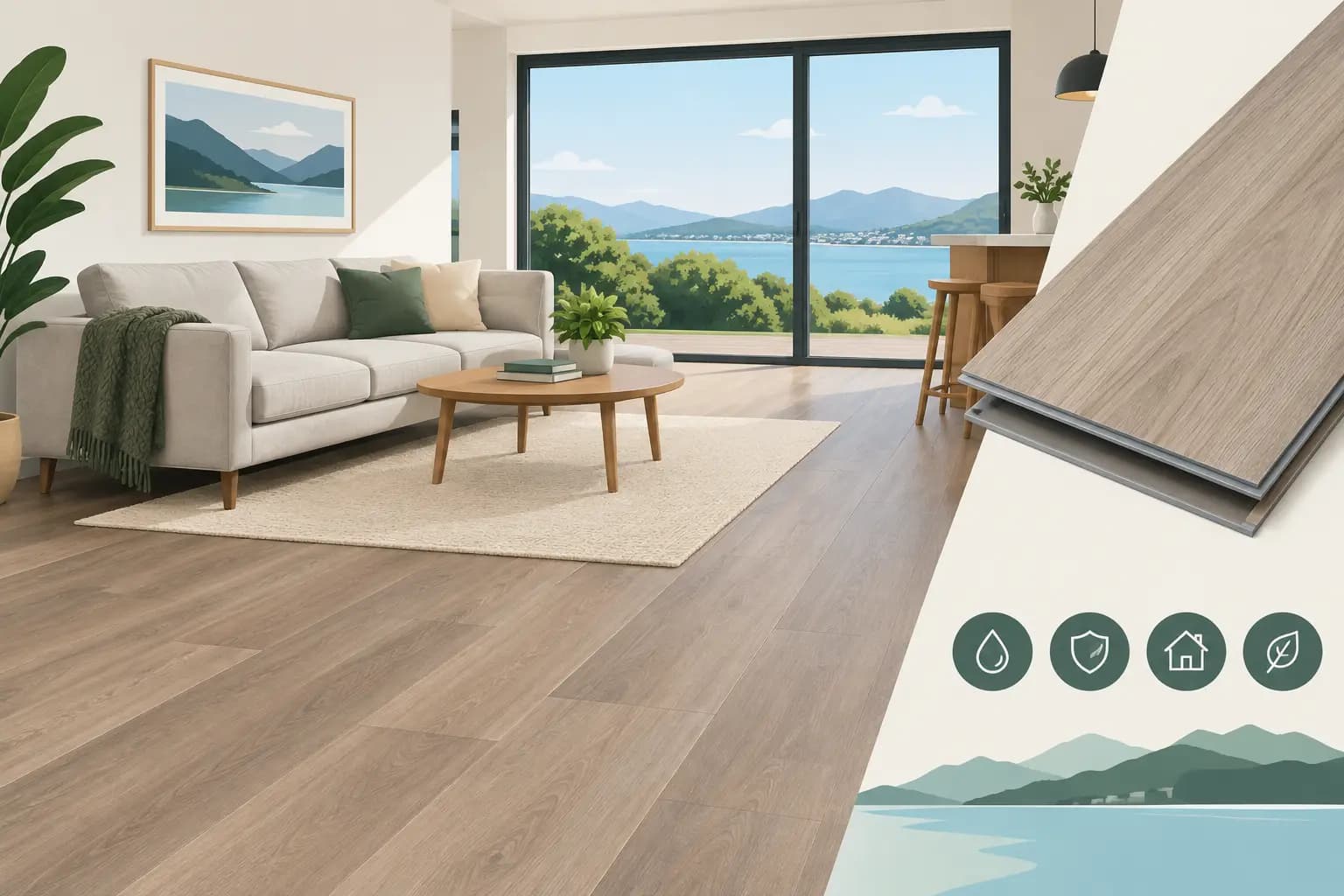
For many coastal homes, stone polymer composite flooring, commonly called SPC, is the strongest all-round option. It combines a rigid, stable core with a hard-wearing surface, giving homeowners the timber-look finish they want without the anxiety that comes with water-sensitive flooring.
A quality SPC floor is a particularly good fit for open-plan living areas, kitchens, hallways and bedrooms. It is scratch resistant, paw-tested, childproof and built to cope with the everyday knocks that come with coastal family living. Sand still needs to be swept up, of course, but a durable wear layer is far more forgiving than softer flooring surfaces.
Water resistance is the other major advantage. SPC is well suited to areas where damp feet and small spills are part of normal life. That does not mean ignoring leaks or flooding. Water can still affect subfloors, wall linings and the edges of an installation if it is left sitting there. But for daily moisture, it gives a coastal household valuable breathing room.
Heat performance needs proper attention. Not all SPC products are equal, and direct sun through large doors or full-height glazing must be assessed before installation. The subfloor, expansion allowance, room layout and product specification all matter. This is where technical advice on site is worth far more than choosing a plank from a showroom display.
Where SPC works best
SPC is an excellent choice from the entry through the living area, kitchen and bedrooms when you want one consistent look across the home. It also works well in renovations where speed matters. With the right preparation, a floating composite floor can be installed efficiently and used soon after completion.
For bathrooms and laundries, the floor itself may be water resistant, but the full room still needs correct waterproofing and detailing. Flooring is not a replacement for a properly built wet area.
MFB flooring for warmth with everyday durability
MFB flooring is another composite option worth considering for coastal homes, especially where homeowners want a warmer underfoot feel and a refined timber appearance. The right MFB product offers a tough surface for busy family spaces while delivering a more natural visual character than many conventional hard-floor options.
It is well suited to living rooms, dining areas, bedrooms and hallways that receive normal household traffic. A quality underlay beneath the floor can improve acoustic comfort as well, which is useful in open-plan houses where sound travels easily.
The trade-off is simple: match the product to the room. If an entry is regularly exposed to dripping wetsuits, wet dogs and sand straight from the beach, SPC may be the more practical choice. If the area is a drier living zone and the priority is a warm, timber-inspired finish, MFB can be an excellent fit. Good flooring decisions are not about declaring one product the winner everywhere. They are about using the right material in the right part of the house.
Can bamboo flooring work in a coastal home?
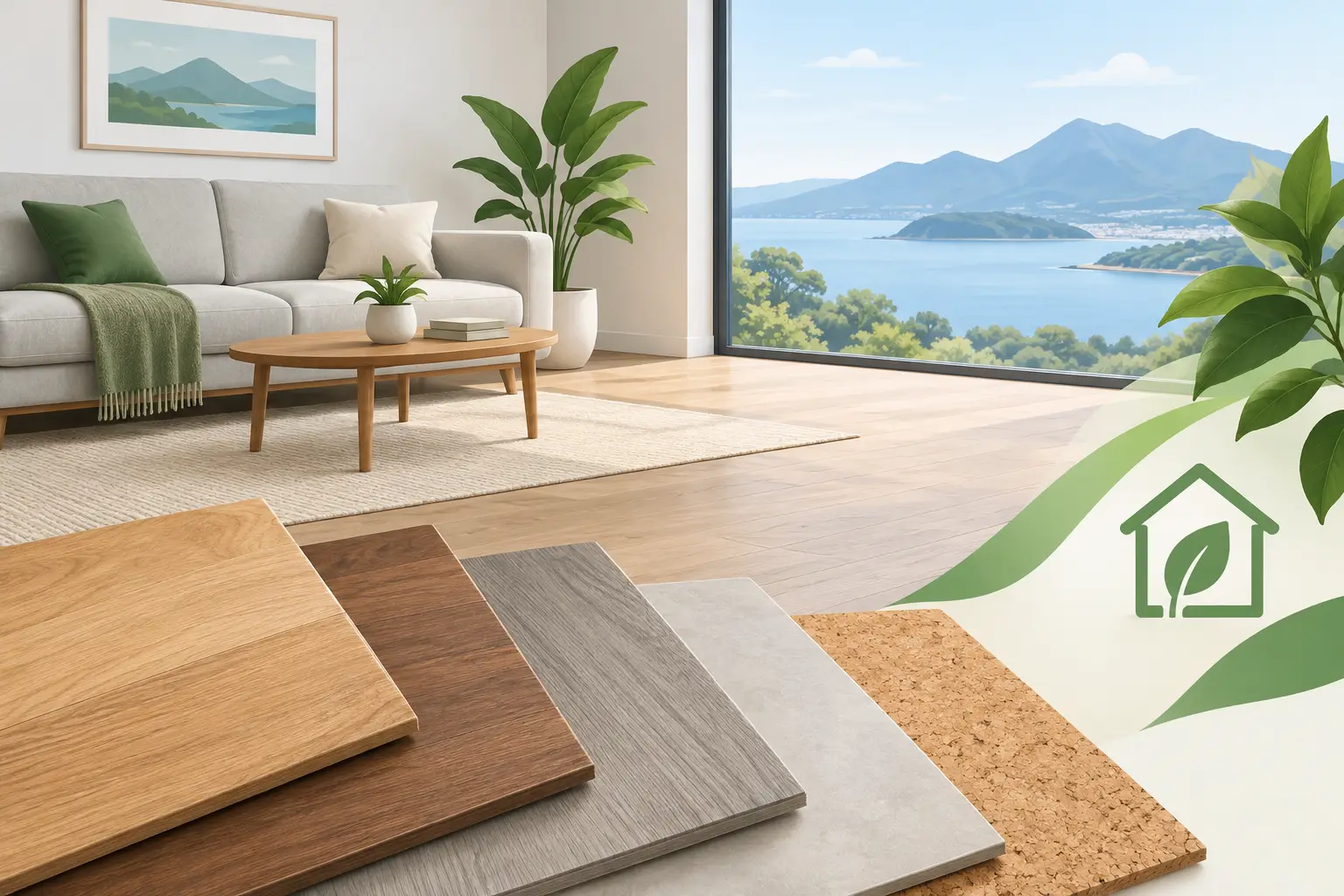
Absolutely, provided it is chosen for the right spaces and installed correctly. Premium bamboo flooring brings genuine warmth, character and a strong sustainability story that appeals to homeowners who do not want their new floor to look synthetic. It can transform a bedroom, lounge or dining space into something with more depth than a standard hard-floor installation.
Bamboo is not the automatic answer for every wet, sandy threshold. Like other natural flooring products, it performs best when moisture is controlled and the room is properly considered. It is better suited to dry internal areas than a beachside entry where people arrive dripping and barefoot several times a day.
Sunlight is also part of the equation. Natural materials can change in colour over time, and harsh direct light should be managed with sensible window coverings where necessary. That is not a flaw - it is part of choosing a real material. Homeowners who want the look and feel of bamboo should be comfortable with its natural variation and give it the conditions it deserves.
Do not overlook the installation details
Even the best coastal flooring product can disappoint if the preparation is rushed. Moisture testing, subfloor condition, levelling, underlay selection and expansion gaps are not optional extras. They are the difference between a floor that looks sharp for years and one that starts showing problems after its first summer.
Concrete slabs need to be checked for moisture before flooring goes down. Timber subfloors need to be secure, level and appropriately ventilated. Uneven areas can cause movement, noise and premature wear, especially with click-together flooring systems.
Trims and finishing details matter too. Aluminium trims protect transitions and create a clean finish at doorways and changes in level. Correctly fitted skirtings, expansion allowances and door clearances stop a good installation from looking amateur once the furniture goes back in.
A professional measure is where these issues become visible early. It allows the installer to see the glazing, assess the traffic flow, identify problem areas and recommend a layout that works with the room rather than against it. No costly surprises. No guesswork from a sales counter.
Choose colour and texture for real coastal life
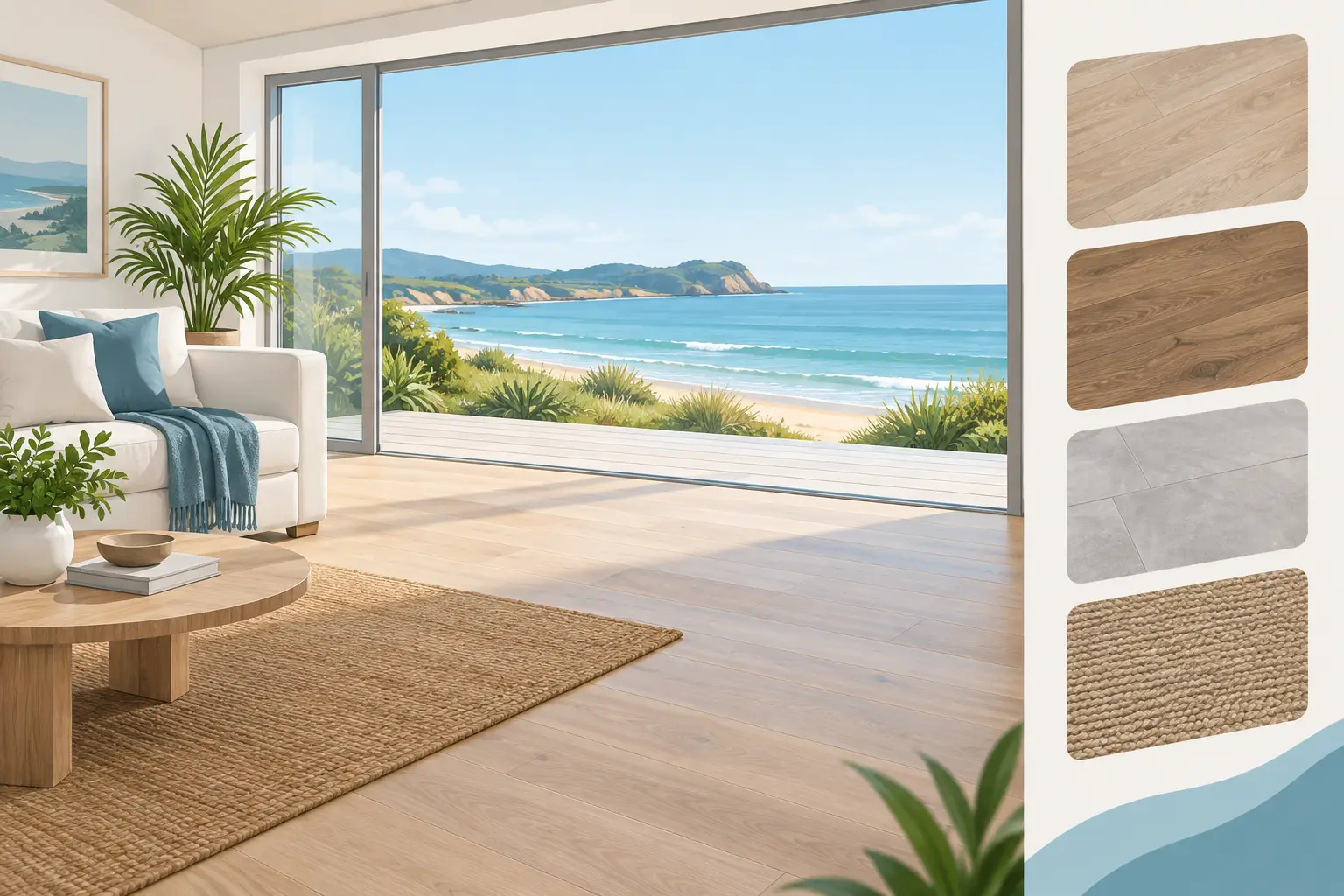
Pale oak tones, soft greys and natural timber colours suit coastal interiors because they keep rooms light without making every grain of sand obvious. Very dark floors can look striking, but they tend to show dust, pet hair and footprints quickly. Very smooth, high-gloss finishes may also make marks more visible than a matte, textured surface.
For a busy household, a mid-tone plank with natural variation is usually the smart choice. It gives the relaxed coastal look people want while being forgiving between cleans. Wider planks can make open living spaces feel calm and generous, while narrower boards may suit older homes or rooms with more complex layouts.
Take samples home and look at them in the actual room. Check them in morning light, late afternoon sun and under your evening lighting. The colour you like under showroom lights can look completely different beside your cabinetry, paint and curtains.
A better way to make the final call
Start with the hard questions, not the pretty sample. Identify the wet zones, the sunny zones and the high-traffic zones. Then choose a floor that handles those conditions without asking you to change the way your family lives.
For most coastal renovations and new builds, SPC offers the best mix of durability, water resistance and easy care across the main living areas. MFB can be ideal where warmth and visual depth are the priority in drier rooms. Bamboo brings sustainable natural appeal when used in the right environment and given the right preparation.
At Trade Flooring NZ, Martin can assess the site, talk through the options plainly and install a floor to the point of perfection. The best result starts with a proper measure, a product that suits the house and workmanship that does not leave the details to chance.