A good stone composite flooring review should start where real life happens: wet shoes at the front door, dog claws racing down the hallway, children dropping toys, and afternoon sun pouring through large windows. For many Northland and Auckland homes, stone composite flooring is a sensible answer to those pressures. But not every board is built alike, and a floor that looks sharp in a sample can disappoint if its core, wear layer, preparation or installation are wrong.
Stone composite flooring is often sold as the easy option. In many ways, it is. It is tough, water-resistant and quick to install compared with many traditional floor coverings. The catch is that the result depends on matching the right product to the room, preparing the subfloor properly and allowing for the conditions inside your home.
What is stone composite flooring?
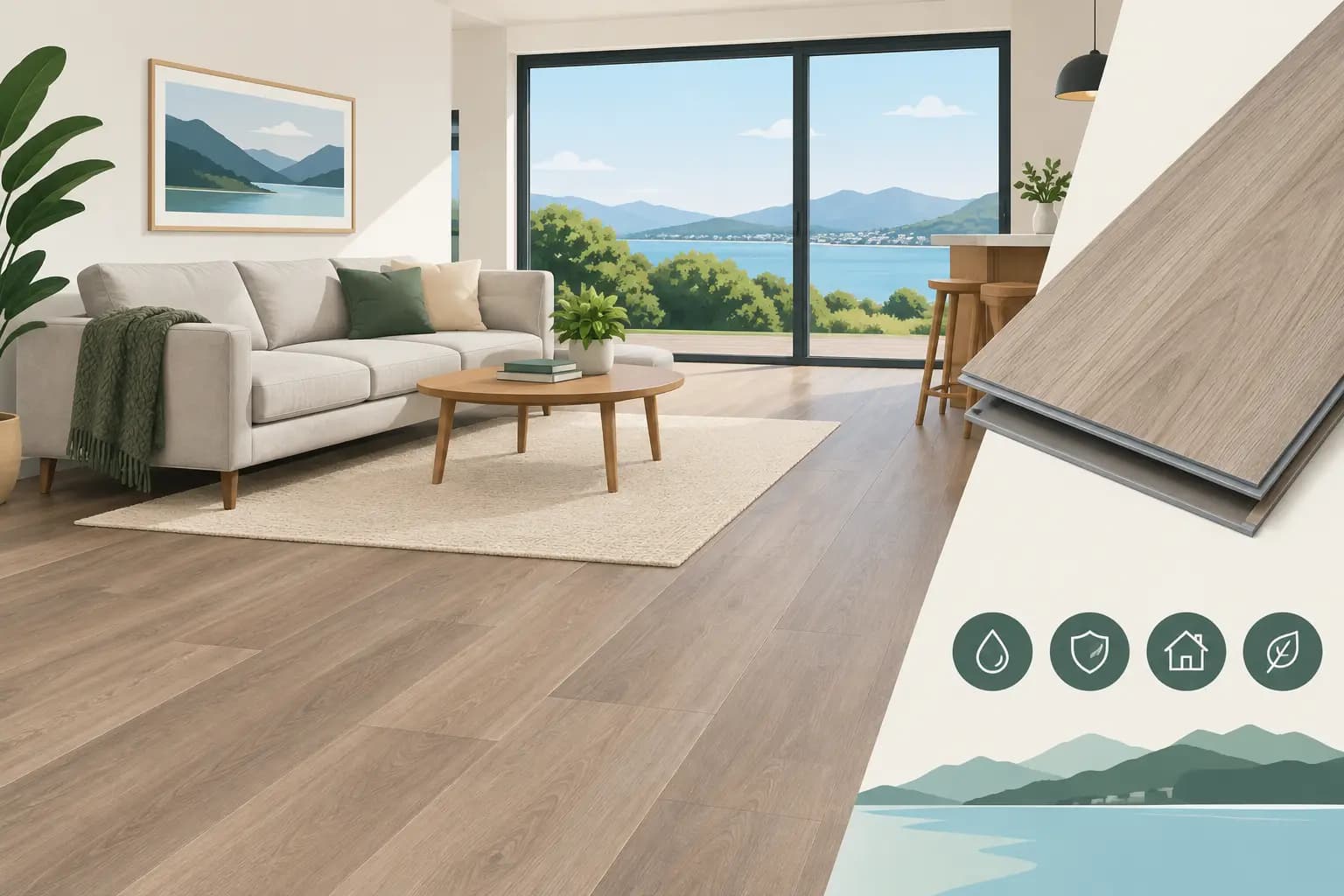
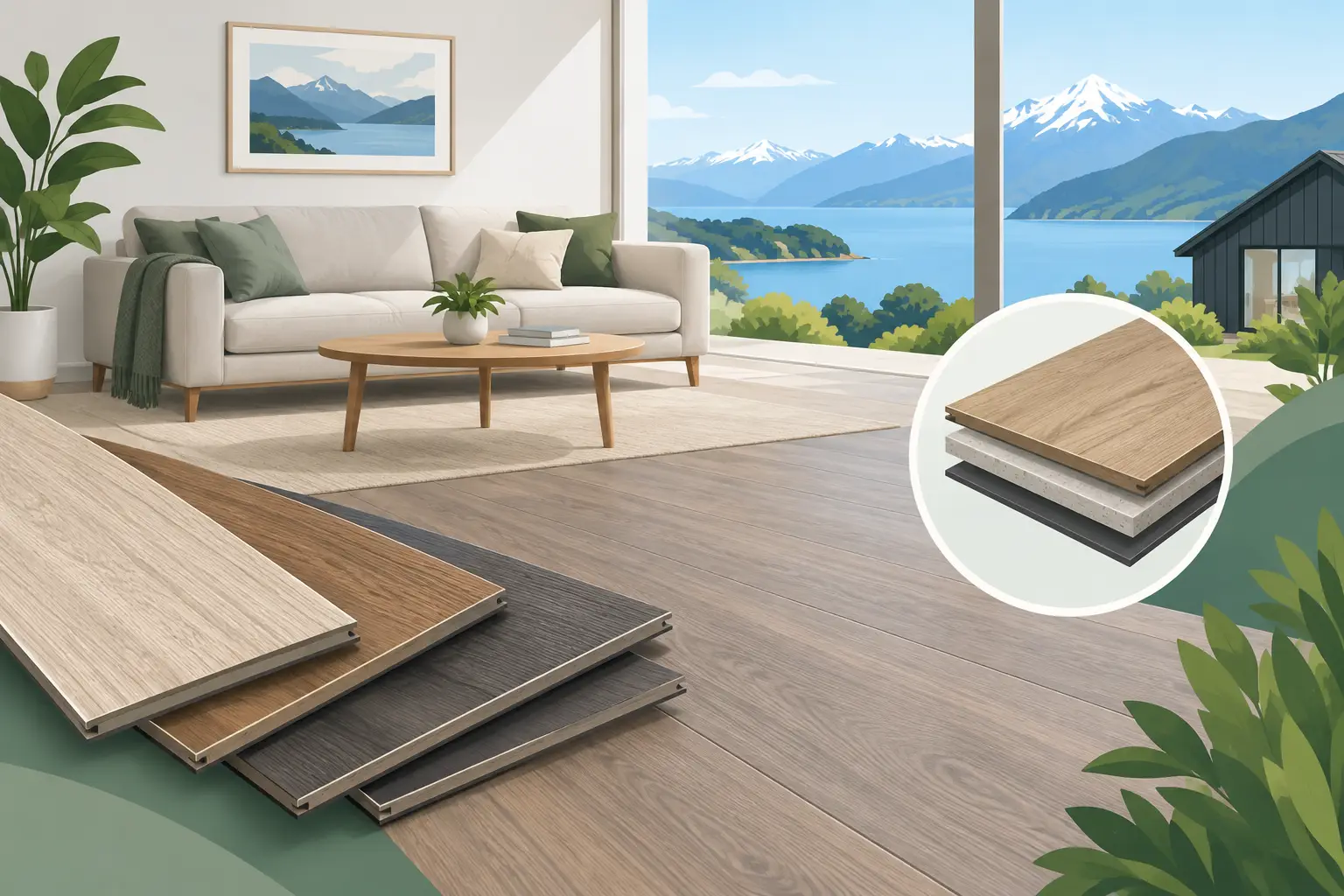
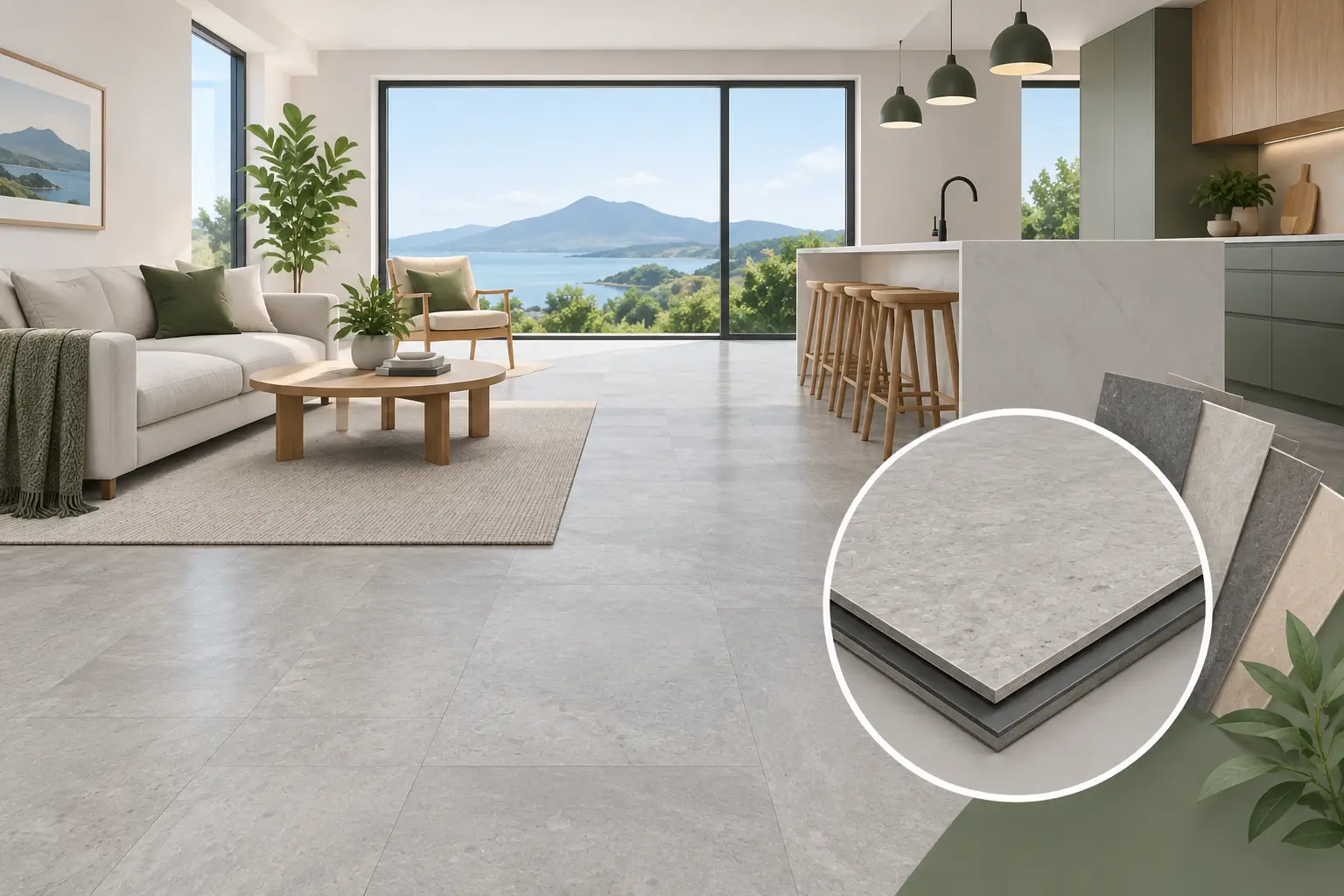
Stone composite flooring usually refers to SPC flooring, short for stone polymer composite. It is a rigid-core plank made from mineral content and polymer binders, finished with a printed decorative layer and a protective wear layer. The boards click together as a floating floor, creating a timber-look surface without the movement and moisture concerns associated with some natural products.
The rigid core is the reason SPC has become popular in renovations and new builds. It provides a stable, dense board that handles everyday knocks well and feels firmer underfoot than softer vinyl options. Quality planks also use an attached acoustic backing, which helps reduce sound transfer and gives the floor a more comfortable feel.
Do not assume every plank labelled SPC will perform the same way. Board thickness, wear-layer quality, click-system engineering, backing density and dimensional stability all matter. These are the details that separate a floor that stays tight and tidy from one that begins to show gaps, noisy movement or damaged joins.
Stone composite flooring review: where it earns its place
For busy households, the strongest case for stone composite flooring is practical durability. It is a hard-working surface for kitchens, dining rooms, hallways, living areas and bedrooms. Spills can be wiped up without the panic associated with a timber floor, and the surface is well suited to homes with children, pets and regular visitors.
It is also a strong option when replacing tired carpet and old laminate in one continuous area. Wide-plank timber visuals can make an open-plan room feel calmer and larger, while the lower profile of many SPC products can simplify transitions to existing rooms. With the correct trims and expansion detailing, the finished result can be clean and understated rather than overly plastic-looking.
The waterproof nature of the plank itself is another genuine advantage. A dropped drink, wet towel or muddy paw is not likely to damage the board. That does not mean a floating floor turns a bathroom into a wet room. Water still needs to be managed at edges, penetrations and doorways, and any leak beneath the floor needs attention quickly. Waterproof boards do not fix poor building maintenance.
For rental upgrades and light-commercial spaces, the easy-care surface can also reduce ongoing hassle. A quality floor that cleans easily and handles frequent foot traffic is often better value than a cheaper product that needs replacing early.
The trade-offs homeowners should understand
Stone composite flooring is not a miracle product, and a straight review needs to say so. It can feel cooler and harder underfoot than carpet or a softer vinyl floor. An attached backing helps, but it will not create the cushioned feel of carpet. In bedrooms, that may be a deciding factor for some households.
The floor is also only as flat as the surface underneath it. SPC is rigid, which means it can bridge minor imperfections but will not hide a rough or uneven subfloor. High spots can stress click joins. Low areas can create movement underfoot. Both can lead to noise, joint damage or an unsatisfactory finish over time.
Deep gouges are another consideration. Stone composite flooring is scratch resistant, not scratch proof. Dragging heavy furniture, shifting appliances without protection or allowing grit to build up at entrances can mark any floor. Felt pads, proper entry mats and sensible furniture handling remain part of owning a good-looking floor.
Finally, repair is different from sanding timber. Individual planks can sometimes be replaced, but it is not always a simple lift-and-click job once a large floating floor is installed. The location of the damaged board, the direction of the planks and access from the wall all affect the repair method. Choose a colour you will still be happy with years from now, and keep a few spare planks from the original batch.
Heat through large glazed areas matters in New Zealand
Sun exposure is one of the most overlooked parts of flooring selection. Homes with expansive north- or west-facing glazing can experience serious heat build-up, especially in Auckland and Northland summers. Direct sun can push surface temperatures well beyond what the room itself feels like.
A stable rigid-core product is generally a better choice than many softer flooring alternatives in these conditions, but it still needs to be assessed properly. Darker colours absorb more heat. Large uninterrupted floor areas require correct perimeter expansion space. Window coverings, UV protection and the exact product specification all play a part.
This is where a site measure is more useful than choosing from a small sample in a showroom. A flooring specialist should look at the glazing, room layout, existing subfloor, transitions and likely temperature changes before recommending a product. A floor does not perform in a brochure. It performs in your house.
Installation decides whether the floor looks premium
The visible surface gets all the attention, but the installation is where value is either protected or lost. Before any planks go down, the subfloor should be checked for flatness, moisture and structural soundness. Concrete may need moisture testing and levelling. Timber subfloors may need repairs, fastening or preparation to remove movement and squeaks.
Expansion gaps around walls, cabinetry, pipes and fixed objects are not optional. A floating floor needs room to move with seasonal changes. Those gaps should then be finished neatly with skirting, scotia or suitable trims, not squeezed tight and hidden with hope.
Door jambs, transitions to tile, stair details and aluminium trim selection also separate a rushed job from a professional one. These are the areas homeowners notice every day. A plank floor can be installed quickly, but precision still takes skill.
At Trade Flooring NZ, the focus is not just supplying a board. It is assessing the site, helping select a suitable option, measuring accurately and installing it to the point of perfection. Direct-import pricing is valuable, but it only stays good value when the product and workmanship are right from the start.
How to judge value, not just price
When comparing quotes, look beyond the square-metre figure. Ask what is included for floor preparation, moisture management, underlay, trims, removal of old flooring, furniture moving and finishing at doorways. A cheap headline price can become expensive once these essentials are added.
Also compare the actual product specifications. Check the total plank thickness, wear-layer rating, attached backing, warranty conditions and recommended installation areas. A reputable supplier should be able to explain why a particular board suits your home, rather than simply steering you to whatever happens to be on special.
Samples are useful, but view them in your own light. Put them beside cabinetry, paint colours and existing furnishings. Look at them in morning light and again in the late afternoon. The right colour should work with the house, not fight it.
A well-chosen stone composite floor should make daily life easier without looking like a compromise. Start with an honest assessment of your rooms and how your household uses them, then make the final choice with the subfloor and installation plan already accounted for.