A floor can look excellent in the showroom and still be the wrong choice once it meets wet school shoes, a dog bowl, afternoon sun and everyday family traffic. When comparing SPC versus laminate flooring, the real question is not which one looks better on day one. It is which floor suits your room, your household and the way your home handles moisture and heat.
Both are popular floating-floor options. Both can deliver convincing timber looks without the cost, upkeep or installation time of traditional hardwood. But their cores are fundamentally different, and that difference matters in Northland and Auckland homes.
SPC versus laminate flooring: the real difference
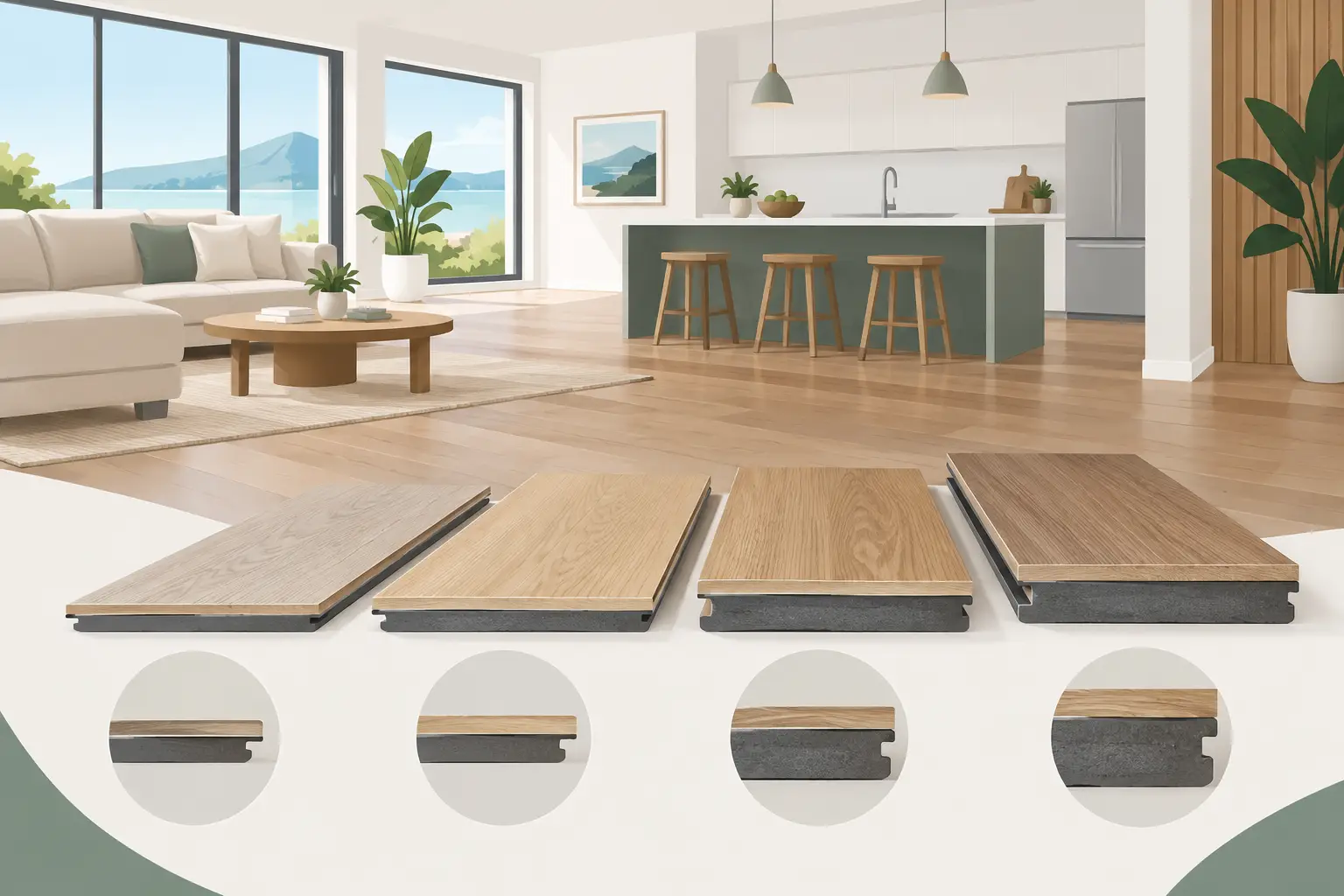
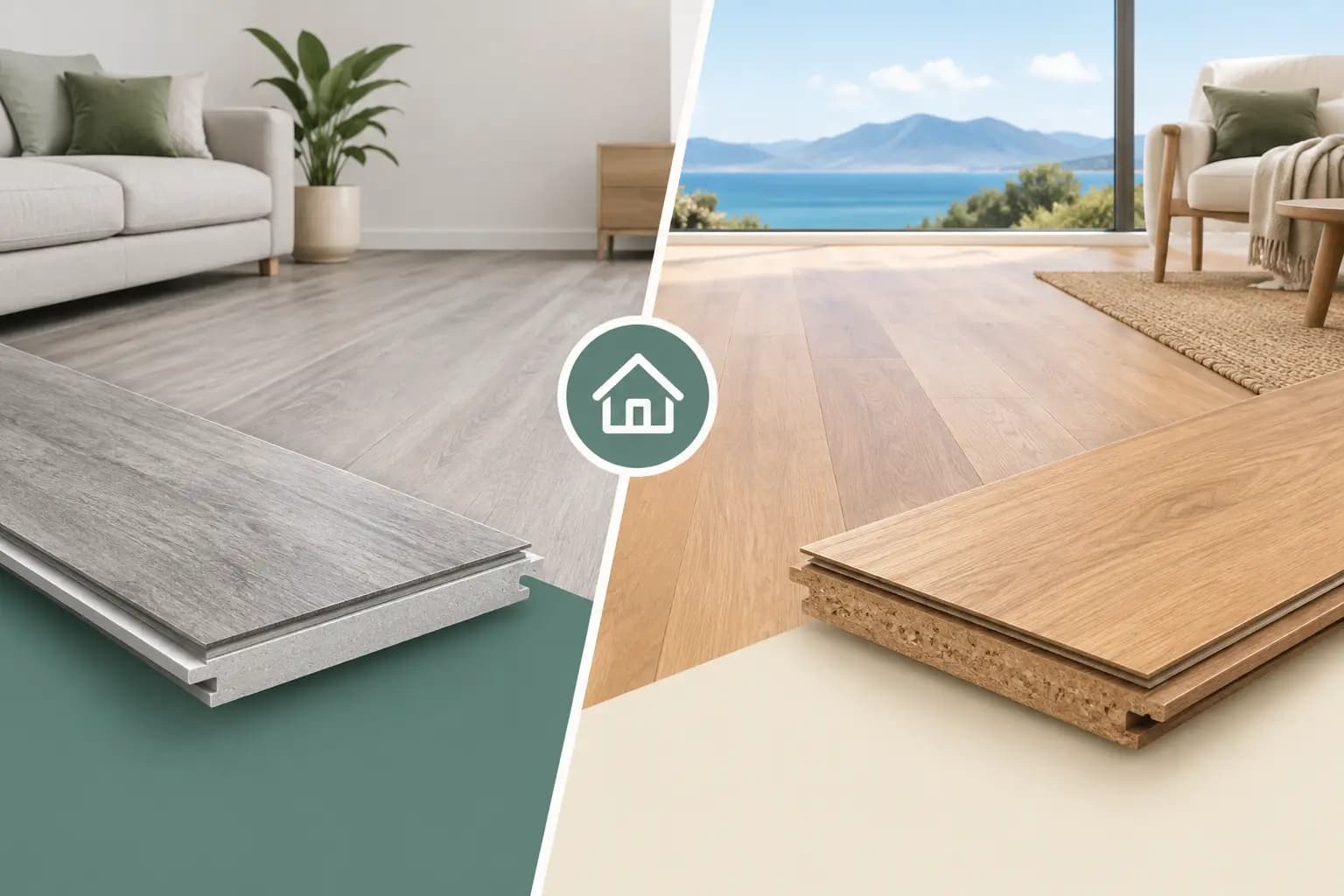
SPC stands for stone polymer composite. It is a rigid plank with a dense mineral-based core, usually finished with a printed décor layer and a tough protective wear layer. The construction gives SPC excellent dimensional stability and strong resistance to water exposure.
Laminate flooring uses a high-density fibreboard core, topped with a photographic timber design and a protective surface. Quality laminate can be highly scratch resistant and visually impressive, but its fibreboard core is more vulnerable when water gets into the joins, edges or damaged areas.
That does not make laminate a poor product. It makes it a product that needs to be specified properly. A quiet bedroom, a well-protected living space or a rental refresh may suit laminate very well. A busy kitchen, entry, family room or home with large glazed doors often points towards SPC.
Water resistance is where the gap opens
For many households, water is the deciding factor. SPC flooring has a waterproof core. A spill from the kitchen bench, wet paws at the ranch slider or a tipped drink can be wiped up without the core swelling.
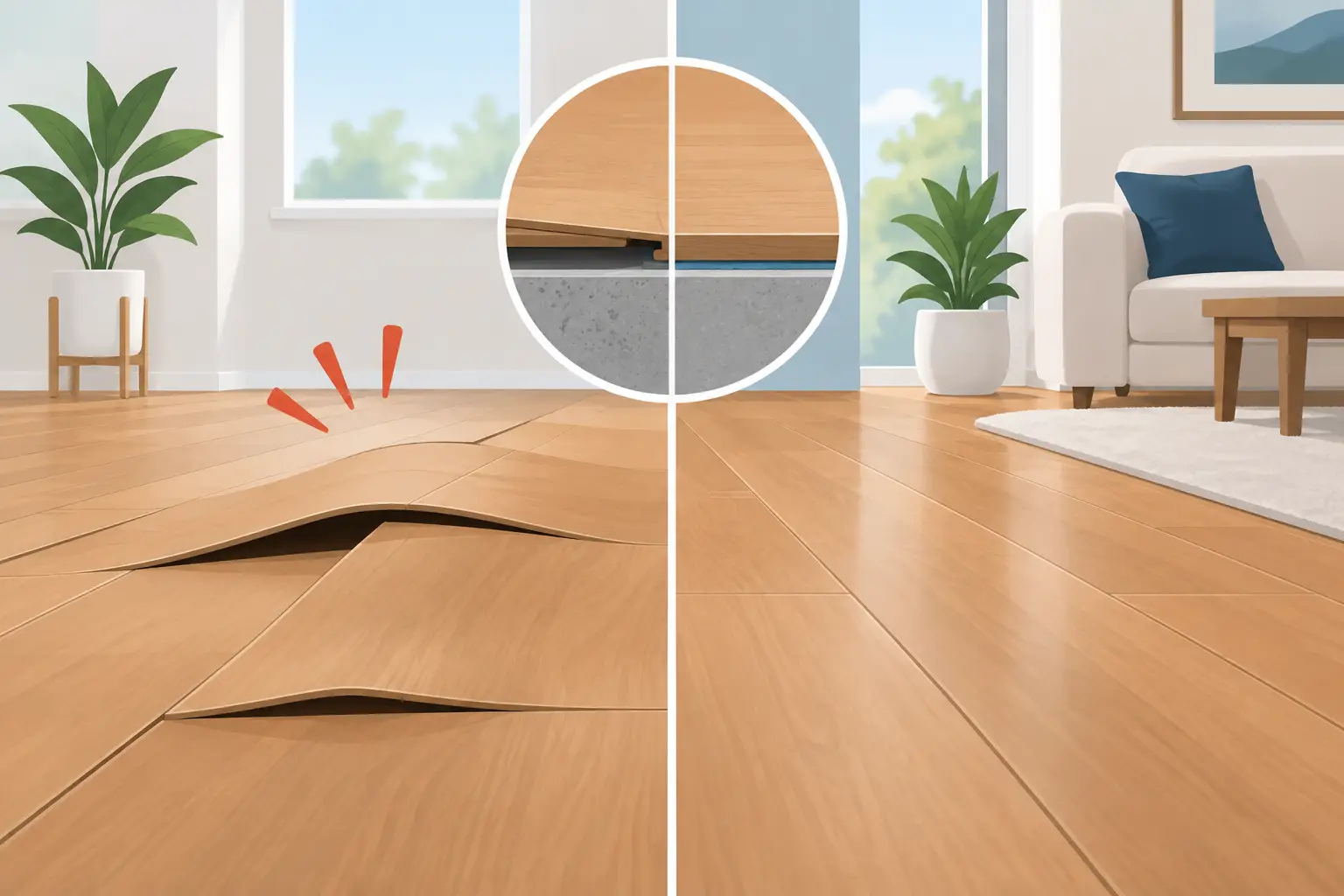
Laminate needs more care. Some modern laminate ranges have water-resistant surface technology and sealed-edge systems that buy you valuable time to clean up a spill. They are not the same as having a waterproof composite core. Repeated moisture at joins, standing water or a leak left unnoticed can cause laminate edges to lift or the core to swell.
There is an important catch: waterproof flooring does not make a room waterproof. Water can still travel beneath any floating floor through gaps at walls, doorways or plumbing penetrations. If there is a leaking dishwasher, failed shower waterproofing or ongoing subfloor moisture issue, fix the cause first. Flooring should never be used to hide a building problem.
For bathrooms, the right answer depends on the product specification, room design and installation details. Many homeowners assume SPC can go anywhere because the plank itself is waterproof. It may be suitable for some spaces, but perimeter sealing, substrate condition and manufacturer requirements still matter. Get the site checked rather than relying on a label.
Heat and sun through large glazed areas
North-facing windows and wide sliders make a New Zealand home feel open and bright. They can also put flooring under serious heat load. This is one area where core stability matters.
SPC is generally more stable than standard laminate when temperatures rise, which is a major advantage in sun-exposed living areas. A quality SPC product, correctly acclimatised and installed with the required expansion allowances, is well suited to demanding spaces with plenty of glass.
Laminate can perform well too, but it is less forgiving of extreme heat and moisture changes. Direct sun, insufficient expansion space or an unsuitable installation can lead to movement, opening joints or edge stress over time. That is why a proper measure is worth more than a quick guess based on square metres.
Even with SPC, no installer should promise that any floating floor ignores physics. Window coverings, sensible room ventilation and correct detailing all help. The point is to choose a product designed for the conditions, then install it to the point of perfection.
Scratch resistance, dents and real family life
Both SPC and laminate can handle the daily punishment of children, pets and furniture better than many people expect. The wear layer and surface finish are as important as the product category, so compare the actual specifications rather than assuming one label tells the whole story.
Laminate often has an exceptionally hard surface and can be very resistant to fine scratching. It is a strong option for dry areas with plenty of foot traffic. SPC is also scratch resistant, paw-tested and childproof in practical household terms, but no floor is immune to grit dragged in from the drive, furniture legs or a sharp stone under a chair.
SPC's dense core generally gives it better resistance to dents from everyday impact. Dropped toys, moving chairs and active households are less likely to leave a permanent mark than they would on a softer material. Use felt pads under furniture, lift rather than drag heavy items, and place a quality mat at exterior doors. Those simple habits protect either floor.
Feel underfoot and noise levels
Laminate usually feels a little warmer and more timber-like underfoot than SPC because of its fibreboard core. For bedrooms and upstairs rooms, that can be appealing. The sound underfoot can also be less sharp when the right underlay is used.
SPC is denser and can feel firmer or cooler, particularly over a concrete slab. That is not automatically a downside. Many homeowners prefer its solid, stable feel. The underlay selection and subfloor preparation make a big difference to comfort and acoustic performance.
Do not treat underlay as an optional extra or choose it purely on price. The wrong underlay can compromise the locking system, create movement under the planks or fail to meet the flooring manufacturer's requirements. A suitable acoustic underlay helps reduce sound while supporting the floor properly.
Appearance and design choice
There is no shortage of good-looking options in either category. Laminate can offer highly detailed timber grain, textured finishes and long planks that create a classic wood-floor appearance. SPC has improved dramatically and now offers realistic oak tones, natural embossing and contemporary colours that work across modern homes.
The better choice depends on the look you want and how the floor connects with your cabinetry, wall colours and natural light. Pale oak can make a compact room feel larger. Mid-tone timber shades hide day-to-day dust better than very dark or very pale floors. Wide planks can look outstanding in open-plan spaces, but the direction of installation should work with the room, the light and the layout.
Samples are useful, but look at them in your actual home. A colour that feels warm under showroom lighting can look completely different beside your windows at 3 pm.
Cost: look beyond the plank price
Laminate is often the lower-cost starting point, particularly for larger dry areas. SPC can cost more upfront, depending on the range and thickness, but may offer better value where water exposure, heat and impact resistance are higher priorities.
The installed price is what matters. That includes moisture testing where needed, subfloor preparation, underlay, trims, skirtings or scotia, removal of old flooring and the workmanship required to finish the job cleanly. Cheap planks fitted over an uneven subfloor are not a bargain. They are a shortcut to noisy movement, joint issues and a floor that looks unfinished around the edges.
A direct-import model can make premium composite flooring more accessible without paying conventional showroom mark-ups. But price should still sit beside product suitability and installation quality. A good floor only performs as well as the preparation underneath it.
When SPC is the smarter choice
Choose SPC when moisture risk is part of normal life, not an occasional accident. It is particularly well suited to kitchens, dining rooms, hallways, entrances, busy family living areas and homes with pets. It is also the safer bet for areas with substantial glazing and strong sun exposure, provided the product and installation are specified correctly.
SPC is a practical choice when you want a single continuous floor through several living spaces and do not want every spilled drink to become a concern. It combines low-maintenance living with the clean timber look many renovators want.
When laminate makes sense
Choose quality laminate for dry, stable areas where a hard-wearing timber look and a warmer underfoot feel are priorities. Bedrooms, studies and low-moisture living rooms can be ideal locations. It can deliver excellent visual impact for a sensible budget.
The key word is quality. Look for a product with a proven locking profile, credible wear rating and clear instructions for moisture, underlay and expansion gaps. Avoid treating laminate as a cheap substitute for every room in the house. Used in the right place, it is a capable flooring option.
The installation detail that decides the result
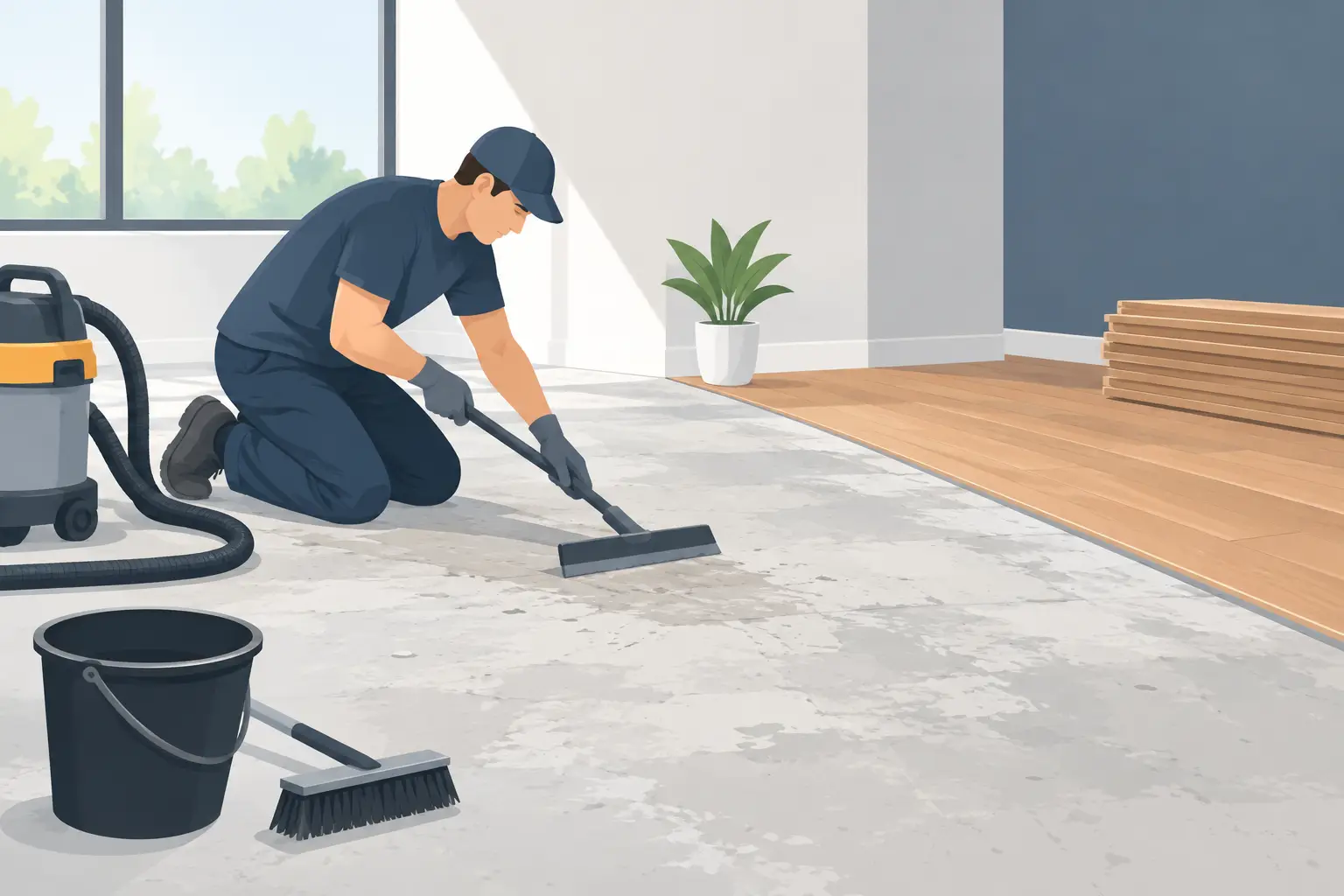
SPC and laminate are both floating floors, but that does not mean installation is a simple click-together job. Subfloors need to be dry, flat and clean. Door jambs, transitions, expansion gaps, trims and perimeter finishing all need attention. If the floor runs through multiple rooms or meets existing tile, carpet or stairs, the details become even more important.
At Trade Flooring NZ, Martin starts with the site rather than a sales pitch. A free measure and clear quote give you the chance to match the right floor to the conditions before materials are ordered and installed.
The best choice is the one you will not have to worry about every time the dog comes inside wet or the afternoon sun hits the living room. Choose for the room you actually live in, then make sure the preparation and finish are done properly.