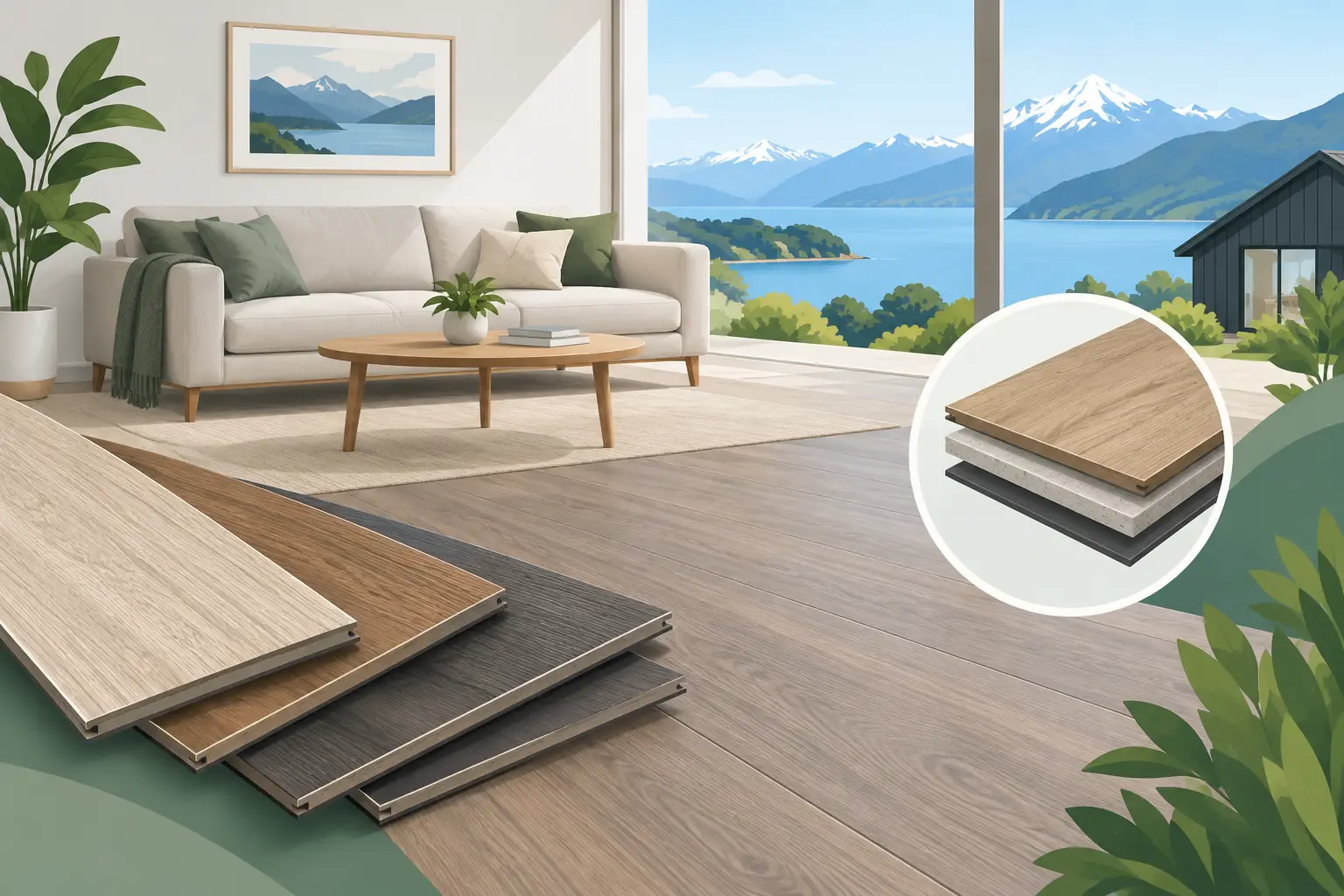
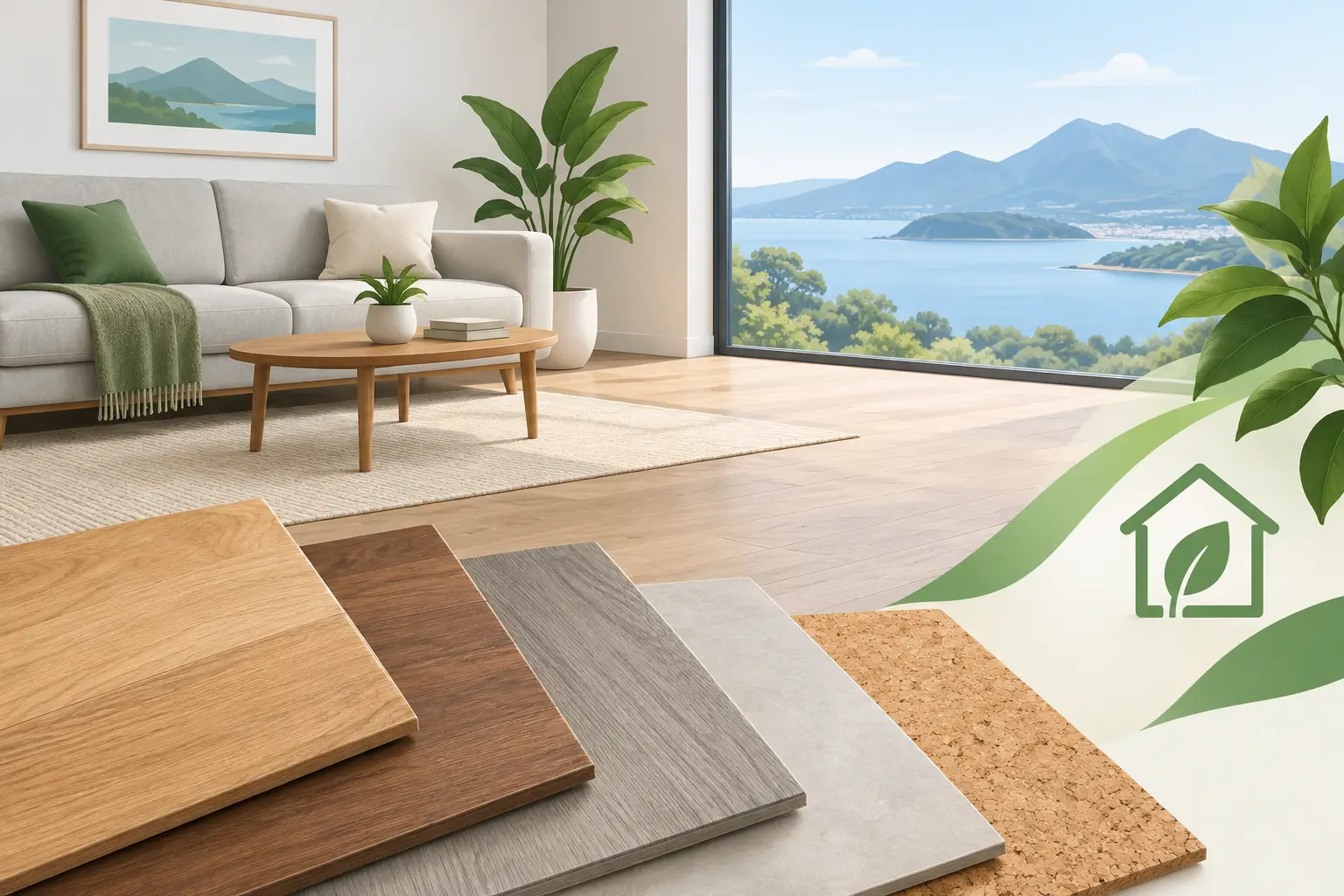
That new-floor smell is not always a sign of quality. For families renovating in Auckland, Northland or Whangārei, the best low VOC flooring materials are the ones that suit the room, stand up to real household traffic and avoid filling the home with unnecessary chemical emissions.
VOC means volatile organic compounds. These are gases released from certain manufacturing processes, finishes, glues, adhesives and coatings. Some emissions fade quickly after installation, while others can linger. If you are building, replacing carpet or renovating while living in the home, choosing flooring with low emissions is a practical decision, not just a green one.
The catch is that “low VOC” is not a single material category. A timber floor, bamboo floor, vinyl-based composite floor or carpet can all vary widely depending on how they are made and installed. The full system matters: the plank, its coating, the underlay, moisture barrier and any adhesive.
What makes flooring genuinely low VOC?
Marketing labels can make this more complicated than it needs to be. Look beyond broad claims such as “eco-friendly” or “natural”. Ask what has actually been tested, what finish is on the product, and whether the installation method needs adhesive.
A credible supplier should be able to explain the product’s emissions information and its construction. For wood and bamboo products, that means asking about binders, resins and surface coatings. For composite floors, ask about the core, wear layer and whether the product has been independently tested for indoor air emissions.
Low VOC does not automatically mean zero VOC. Very few building products are entirely emission-free. The sensible goal is to reduce avoidable indoor pollutants while still choosing a floor that will last. A floor that fails early, swells at the joints or needs replacing after a few years is not a sustainable outcome.
Best low VOC flooring materials for real homes
Strand-woven bamboo flooring
Quality bamboo is one of the strongest choices for homeowners who want a renewable, timber-look floor with serious everyday durability. Bamboo regrows far faster than traditional hardwood trees, and strand-woven bamboo is manufactured by compressing bamboo fibres into a dense, hard-wearing board.
Its low VOC credentials depend on the detail. Bamboo is not simply cut, sanded and laid. It is processed with binders and finished with coatings, so product quality matters. Look for a supplier that can clearly identify the adhesives and coatings used, rather than relying on the word “bamboo” as proof of low emissions.
For busy family homes, strand-woven bamboo offers a warm, natural appearance without the softness that can make some timber floors prone to dents. It is a good fit for living rooms, hallways, bedrooms and open-plan areas. Proper acclimatisation, subfloor preparation and expansion allowances are essential. A good product can still perform poorly if it is installed badly.
Bamboo is not the best answer for every wet area. In bathrooms, laundries or spaces with frequent standing water, a waterproof composite floor is usually the safer call.
SPC composite flooring
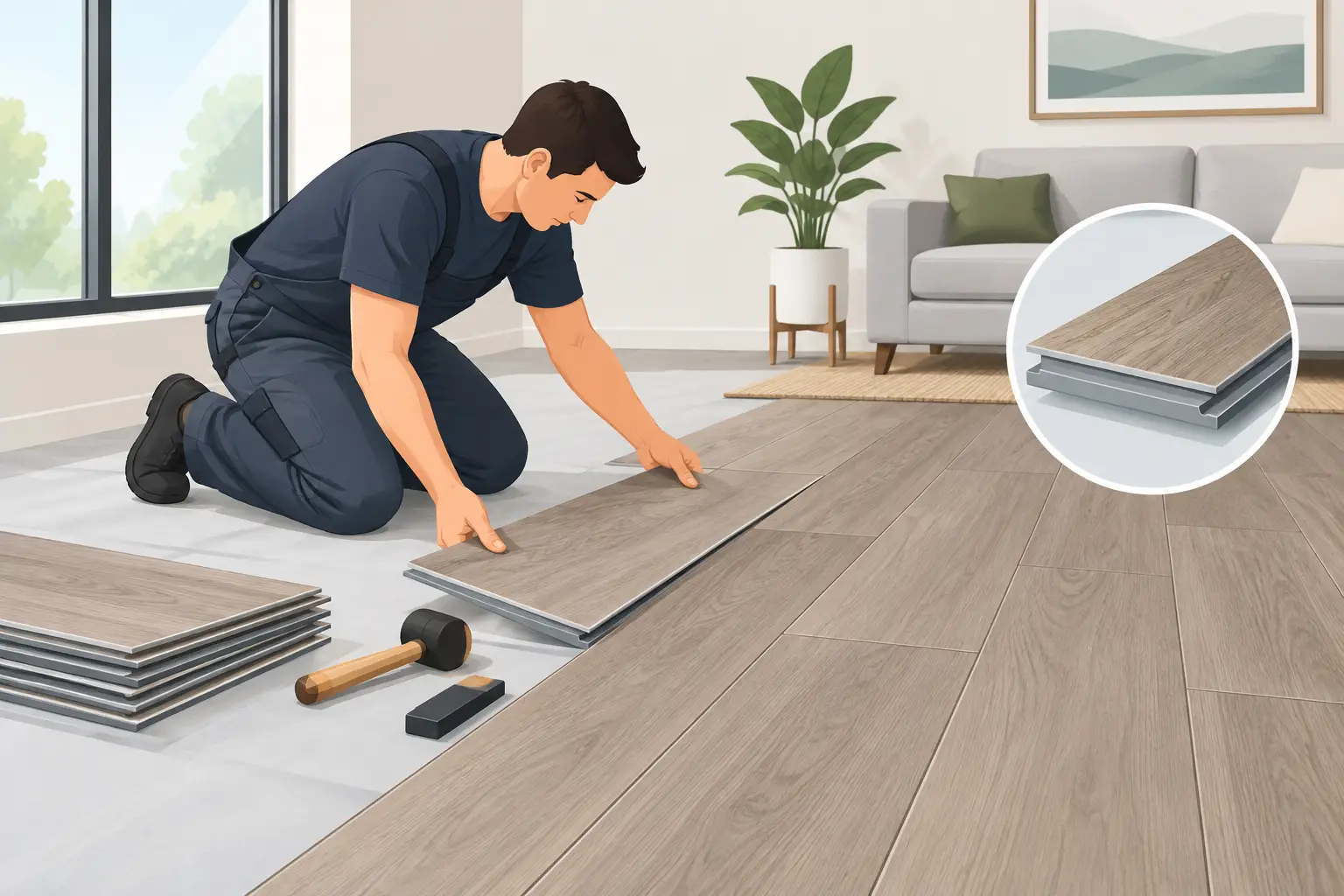
Stone polymer composite, commonly called SPC, is a rigid-core flooring built for hard-working homes. It is stable, waterproof at the plank level and highly practical where children, pets, spills and wet shoes are part of daily life. It can also be a smart option for renovations because many SPC floors can be floated over a suitable existing hard floor after proper site assessment.
Not all SPC is equal. The material is often grouped under “vinyl flooring”, but construction, wear layers, backing and emissions performance vary significantly between suppliers. Better products are made to strict indoor-air standards and should have documentation to support their low-emission claims.
SPC does not deliver the same natural timber feel as bamboo, but it wins on water resistance and easy maintenance. It is particularly useful in kitchens, entry areas, laundries and homes where a practical finish matters more than a traditional solid-floor look. Choose a quality rigid-core plank with a realistic embossed finish and enough wear protection for the traffic it will receive.
Cork flooring
Cork has a distinctive look and a softer feel underfoot than timber or composite flooring. It is harvested from bark rather than by cutting down the tree, making it a renewable material. Its natural thermal and acoustic qualities can make bedrooms, studies and quieter living spaces more comfortable.
The trade-off is durability. Cork can mark under sharp furniture legs, and its performance relies heavily on the quality of its finish. It also needs care around water. A well-finished cork floor can be a good low-emission option, but it is not the most forgiving choice for a high-energy household with large dogs, scooters and constant traffic through the kitchen.
Linoleum
True linoleum is different from sheet vinyl. It is traditionally made with natural ingredients such as linseed oil, wood flour, resins and mineral fillers. It has a long history in commercial and residential interiors and can be a low VOC option when selected with suitable backing and installed using low-emission adhesive.
It is tough, hygienic and available in colours that suit a more design-led renovation. However, it usually requires a very smooth, well-prepared subfloor and professional installation. It is not a floating-floor solution, and the adhesive is part of the indoor-air equation. That makes installer experience especially important.
The materials that need closer scrutiny
Carpet can be comfortable and quiet, but it is one of the categories where the product alone tells only half the story. Carpet backing, underlay, stain treatments and adhesive can all contribute to emissions. If carpet is your preference for bedrooms, choose a low-emission carpet and underlay, then avoid unnecessary chemical treatments.
Engineered timber can also be an excellent floor, but check the make-up. Its layered construction uses adhesives, and the coating may be oil-based, UV-cured or water-based. There is no reason to rule it out, but there is every reason to ask better questions before signing off on a particular board.
Laminate flooring has improved dramatically, yet the fibreboard core and resin content deserve attention. Look for recognised low-emission certification and do not assume a cheap imported laminate will have the same indoor-air performance as a properly documented product.
Installation can make or break a low VOC choice
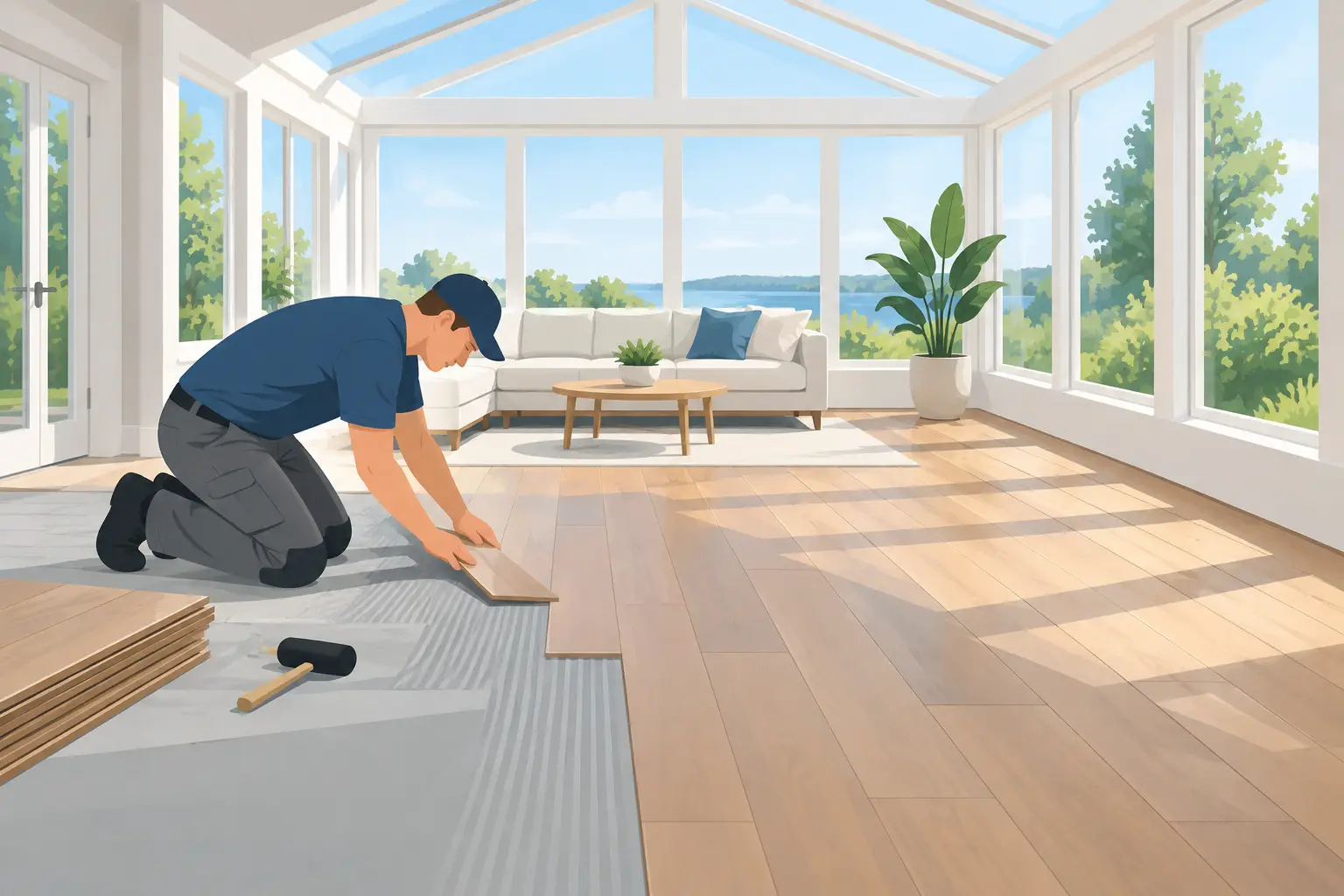
A low-emission floor installed with high-emission glue does not deliver the result most homeowners expect. Where the room and product allow, floating installation can reduce the need for adhesives. That is one reason click-lock bamboo and SPC systems are popular for renovations.
Underlay matters as well. The right underlay helps manage sound, minor subfloor variation and moisture where required, but it must suit the flooring system. Adding a random soft underlay because it feels thicker can damage locking joints and void warranties. Moisture protection should be specified for the site, not guessed at from the shop floor.
Ventilation is the final piece. Air out the house during and after installation where practical, particularly if any adhesive, levelling compound or sealant has been used. Keep the room at normal living conditions, not sealed up for days. Good ventilation helps any initial odour dissipate while the floor settles into service.
Choose for the room, not the brochure
The right floor for a sun-filled lounge with large glazing may not be the right floor for a damp laundry or a rental with pets. Heat exposure, moisture, subfloor condition, furniture, foot traffic and your cleaning routine all affect the recommendation.
For a warm, durable natural floor, quality strand-woven bamboo is hard to beat. For waterproof practicality and a family-proof surface, low-emission SPC is often the better fit. Cork and linoleum have genuine strengths, but they need the right location and a homeowner who understands their care requirements.
The best result comes from looking at the whole job before choosing a colour board: the material, emissions documentation, underlay, subfloor and installation method. Trade Flooring NZ can assess those details on site, then supply and install a floor that looks right on day one and keeps performing long after the boxes are gone.