A good floor has to cope with more than muddy shoes at the back door. In Northland and Auckland homes, it may also sit under big glazed doors, handle wet towels, pet claws, dropped toys and the daily traffic of a busy family. This composite flooring buying guide cuts through the sales talk so you can choose a floor that looks right, performs properly and is installed without expensive surprises.
Composite flooring is not one single product. The name covers several engineered floor types made by combining layers and materials for stability, water resistance and everyday durability. The details of those layers matter far more than a display-board sample or a bargain price per square metre.
Start with how your household actually lives
Before choosing colour, think about the rooms, the people and the conditions. A quiet upstairs bedroom has different demands from an open-plan kitchen, hallway and living area with children, a dog and sliding doors facing the afternoon sun.
For kitchens, entrances and family living areas, most homeowners want a hard-wearing surface that is simple to clean and less vulnerable to everyday spills. If you have pets, look for a textured or low-sheen finish that helps disguise light scuffs and paw marks. Very glossy floors can look sharp on day one, but they show dust, streaks and scratches more readily.
Sun exposure deserves proper attention. Large north- or west-facing glazed areas can create serious heat build-up on a floor. Not every composite product is suitable for those conditions, especially where direct sunlight falls across the same area for long periods. Blinds, curtains and sensible product selection all play a part. This is where an on-site assessment beats guessing from a brochure.
Composite flooring buying guide: know the core
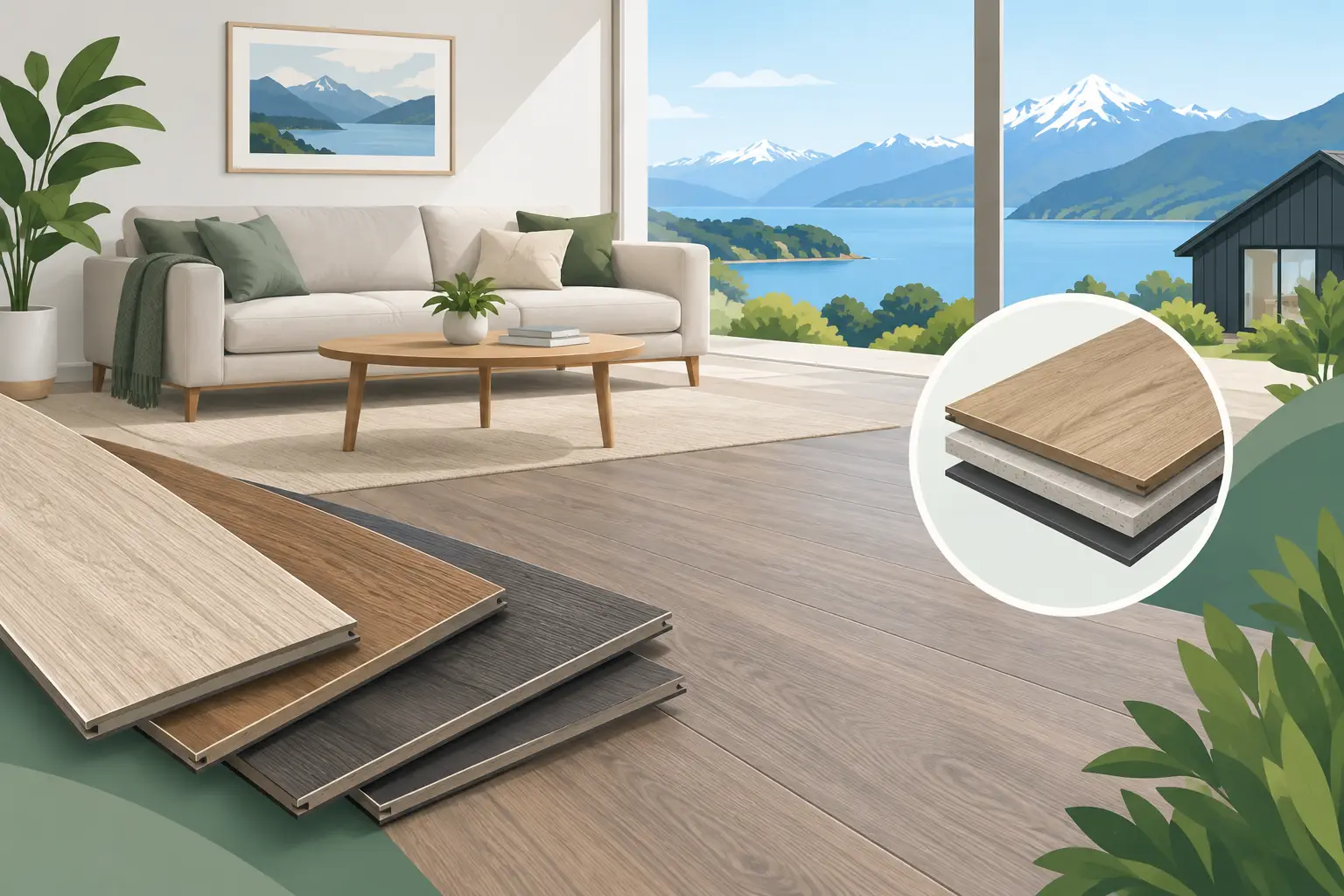
The core is the working heart of a composite floor. It influences stability, indentation resistance, water performance, comfort underfoot and how the boards behave across the room.
SPC flooring
SPC stands for stone polymer composite. It has a dense, rigid core made with mineral content and polymers, usually finished with a decorative layer and protective wear layer. It is a strong practical option for homes that need a water-resistant, low-maintenance floor with a timber-look finish.
A quality SPC floor feels firm underfoot and generally handles household life well. It is often a sensible choice for kitchens, dining areas, corridors and renovations where you want quick installation over a properly prepared existing subfloor. The trade-off is that rigid flooring can transmit more sound and feel less forgiving than softer products, so the right underlay and subfloor preparation are not optional extras.
MFB composite flooring
MFB flooring uses a different composite board construction, designed to provide a stable, durable platform with a realistic timber appearance. Product specifications vary, so do not assume all MFB boards perform the same way around moisture, heat or uneven subfloors.
The right MFB product can give a clean, contemporary timber-floor look at a sensible price. It still needs realistic expectations: water resistance is not permission to leave standing water on the surface, and a stable board does not correct a floor that is badly out of level.
Thickness is only part of the story
Thicker boards can feel more substantial, but thickness alone does not prove quality. Check the full construction, locking system, wear layer, backing, warranty conditions and installation requirements. A thin floor with a weak locking profile is a false economy. Equally, a thick board installed over a rough, damp or poorly prepared subfloor can fail before its time.
Do not buy on colour alone
Colour matters. It sets the mood of the room, affects how large the space feels and needs to work with cabinetry, wall paint and natural light. But it should be the final filter, not the first.
Pale oak-style boards can make compact rooms feel open and relaxed, while mid-tone timber looks are forgiving in high-traffic family homes. Deep colours can add drama, but often show dust and scratches more quickly. Grey flooring remains popular in some schemes, although warm natural timber tones are generally easier to live with over the long term.
Take samples home and look at them in morning, afternoon and evening light. Hold them beside your joinery and skirting boards. Better still, view them on the floor rather than against a vertical wall. What looks perfect under showroom lighting can change completely in your own home.
Check the wear layer and surface finish
The wear layer is the transparent protective surface above the printed timber or stone design. It is a key indicator of how well the floor will stand up to daily use. For a busy household, a stronger wear layer is worth paying for, particularly in kitchens, hallways and living spaces.
Ask practical questions. Is the finish rated for residential use in high-traffic areas? Is it designed to resist scratching and staining? What does the manufacturer say about chairs, pets and direct sunlight? Are felt pads required under furniture? A salesperson should be able to answer clearly, without hand-waving.
Scratch resistant does not mean scratch-proof. Grit brought in on shoes can mark any hard floor over time. Use quality entrance mats, lift rather than drag heavy furniture, and fit felt protection to chair legs. These simple habits do more for long-term appearance than many customers expect.
The subfloor decides whether the job succeeds
The most expensive board in the world will not perform properly over a poor base. Composite flooring needs a dry, clean and sufficiently flat subfloor. Concrete moisture, old adhesive residue, loose vinyl, squeaky particleboard and high spots all need to be assessed before installation starts.
Floating floors also need expansion space around walls, door frames, kitchen islands and fixed objects. That movement allowance is concealed with skirting, scotia or suitable trims. It is not a shortcut or an untidy gap. It is part of a correct installation.
This is why a free on-site measure is valuable. A proper measure identifies transitions between rooms, height differences at doors, stair details, trim requirements and likely preparation work before materials are ordered. It gives you a quote based on the real job, not a hopeful estimate from a floor plan.
Budget for the complete floor, not just the boards
A low advertised board price can look attractive until the extras appear. Underlay, moisture barriers, trims, stair nosings, floor preparation, furniture moving and installation all affect the final figure. Ask for a clear scope that separates product, accessories, preparation and labour.
Direct-import supply can make a meaningful difference to your budget because it cuts out conventional retail layers. At Trade Flooring NZ, the focus is on matching that sharp pricing with technical advice and installation carried through to the final finish. One accountable flooring specialist is easier to deal with than being passed between a retail salesperson, a delivery team and a separate installer.
Do not automatically choose the cheapest quote. Compare what each quote includes, the product specifications, who is responsible for site checks, and whether there is an installation warranty. Saving a few dollars per square metre is not a win if the floor has to be lifted later to fix preventable problems.
Plan the installation around real life
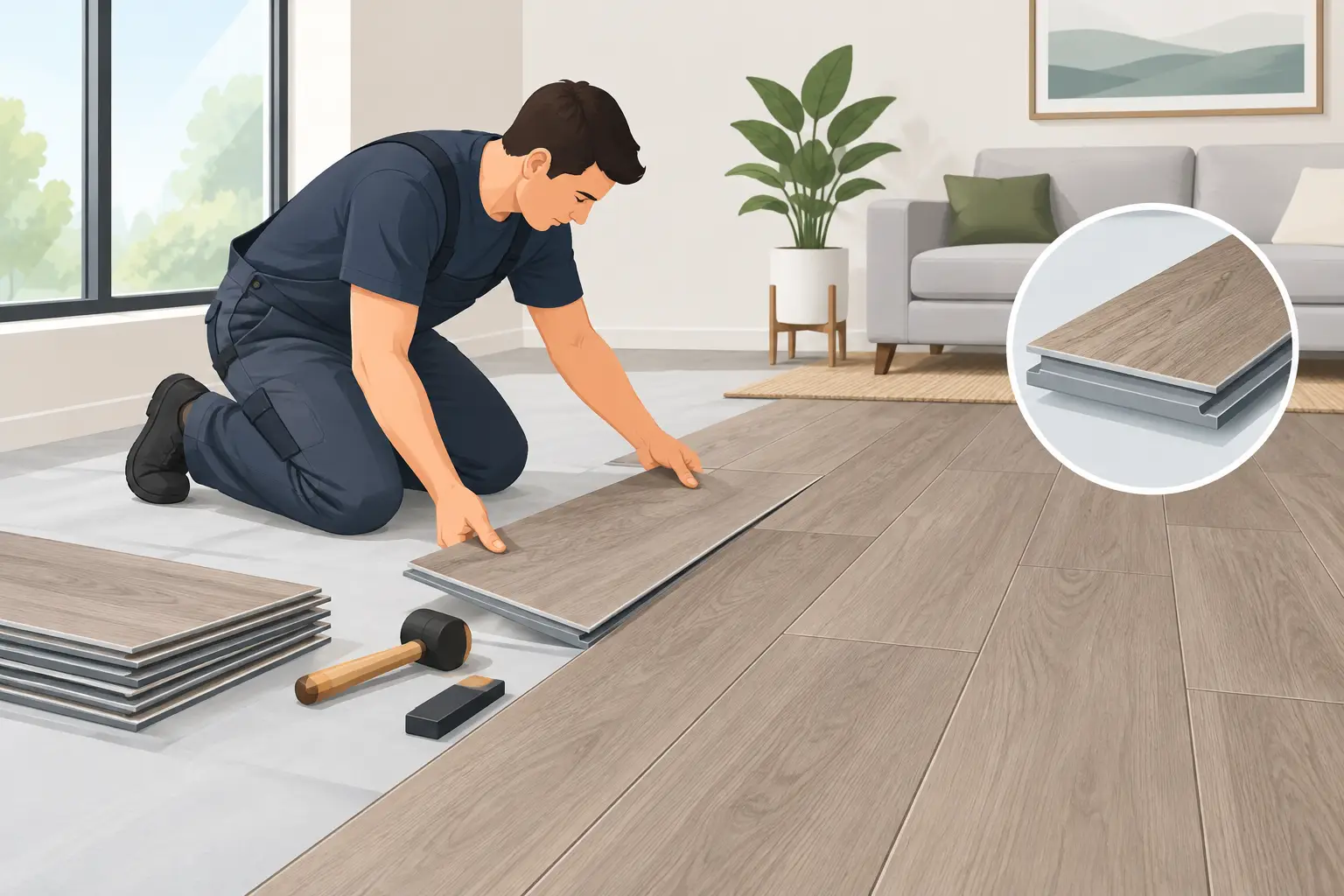
Composite flooring installation is often faster and cleaner than a traditional timber floor, but it still needs planning. You may need rooms cleared, appliances disconnected, doors trimmed or refitted, and access kept available for materials. Confirm whether skirting stays in place, whether scotia will be used and how joins to carpet, tiles or exterior doors will be finished.
Once the floor is down, most composite systems can be used quickly. Keep cleaning simple: vacuum with a hard-floor setting or sweep regularly, then use a lightly damp mop and a cleaner approved for the product. Avoid soaking the floor, steam mops unless specifically approved, and harsh chemicals that can leave residue or damage the finish.
The best choice is rarely the product with the loudest claim. It is the board with the right core, wear layer, finish and installation plan for your home. Start with a sample, get the site checked properly, and choose the floor you will still be happy walking on years from now.