
A sunroom can be the best room in the house until the floor starts working against it. In this sunroom flooring installation case study, the brief was clear: create a warm, timber-look space that could cope with hard North Island sun, big glazed doors, children, a dog and regular traffic from the garden.
The homeowners were renovating a light-filled living area opening onto a deck. Their existing floor had faded unevenly near the glass and was showing the effects of wet feet, furniture movement and daily family use. They did not want another floor that looked good on installation day but needed constant caution afterwards.
They wanted a finish with natural character, practical durability and a price that made sense. More importantly, they needed the right product and installation method for a room where heat build-up was not a theoretical risk. It was part of the job every sunny afternoon.
The sunroom challenge was heat, not just appearance
Sunrooms place flooring under more pressure than many homeowners expect. Large areas of glazing can concentrate heat directly onto the floor. Add opening stacker doors, bright UV exposure and a room that swings between cool mornings and hot afternoons, and movement becomes a real consideration.
This project also had three transitions to manage: the main living area, the deck threshold and a tiled entry. The finished floor needed to sit cleanly against each surface without awkward height changes, exposed edges or improvised trim work.
The homeowners initially liked the idea of natural timber. The look was right, but the practical conversation needed to come first. Solid timber and some engineered products can be beautiful, yet they require the site conditions, acclimatisation and ongoing care to be right. In a glass-heavy room with strong direct sun, that is not always the best fit for a busy household.
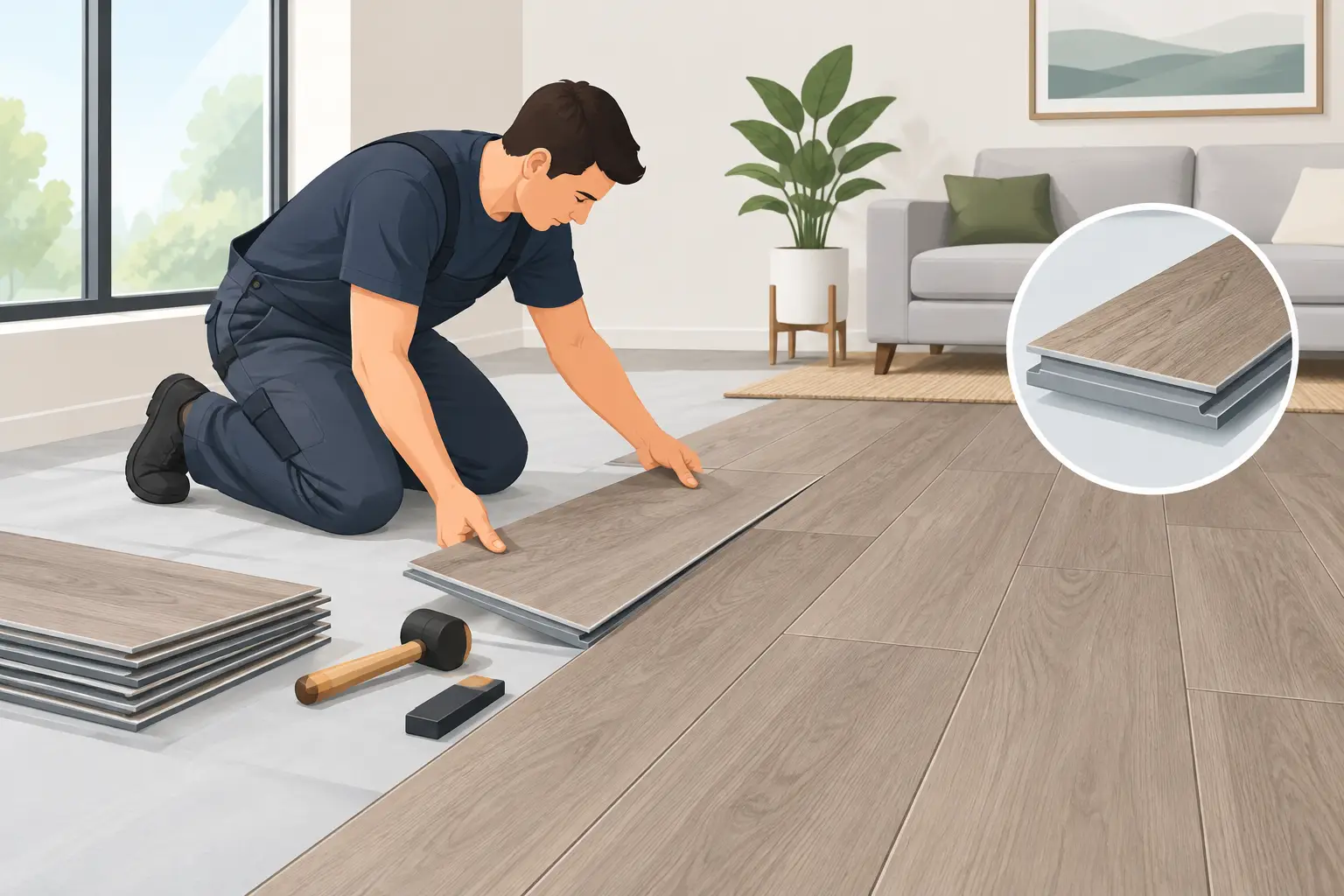
The answer was a premium DualCore® stone polymer composite floor in a mid-tone oak colour. It delivered the timber look they wanted while offering stable, water-resistant performance suited to everyday family life. The chosen colour also mattered. A mid-tone board gives enough warmth to soften a bright room, while being more forgiving than a very pale or very dark floor when it comes to dust, paw marks and the occasional bit of garden grit.
Sunroom flooring installation case study: getting the site right
No floor performs properly if the preparation is rushed. Before any boards were ordered, the site was measured and assessed. This is where an owner-operator installer earns their keep. Product selection is only one part of the outcome. Subfloor condition, levels, moisture, expansion requirements and finishing details decide whether the job stays sharp over time.
The existing substrate was checked for flatness rather than simply covered over. SPC flooring is tough, but it still needs a suitably even base. Small highs and lows can telegraph through a floating floor, create movement underfoot and put unnecessary stress on the click system.
A few localised areas required levelling work before installation could begin. It added a step, but skipping it would have been false economy. A floor should feel firm and consistent when walked on, particularly in an open-plan room where sunlight makes every line and transition more visible.
Moisture was also assessed. The room itself was dry, but the deck-facing doors meant wet footwear and rain blown in during a Northland shower were part of normal life. SPC was a sensible choice because it is built for water resistance, but that does not mean moisture checks can be ignored. A sound installation starts with a dry, prepared substrate and the correct underlay where required.
The team allowed the necessary expansion space around walls, frames and fixed joinery. Floating floors need room to move with changes in temperature. That gap is then concealed properly with skirting or finishing trims, not squeezed tight and hoped for the best.
The installation details that made the difference
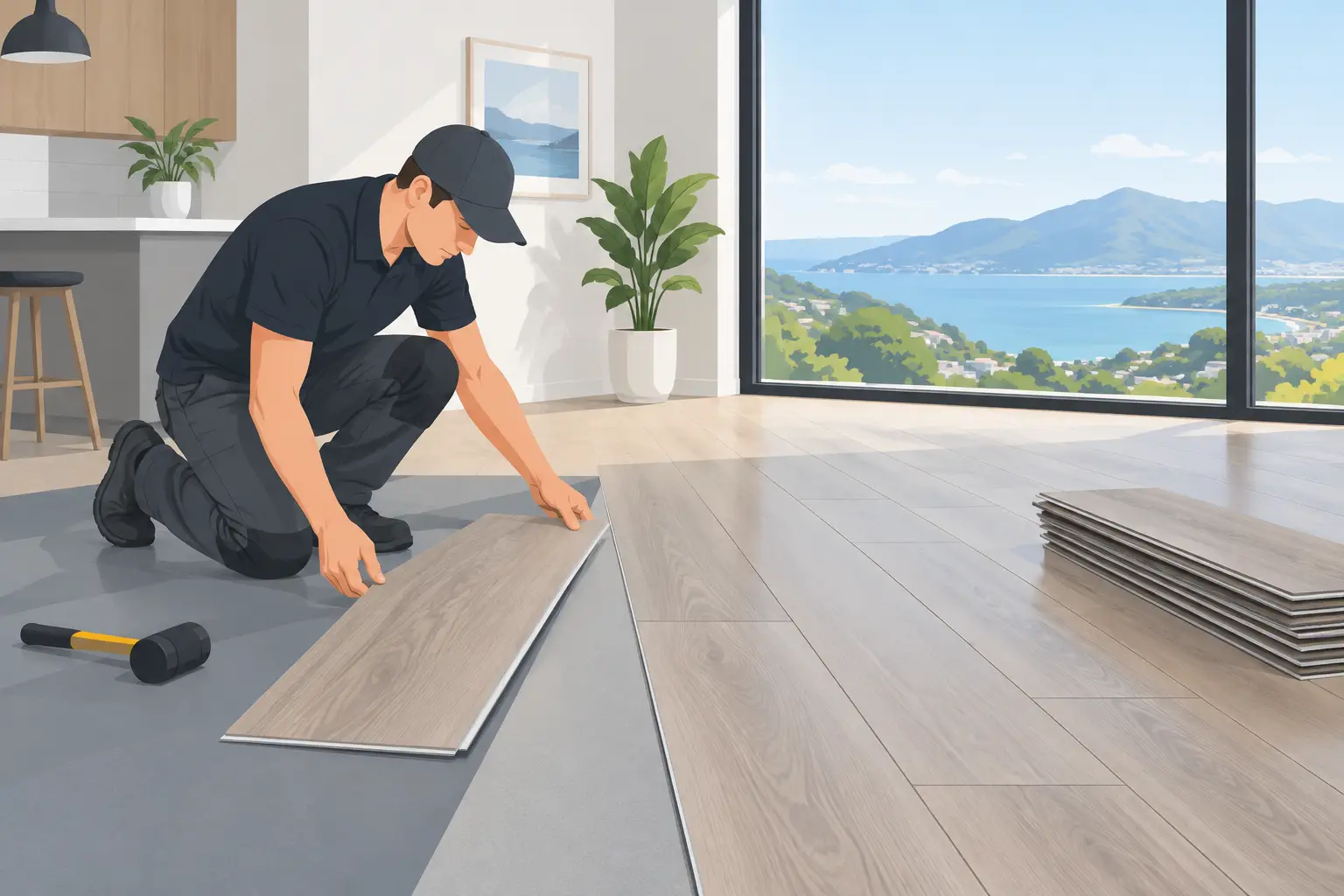
The boards were laid to run with the length of the room and the direction of the strongest natural light. This gave the sunroom a longer, calmer visual line and reduced the chopped-up look that can happen when boards run across a narrow space.
The first rows were set precisely. This is not a detail anyone notices when it is done well, which is exactly the point. If the opening rows are out, the error carries through the entire room. By the time the floor reaches the far wall or a wide stacker door, the result can look visibly off.
Door jambs were undercut where needed so the flooring could slide neatly beneath them. The deck threshold was finished with an aluminium trim selected to protect the edge while keeping the transition low and tidy. At the tiled entry, a matching profile created a deliberate change between surfaces rather than a trip point disguised as a finish.
Because this was a family space, furniture protection was discussed before the installers left. SPC handles daily life well, but no flooring benefits from being dragged across the room under a loaded sofa or dining table. Felt pads under furniture feet and a quality mat at the deck entrance are simple measures that protect any finished floor.
The job moved quickly once preparation was complete. There was no need for sanding, staining or waiting for coatings to cure. The family could use the room straight away, which mattered because the sunroom was their main connection between kitchen, lounge and outdoor living.
Why SPC suited this home better than a one-size-fits-all answer
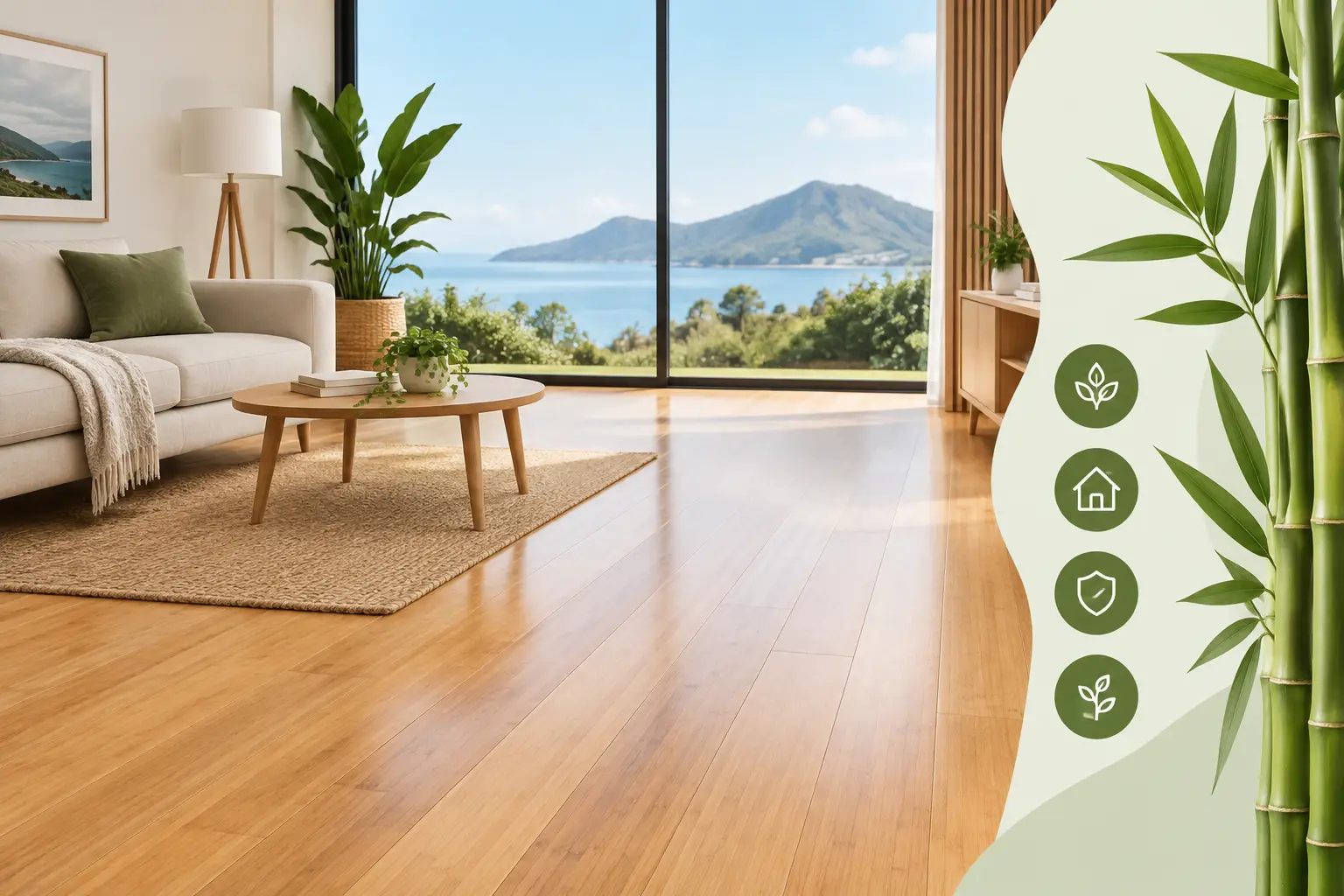
There is no single best floor for every sunroom. Bamboo flooring remains an excellent option for many homes, particularly where a natural material and distinctive grain are priorities. It is sustainable, hard-wearing and gives a room genuine warmth. But each project needs an honest assessment of direct sun, glazing, humidity, subfloor and how the room is used.
For this particular renovation, the composite construction and practical resilience of DualCore® SPC were the better match. The homeowners wanted less worry around wet feet, a lively dog, dropped toys and regular entertaining. They also wanted confidence that the floor would remain stable in a space with significant heat exposure.
That does not mean the room can be treated carelessly. Strong sunlight can heat any surface, and blinds or window coverings remain a smart investment where glazing receives intense direct sun. Good window management protects flooring, furnishings and comfort in the room itself. The benefit of choosing a suitable SPC product is that the floor is designed to cope with normal residential conditions without demanding a fragile lifestyle around it.
The finished result: warm, practical and ready for daily life
Once installed, the floor changed the feel of the entire area. The oak tone grounded the bright walls and glass, making the sunroom feel connected to the rest of the home rather than like an added-on conservatory. The continuous run through the living space also made the footprint appear larger.
The homeowners gained a floor that looks refined enough for a design-led renovation and practical enough for real household traffic. No costly showroom margin. No vague advice from someone who will never see the site. Just the correct product, careful preparation and an installation completed to the point of perfection.
At Trade Flooring NZ, that is the standard: assess the conditions first, explain the options plainly, then install the floor properly. The work is backed by a 12-month installation warranty because workmanship should be accountable after the last trim is fitted.
If your sunroom has large windows, doors to the deck or a full afternoon of direct sun, do not choose flooring from a small sample alone. Have the room measured, talk through the heat exposure and look at the transitions that will make or break the finished result. The right floor should let you enjoy the light, not spend every sunny day worrying about it.