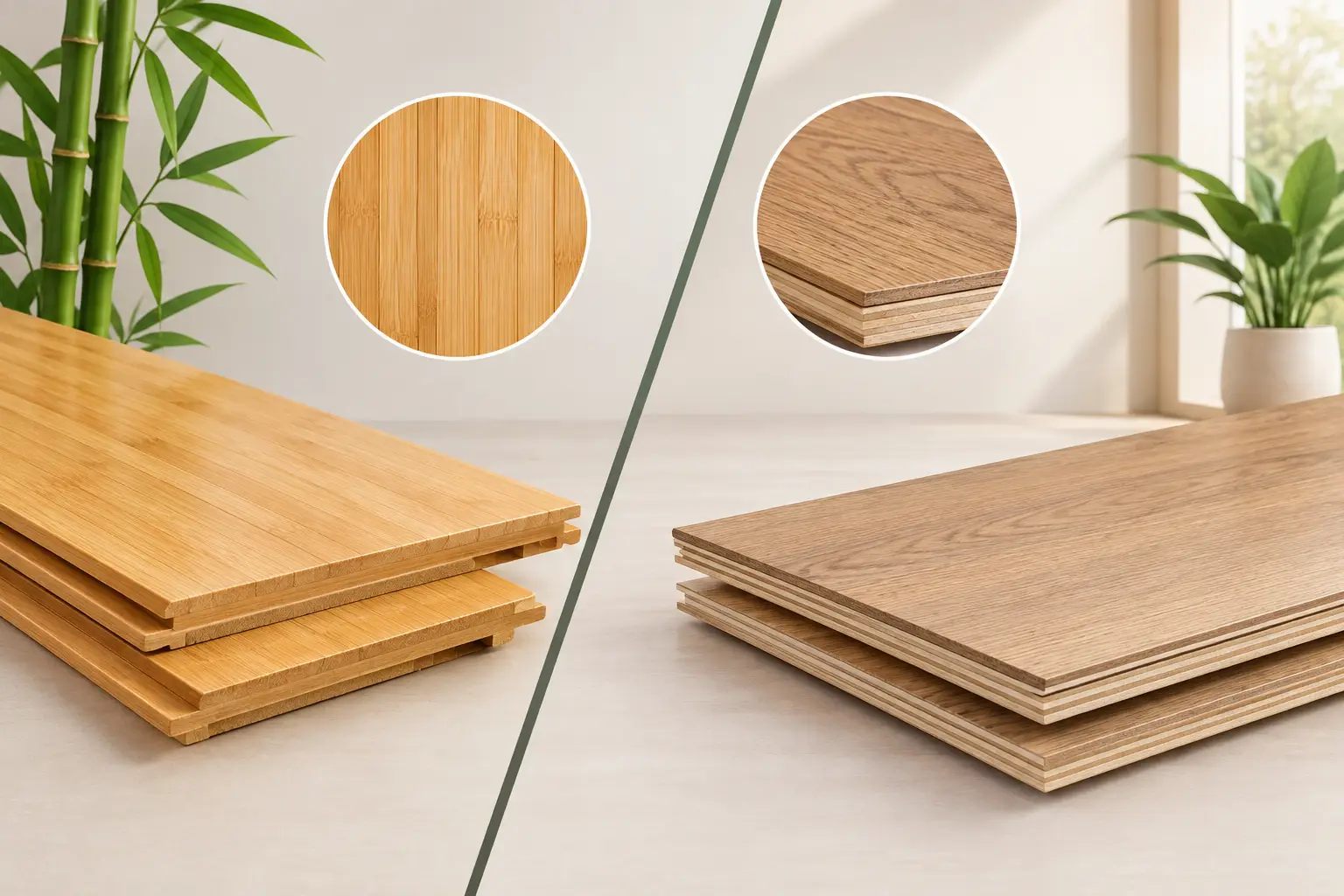
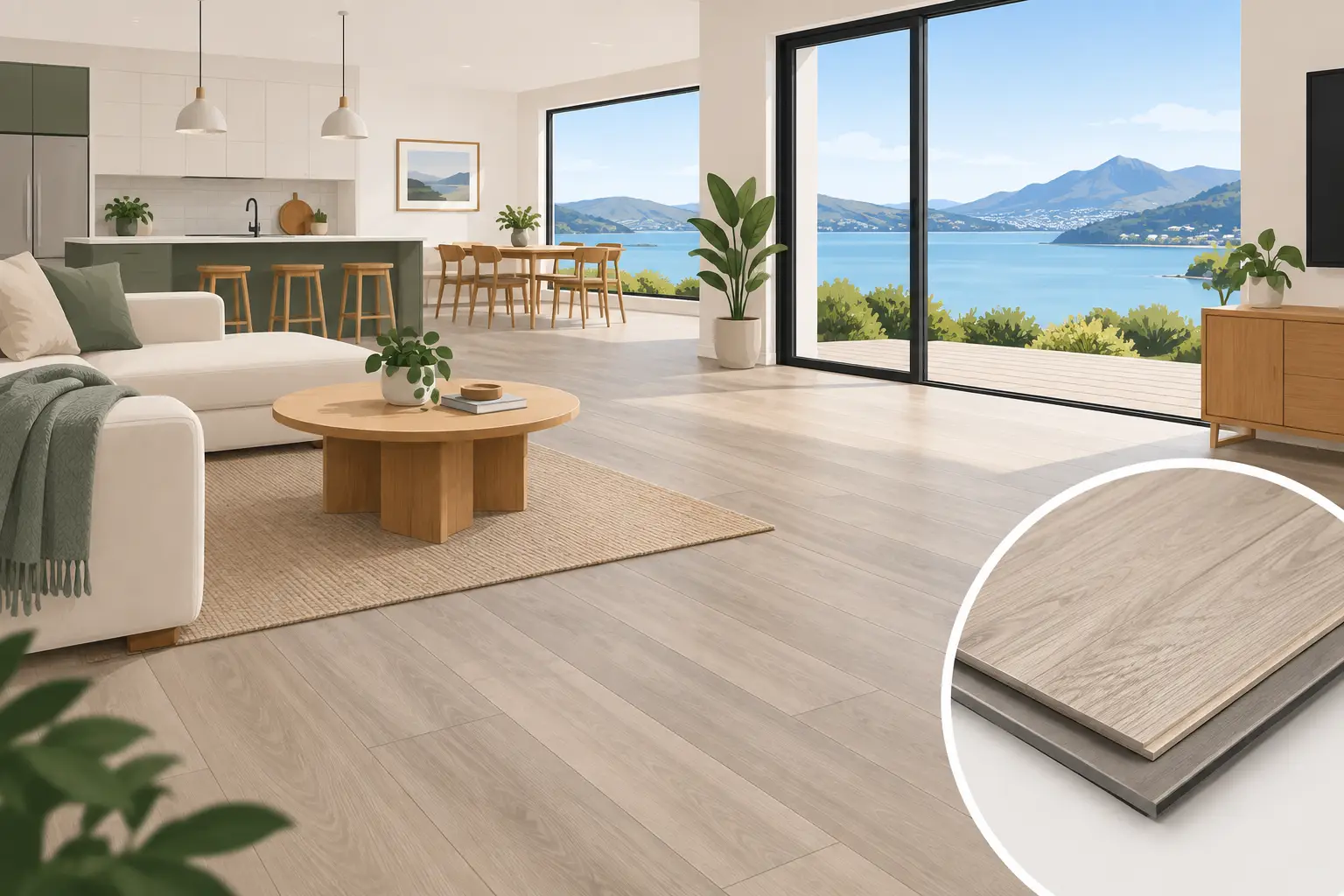
A floor can look brilliant in a sample board and still be the wrong choice for your home. Large north-facing glazing, active kids, wet paws, uneven subfloors and Auckland humidity all put flooring under pressure. That is why MFB composite flooring NZ homeowners choose needs to be assessed for the actual site, not selected from a showroom rack.
MFB flooring is built for people who want the timber look without signing up to the maintenance, movement and moisture concerns that can come with some natural timber products. It is a practical choice for renovations, new builds and busy family homes where the floor needs to work hard every day and still look sharp.
What is MFB composite flooring?
MFB composite flooring uses a dense mineral fibre board core beneath a durable decorative surface. The result is a rigid floating floor designed to feel more solid underfoot than many lightweight alternatives, while delivering the clean, contemporary look of timber planks.
The appeal is straightforward. You get a stable, hard-wearing floor with realistic timber styling, fast installation and a surface suited to the knocks of normal household life. For many homes, it sits in the sweet spot between appearance, practicality and cost.
Not all composite flooring is made to the same standard, though. Core density, locking profile, wear layer, backing, plank construction and installation method all affect the finished result. A cheaper board may look similar at first glance, but it can be less forgiving on a challenging subfloor, noisier underfoot or more prone to joint issues if it is not installed correctly.
Why MFB composite flooring suits NZ homes
New Zealand homes are not gentle on floors. We track in grit from the driveway, open doors to rain, run heat pumps through winter and expose living areas to strong sun in summer. Flooring needs to handle daily life, not just photograph well on handover day.
A practical answer to spills, pets and family traffic
A quality MFB composite floor is designed with water resistance in mind, making it a strong option for kitchens, dining spaces, hallways and open-plan living areas. Spills can be dealt with easily when they are wiped up promptly, and the durable surface stands up well to the scuffs, toys and paw traffic that come with a lived-in home.
That does not mean any floating floor should be treated like a wet-room surface. Persistent water, flooding, failed plumbing and moisture rising through a slab can still create problems. The right product and preparation matter just as much as the surface claim on the box.
For families, the main benefit is confidence. You are not constantly worrying about a dropped drink, a dog racing through after the rain or children dragging chairs across the dining area. Use felt pads under furniture, maintain entry mats and deal with spills quickly, and the floor is made for the rest of it.
Better stability where temperature changes
Large glazed areas are a feature of many modern Northland and Auckland homes. They also create intense heat and sharp temperature changes across the floor. Some flooring products can expand, contract or react badly when conditions are not properly considered.
MFB composite flooring is valued for its rigid, stable construction, but no material is immune to poor planning. Direct sun, window orientation, expansion requirements and the size of the continuous floor area all need to be checked before installation. In rooms with substantial glazing, the installer should assess the exposure rather than make broad promises from a brochure.
This is where experience pays for itself. The right flooring specialist identifies risks early, recommends suitable detailing and makes sure perimeter expansion gaps, trims and transitions are not treated as an afterthought.
Timber style without timber maintenance
A good composite floor brings warmth and character to a home without the sanding, recoating or more careful moisture management associated with many timber floors. Modern plank designs offer natural grain, texture and colour variation that can work equally well in a clean-lined new build or a full renovation.
The choice of colour still matters. Pale oak looks open and relaxed, but can show dark grime around busy entrances if cleaning is neglected. Deep tones can create a dramatic finish, yet they may reveal dust and pet hair more readily in bright rooms. Mid-tone timber looks are often the most forgiving for active households.
The core is only half the job
The biggest mistake homeowners make with composite flooring is assuming the board alone guarantees performance. It does not. The subfloor, underlay, moisture management and installation workmanship decide whether the finished floor feels solid and stays that way.
Before a floor is ordered, a proper on-site measure should check levels, flatness, moisture conditions, access, room transitions and existing floor coverings. A floating floor needs a sound, suitably prepared base. If the subfloor has dips, high spots or moisture issues, laying planks straight over it is not a saving. It is simply postponing the bill.
A professional installation also considers the details people notice every day: neat door jamb cuts, correct expansion allowance, clean transitions to tile or carpet, matching aluminium trims and a finish that does not look rushed around cabinetry. These are small items until they are done badly.
When comparing quotes, ask what is included. A low square-metre figure can leave out floor preparation, removal of existing material, underlay, trims, delivery or installation. The right quote is clear about scope, not vague enough to grow once work starts.
Choosing MFB flooring for your project
MFB composite flooring can suit most dry interior spaces, but product selection should match how the room is used. An open-plan family area may need maximum scratch resistance and a colour that hides everyday dust. A rental renovation may place more value on fast turnaround and a hard-wearing finish. A high-end new build may prioritise wider planks, realistic embossing and a floor that carries consistently through the living spaces.
There are four questions worth answering before making a final decision:
- How much direct sun reaches the floor, particularly through large windows and stacker doors?
- Is the subfloor timber, concrete or an existing hard surface, and is it flat and dry enough?
- Will the space see wet shoes, pets, children, heavy furniture or high daily traffic?
- What transitions, stair edges, cabinetry details and adjoining floor finishes need to be planned?
These questions are more useful than simply asking which colour is popular. The best floor is the one that works in your home and is installed correctly from the start.
Value is more than a cheaper box of planks
Direct-import pricing can make premium composite flooring far more accessible, particularly when it removes conventional showroom and middleman margins. But value is not about buying the lowest-priced product available. It is about getting the right board, enough stock for the project, proper accessories and skilled installation without paying for unnecessary retail overheads.
Permanent stock availability also matters when a renovation schedule is tight. A delayed floor can hold up painters, kitchen installers, furniture deliveries and move-in dates. Choosing a supplier who understands product availability and manages the job from measurement through to final finish keeps the project moving.
At Trade Flooring NZ, that means dealing with one accountable flooring specialist from product advice and site assessment to supply and installation. It is a simpler process, and it reduces the risk of the product being sold by one person and the installation problems being left for someone else to solve.
Looking after your MFB composite floor
Maintenance is uncomplicated. Vacuum or sweep regularly to remove abrasive grit, use a well-wrung damp mop with a suitable floor cleaner, and avoid flooding the surface with water. Entry mats help protect busy doorways, while felt pads under chairs and furniture prevent unnecessary surface marking.
Avoid steam mops unless the specific product instructions approve them. Also be cautious with harsh chemicals, waxes and oil-based cleaners, as these can leave residue or affect the finish. For stubborn marks, use the recommended cleaning method rather than attacking the spot with an abrasive pad.
A well-chosen MFB floor should make your home easier to live in, not add another maintenance job to the weekend. Start with a sample, then have the site measured properly. The right board, matched to the right conditions and installed with care, is what gives you a floor worth coming home to.