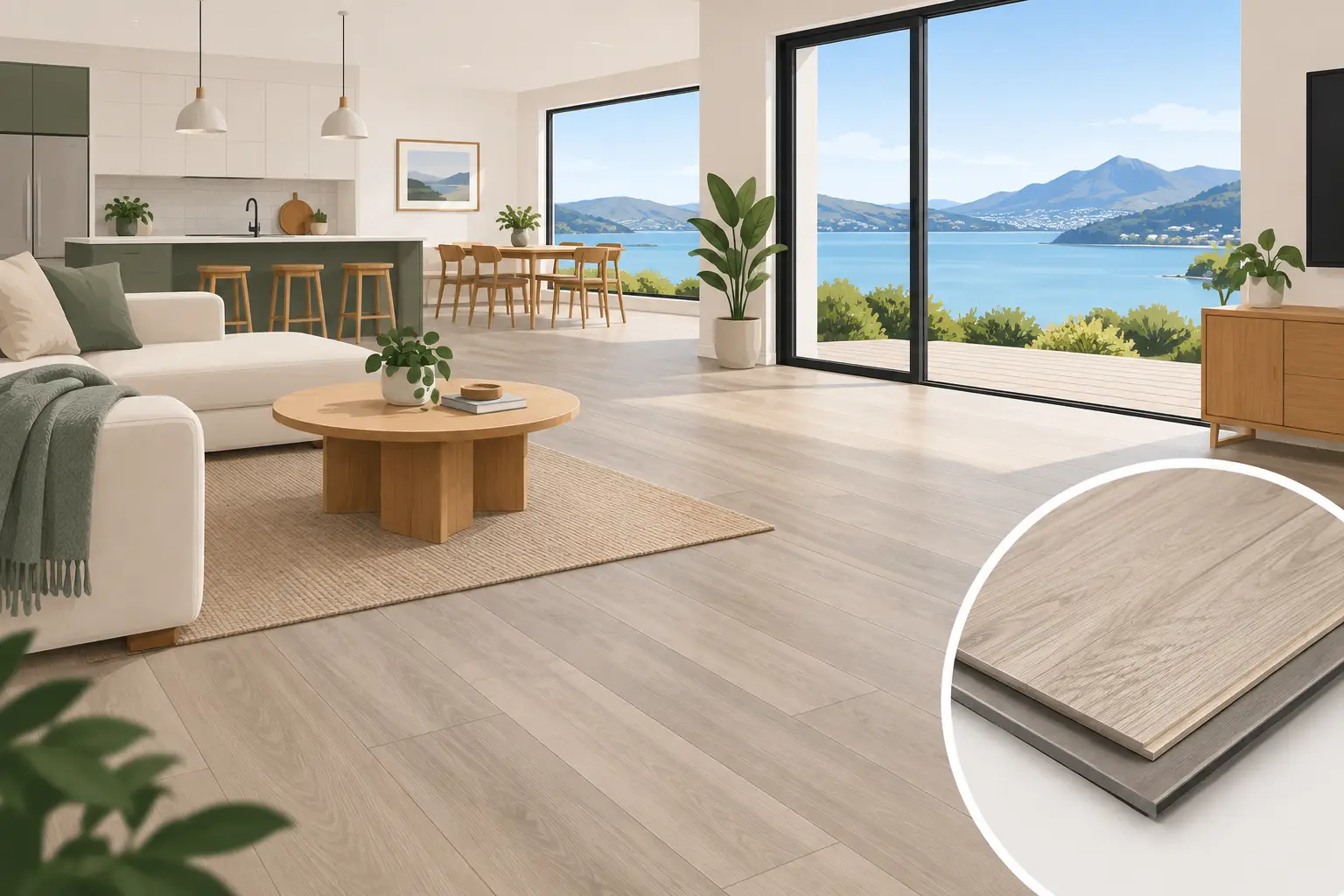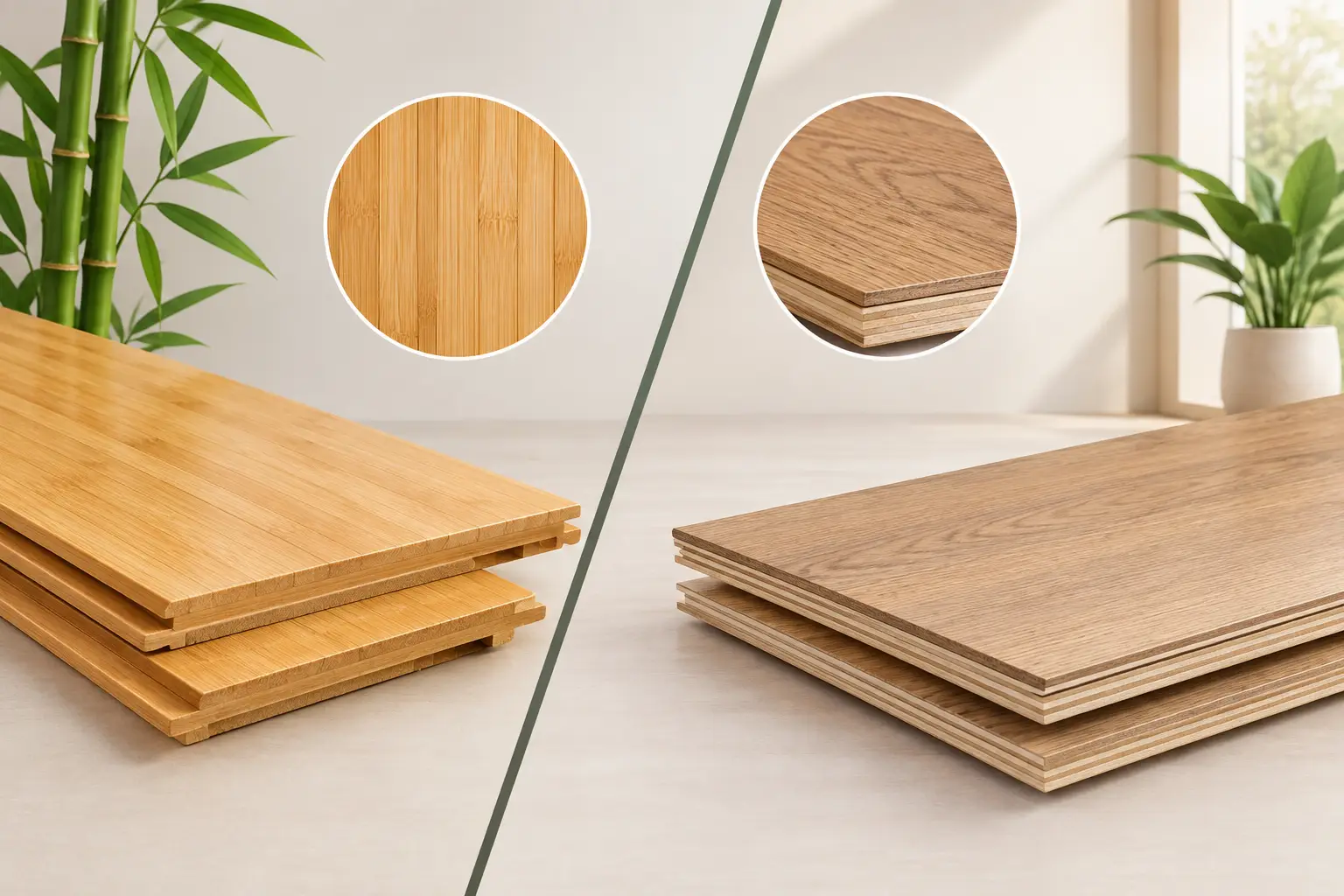
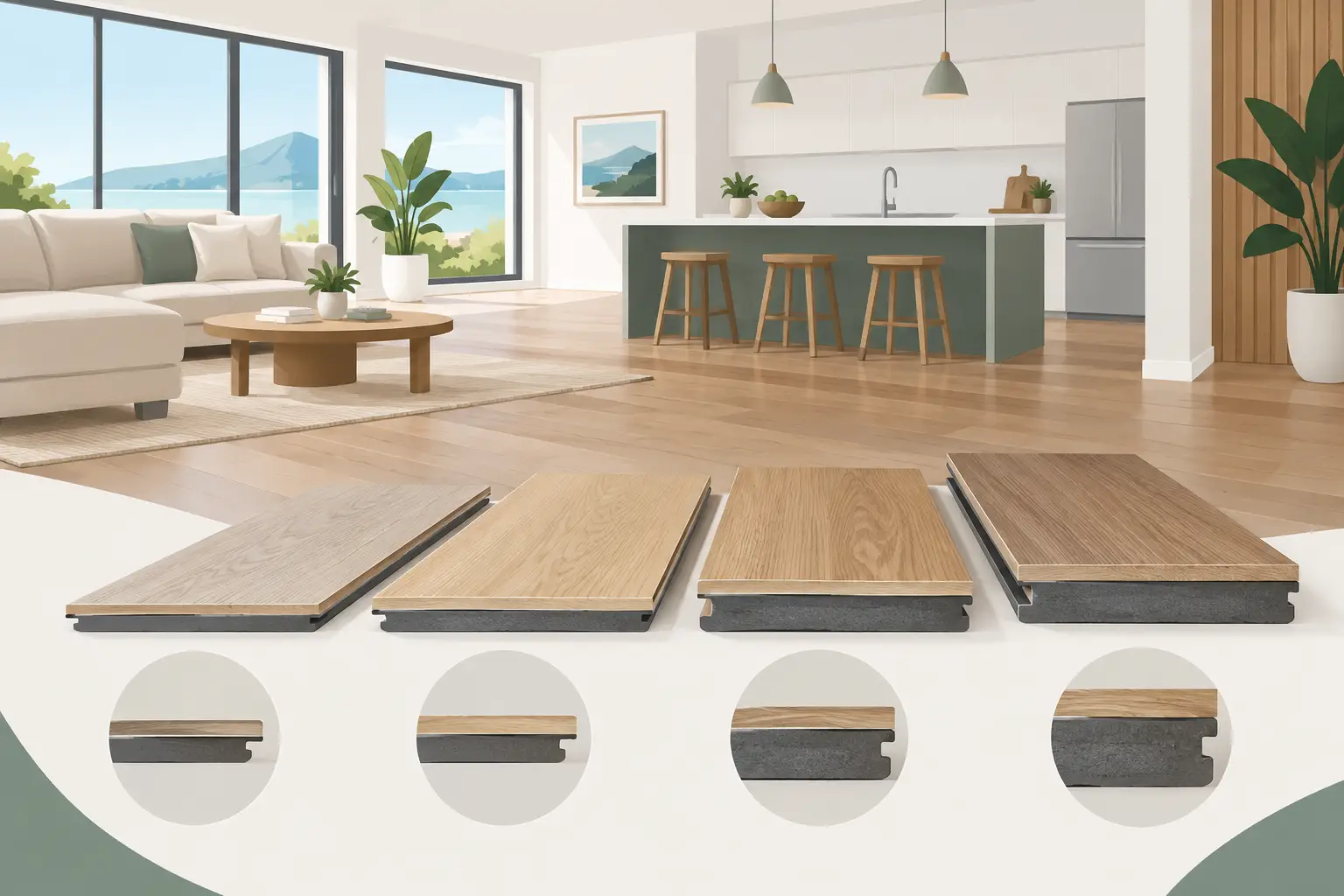
A 4 mm SPC plank and an 8 mm SPC plank can look almost identical in a sample. Once they are installed across a busy family home, over a real subfloor with sunlight, furniture, children and pets, the difference can be significant. This SPC flooring thickness guide cuts through the sales talk so you can choose a floor that suits your home, not simply the thickest number on a brochure.
Thickness matters, but it is only one part of performance. The quality and density of the stone polymer composite core, the wear layer, locking system, attached underlay and the condition of the subfloor all matter just as much. Get the specification right and you have a stable, hard-wearing floor that looks sharp for years. Get it wrong and even an expensive plank can feel disappointing underfoot.
SPC flooring thickness guide: what the numbers mean
SPC stands for stone polymer composite. Its rigid core is made using limestone-based mineral content and stabilising polymers, then finished with a decorative film and protective wear layer. The stated plank thickness is the full build-up from top to bottom, often including any factory-attached acoustic backing.
In practical terms, most residential SPC flooring sits between 4 mm and 8 mm overall. A thinner product can be a smart solution where floor height is limited. A thicker product can offer a more substantial feel and better tolerance for minor imperfections in the base below. But thicker does not automatically mean tougher.
A 6.5 mm plank with a dense, well-made core and a reliable click profile will generally outperform a poorly manufactured 8 mm plank. Likewise, a thick plank with a light-duty wear layer is not automatically the best choice for an active household. Ask what is inside the plank, not just how tall it is.
Around 4 mm to 5 mm: best where height is tight
Thin SPC flooring is commonly chosen for renovations where existing kitchen cabinetry, doors, stair thresholds or built-in joinery make added height a problem. It can be an efficient way to refresh a rental, apartment, bedroom or low-traffic area without creating a chain of extra alterations.
The trade-off is that thinner rigid planks require a flatter, more carefully prepared subfloor. They have less material to bridge small hollows or soften subtle ridges. Install thin SPC over an uneven base and the locking joints carry loads they were never designed to take. That can lead to movement, joint damage or a clicking sound when walked on.
For a well-prepared concrete slab or smooth timber floor, 4 mm to 5 mm SPC can perform very well. It is not a cheap shortcut by default. It simply leaves less room for error underneath.
Around 5.5 mm to 6.5 mm: the practical sweet spot
For many Northland and Auckland homes, a mid-thickness SPC plank is the sensible all-round choice. It provides a solid, confident feel underfoot without causing unnecessary issues at doorways and transitions. It also gives installers more latitude when dealing with the small variations found in real renovation projects.
This range suits open-plan living, hallways, kitchens and family rooms, particularly when paired with a proper wear layer and a good-quality integrated backing. It is a strong option for homes where paws, dropped toys, dining chairs and everyday traffic are part of the job description.
Do not confuse this with permission to lay over a poor subfloor. No floating floor should be expected to correct major dips, high spots or loose boards. Preparation remains the foundation of a long-lasting result.
Around 7 mm to 8 mm: when a heavier build makes sense
Thicker SPC often appeals to homeowners wanting a more substantial plank, stronger acoustic performance or additional confidence over a less-than-perfect existing floor. It can be especially useful in large living spaces, light-commercial settings and homes where the new floor needs to meet another surface at a particular height.
There are limits. Extra thickness can make transitions harder around sliding doors, entry doors, appliances and stair details. It may also require trimming doors or adjusting finishes. If the product includes a thick acoustic backing, adding another soft underlay beneath it can create too much movement and may affect the warranty or click system.
The right question is not, should I buy the thickest SPC? It is, what thickness gives the best finished result in this particular house?
The wear layer matters as much as total thickness
The wear layer is the clear protective coating on top of the printed timber or stone design. It is measured separately from the plank thickness, usually in millimetres. This is the surface that deals with foot traffic, chair movement, pet claws and day-to-day cleaning.
For quieter bedrooms or occasional-use rooms, a lighter residential wear layer may be suitable. For a main living area, kitchen, hallway or home with dogs and children, a tougher wear layer is worth prioritising. A common benchmark is 0.5 mm for busy residential spaces and light-commercial use, although the full product specification and warranty should always be considered.
A thick core with a thin wear layer is not the same as a durable floor. Think of the core as the structure and the wear layer as the armour. Both need to suit the task.
Subfloor flatness decides how well any thickness performs
Most flooring problems blamed on SPC are really preparation problems. Floating SPC planks need a sound, dry and sufficiently flat surface. They do not need a perfectly level floor from one side of the house to the other, but they do need a floor without abrupt high points, hollows, loose sections or movement.
Concrete slabs should be assessed for moisture as well as flatness. Timber floors should be checked for squeaks, flex, damaged sheets and uneven joins. Old vinyl, tiles and existing coverings may sometimes be suitable to go over, but only if they are firm, flat and compatible with the installation system.
This is why a free on-site measure is more useful than choosing from a sample at the kitchen bench. A trained flooring specialist can check room transitions, door clearances, slab condition, sunlight exposure and the practical details that determine whether 5 mm, 6.5 mm or 8 mm is the right call.
Sun, heat and large glazed areas need a proper plan
North-facing rooms, conservatories and living areas with large glazing can put serious heat into a floor. SPC is valued for its dimensional stability, but no floating product should be treated as immune to extreme heat. Direct sun, restricted expansion gaps, dark window coverings and an installation that is pinned under heavy cabinetry can all create trouble.
A suitable thickness helps, yet heat performance is not purely a thickness issue. Product specification, plank colour, room layout, expansion allowances and window treatment all come into play. In sun-exposed spaces, it pays to assess the room rather than assume any SPC product will behave the same way.
The installation detail matters too. Perimeter expansion gaps must be maintained, and trims need to allow the floor to move as designed. Covering an expansion gap with a skirting board is fine. Filling it solid with adhesive is not.
Attached underlay versus separate underlay
Many SPC products come with an attached IXPE or EVA acoustic backing. This can reduce sound, improve comfort and speed up installation. When the manufacturer has designed the plank with that backing, it is usually installed directly over the prepared subfloor or the approved moisture barrier system.
Adding a second cushioned underlay underneath can feel like extra comfort, but it may allow the planks to flex too much. That puts stress on the click joints. Always follow the installation requirements for the exact product, particularly over concrete or where acoustic performance is required in multi-level homes.
If a separate underlay is needed, choose one that is approved for rigid core flooring. A thick, soft underlay intended for carpet or laminate is not automatically suitable for SPC.
Choose thickness around the room, not the sales pitch
For bedrooms and straightforward renovations with a very flat base, a thinner SPC may be all you need. For most busy homes, a quality mid-thickness plank with a strong wear layer is often the best value. For more demanding spaces, challenging transitions or specific acoustic and height requirements, a thicker construction may earn its place.
The smarter investment is a complete system: the right plank, correct underlay or moisture barrier, accurate trims, careful subfloor preparation and an installer who takes responsibility for the finish. Trade Flooring NZ works through those details before installation, because a floor is only as good as what happens beneath it and around its edges.
If you are comparing SPC samples, place the thickness figure beside the wear layer, core construction, backing, warranty conditions and installation requirements. Then have the actual site measured. That is how you buy a floor that feels right on day one and still earns its keep after years of real family life.